HyperAI has compiled a series of extremely valuable and widely used data sets and tutorials for everyone from May 26 to May 29, covering image synthesis, speech recognition, programming reasoning, music and other fields~
The "Aurora Large-Scale Atmospheric Basic Model Demo" is now available in the "Tutorials" section of HyperAI's official website. Come and experience it!
Queen Mary University of London and Oxford University research teams collaborated to develop two new cancer prediction algorithms based on anonymous electronic health records of 7.46 million adults in England.
HyperAI has compiled a series of extremely valuable and widely used data sets and tutorials for everyone from May 19th to May 23rd, covering multiple fields such as artificial intelligence, image and text generation, mathematics, materials, etc.
A team from MIT and Harvard University proposed a framework called PUPS that combines protein sequences and cell images to predict the subcellular localization of unknown proteins.
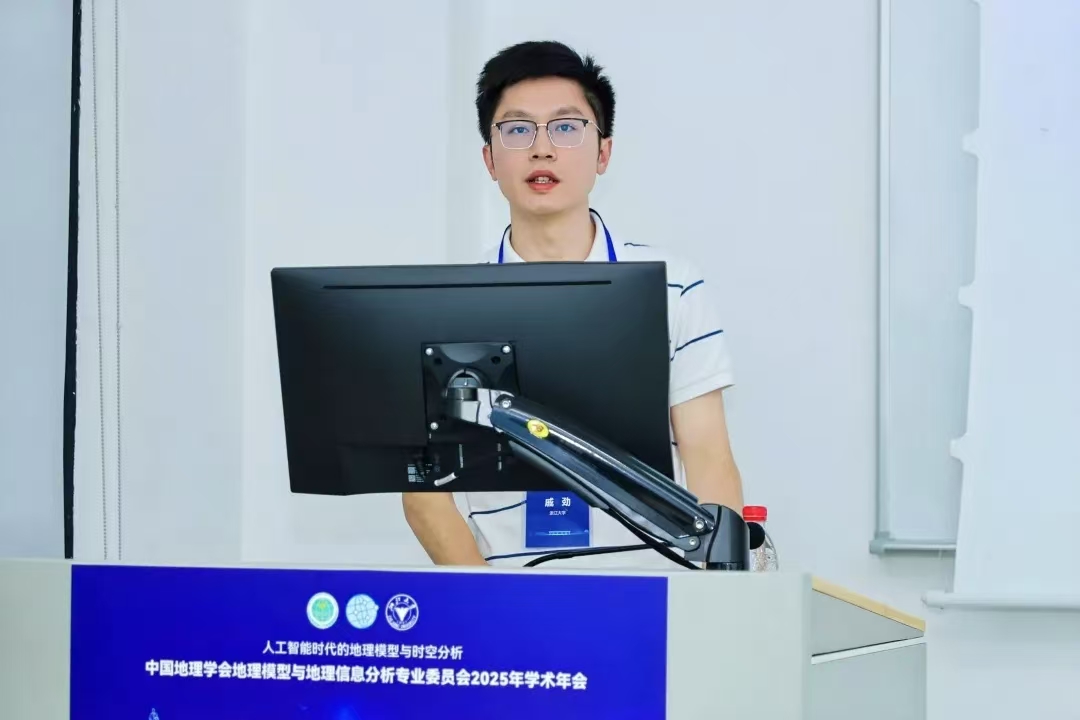
Qi Jin, a full-time researcher at the School of Earth Sciences of Zhejiang University, gave a special presentation on the "Deep Time Earth Crowd Intelligence Collaborative Innovation Platform".
"ACE-Step: Basic Model for Music Generation" can synthesize up to 4 minutes of music in just 20 seconds, which is 15 times faster than the baseline method based on LLM
Cornell University and Regeneron Pharmaceuticals in the United States proposed a graph-encoded mixed survival model (GEMS) to identify sub-phenotypes with consistent characteristics and survival outcomes.
HyperAI has compiled some of the most popular medical data sets for you, covering medical question-and-answer, medical reasoning, medical imaging and other data.
Researchers from Columbia University and Stanford University proposed a generative artificial intelligence structure analysis method PXRDnet based on a diffusion model.
"In-Context Edit: Command-driven Image Generation and Editing" has been launched in the "Tutorial" section of HyperAI's official website. Only very few text commands are needed to achieve accurate image modification. Come and experience it!
David Baker's team at the University of Washington recently used advanced generative models to conduct synthetic OLG design research and verify its feasibility from an engineering perspective.
Researchers from the Russian Academy of Sciences have developed a machine learning-based search engine, MEDUSA Search, that can analyze terabyte-scale high-resolution mass spectrometry data to help discover unknown chemical reactions!
The team led by Zhou Hao from Tsinghua University AIR proposed ProfileBFN (Profile Bayesian Flow Network), which achieves efficient protein family design
A team from Waseda University in Japan used machine learning technology to perform molecular design and experimental optimization of light-driven crystals to successfully maximize the blocking force