Command Palette
Search for a command to run...
News
Latest AI news and updates from around the world
Google Research has upgraded its global flood forecasting system to v2, overcoming several data challenges and improving forecast stability.

The tutorial section of HyperAI's official website (hyper.ai) has launched "Supertonic-3: A Lightweight Local Multilingual Speech Synthesis System". The environment has been deployed and you can experience the high-quality TTS model for free using Free CPU.

genESOM uses generative AI to reconstruct real signals in biomedical research, maintaining the bottom line of scientific reproducibility while reducing the use of 30%–50% experimental animals.

The study proposes a proxy model based on a long short-term memory network, which can predict the output light field of SFG quickly and accurately, while significantly reducing computational costs.

StreakMind can automatically identify satellite and asteroid trajectories in astronomical images, significantly improving the efficiency of sky survey data processing and near-Earth object monitoring.

To facilitate rapid experience of this lightweight model for global developers, HyperAI has launched "MiniCPM-V-4.6: Efficient Multimodal Visual Language Model for Edge Applications". Environment configuration is complete, and online deployment of the model can be easily achieved.

The study systematically reveals the cis and trans genetic regulatory patterns of circulating proteins, and provides new directions for disease mechanism research, screening of potential drug targets, and "drug repurposing".

A research team from the University of Illinois at Urbana-Champaign (UIUC) has proposed a heterogeneous agent framework called Eywa for connecting language agents with domain-specific foundational models.

The tutorial section on the HyperAI official website (hyper.ai) has launched "OmniVoice: High-quality TTS supporting 600+ languages", which can be started with one click and deployed with low difficulty.

The tutorial section on the HyperAI website (hyper.ai) has launched "One-click deployment of Mistral-Medium-3.5-128B" to complete the environment configuration and further lower the barrier to entry for using the model.

The University of Hong Kong's open-source nanobot, with less than 4,000 lines of code, integrates multiple models, long memory, and dynamic tools, making it a minimalist framework for building digital employees.

A research team at the University of Warwick in the UK has developed a stacked ensemble learning framework to predict key asteroseismic parameters of Delta Scuti stars directly from TESS light curves.

The tutorial section on the HyperAI official website (hyper.ai) has launched "One-click deployment of Qwen3.6-27B" to help you quickly verify popular open-source models after completing the environment configuration!

The Technion – Israel Institute of Technology has proposed Task Tokens, which significantly improve the efficiency and adaptability of behavior-based models in specific robotic tasks, while maintaining zero-shot generalization capability.

This article compiles 10 medical-related datasets, which are available online and cover different disease scenarios and research directions.

The tutorial section of HyperAI's official website (hyper.ai) now features "Qwen3.6-35B-A3B Intelligent Agent Programming Tool," offering a low-barrier, quick way to experience popular open-source models!

The dnaHNet model proposed by the University of Toronto and other institutions provides a new approach to balancing computational feasibility and biological fidelity.

This article summarizes the high-quality open-source models mentioned in the Artificial Analysis report. Come and experience firsthand the high performance that approximates closed-source models!

The KAIST team in South Korea used deep learning to design small molecule binding proteins from scratch, with NTF2 as the core, and developed an AI biosensor that can recognize cortisol based on this.

To help users quickly get started with DeepTutor and apply it to real-world learning scenarios, HyperAI's official website (hyper.ai) has launched a "DeepTutor Personal Learning Assistant" in its tutorial section. The environment setup is already complete, lowering the barrier to entry.

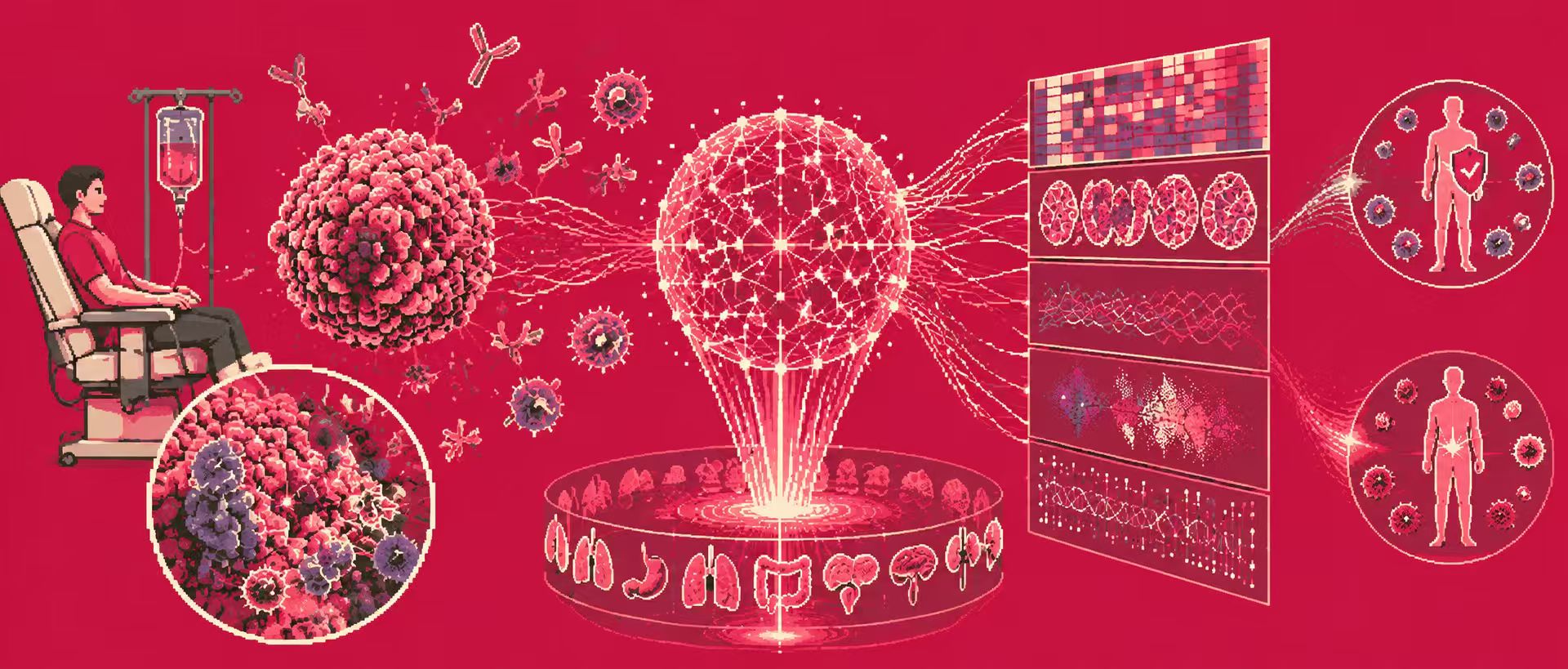
The Pasteur Institute has developed three models: ALBERT_DF, ESM_DF, and GeneCLR_DF, to enable large-scale prediction of antiphage function.

HyperAl has compiled a series of highly valuable and widely applicable tutorials and datasets from version 4.06 to 4.10, covering multiple fields such as speech generation, text-to-image processing, and large-scale models.

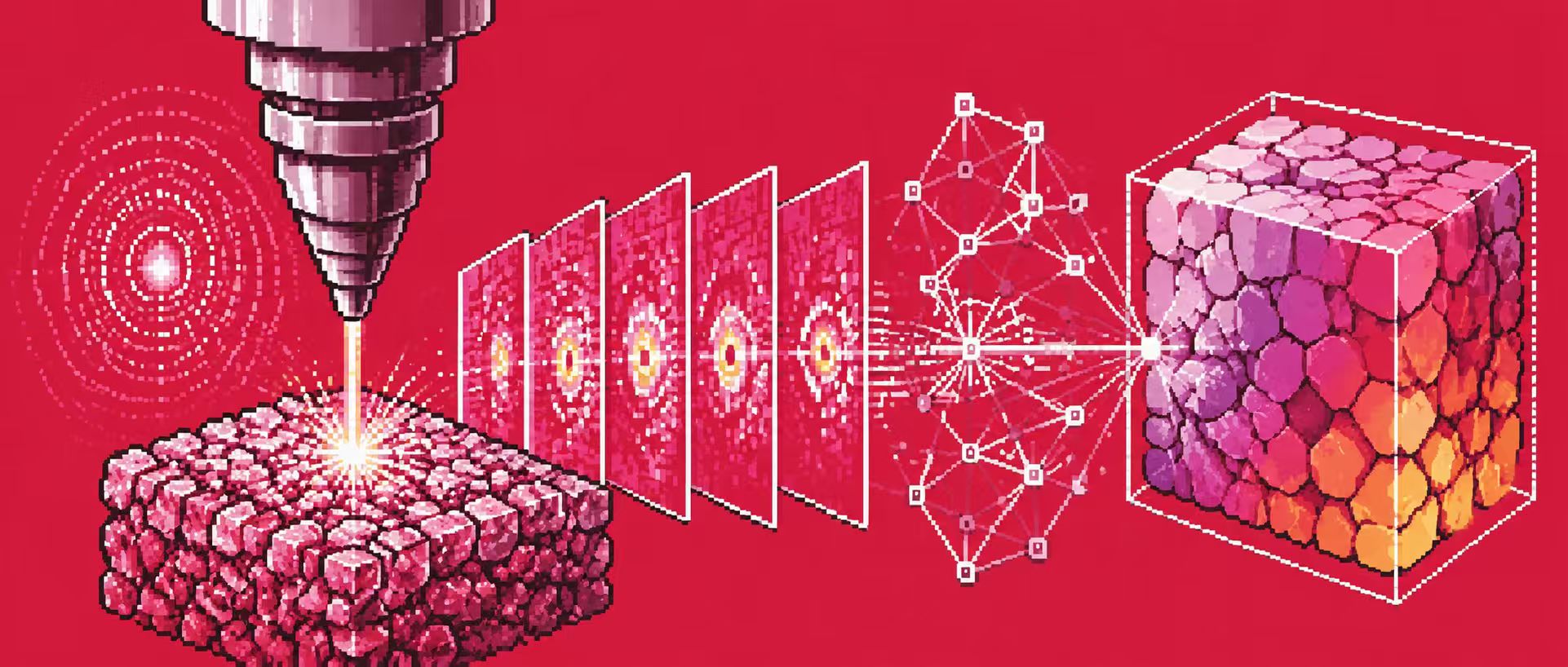
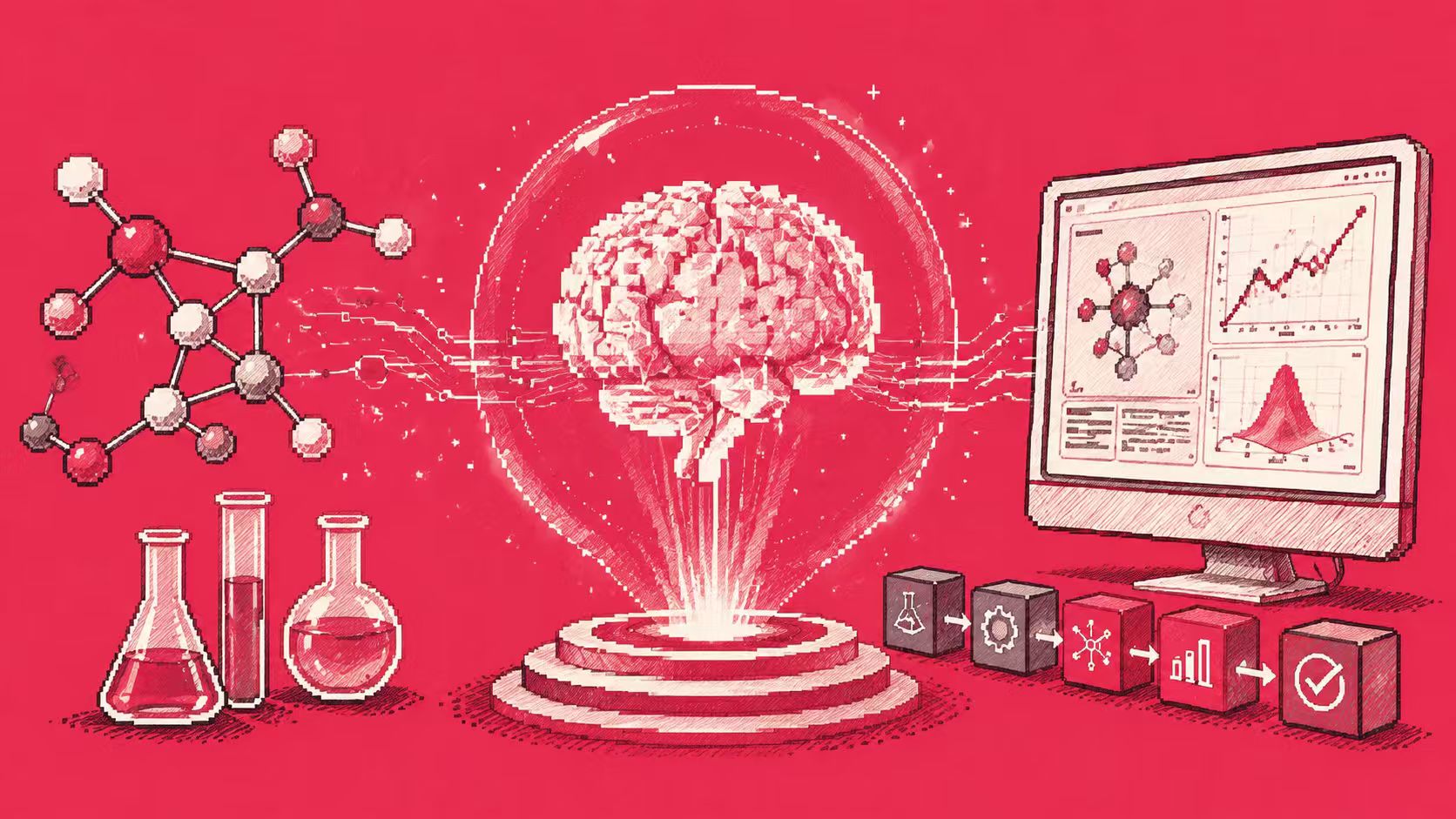
A research team from Cornell University proposed EMSeek, a modular multi-agent platform with source tracing capabilities. Evaluation results on 20 material systems and five task categories show that it achieves approximately twice the speed and higher accuracy of Segment Anything in segmentation tasks. Furthermore, with calibration using only about 2% labeled data, it meets or exceeds the performance of strong single-expert models on three out-of-distribution property prediction benchmarks. A complete query takes only 2 to 5 minutes per image, approximately 50 times faster than an expert workflow.

Google Research has upgraded its global flood forecasting system to v2, overcoming several data challenges and improving forecast stability.

The tutorial section of HyperAI's official website (hyper.ai) has launched "Supertonic-3: A Lightweight Local Multilingual Speech Synthesis System". The environment has been deployed and you can experience the high-quality TTS model for free using Free CPU.

genESOM uses generative AI to reconstruct real signals in biomedical research, maintaining the bottom line of scientific reproducibility while reducing the use of 30%–50% experimental animals.

The study proposes a proxy model based on a long short-term memory network, which can predict the output light field of SFG quickly and accurately, while significantly reducing computational costs.

StreakMind can automatically identify satellite and asteroid trajectories in astronomical images, significantly improving the efficiency of sky survey data processing and near-Earth object monitoring.

To facilitate rapid experience of this lightweight model for global developers, HyperAI has launched "MiniCPM-V-4.6: Efficient Multimodal Visual Language Model for Edge Applications". Environment configuration is complete, and online deployment of the model can be easily achieved.

The study systematically reveals the cis and trans genetic regulatory patterns of circulating proteins, and provides new directions for disease mechanism research, screening of potential drug targets, and "drug repurposing".

A research team from the University of Illinois at Urbana-Champaign (UIUC) has proposed a heterogeneous agent framework called Eywa for connecting language agents with domain-specific foundational models.

The tutorial section on the HyperAI official website (hyper.ai) has launched "OmniVoice: High-quality TTS supporting 600+ languages", which can be started with one click and deployed with low difficulty.

The tutorial section on the HyperAI website (hyper.ai) has launched "One-click deployment of Mistral-Medium-3.5-128B" to complete the environment configuration and further lower the barrier to entry for using the model.

The University of Hong Kong's open-source nanobot, with less than 4,000 lines of code, integrates multiple models, long memory, and dynamic tools, making it a minimalist framework for building digital employees.

A research team at the University of Warwick in the UK has developed a stacked ensemble learning framework to predict key asteroseismic parameters of Delta Scuti stars directly from TESS light curves.

The tutorial section on the HyperAI official website (hyper.ai) has launched "One-click deployment of Qwen3.6-27B" to help you quickly verify popular open-source models after completing the environment configuration!

The Technion – Israel Institute of Technology has proposed Task Tokens, which significantly improve the efficiency and adaptability of behavior-based models in specific robotic tasks, while maintaining zero-shot generalization capability.

This article compiles 10 medical-related datasets, which are available online and cover different disease scenarios and research directions.

The tutorial section of HyperAI's official website (hyper.ai) now features "Qwen3.6-35B-A3B Intelligent Agent Programming Tool," offering a low-barrier, quick way to experience popular open-source models!

The dnaHNet model proposed by the University of Toronto and other institutions provides a new approach to balancing computational feasibility and biological fidelity.

This article summarizes the high-quality open-source models mentioned in the Artificial Analysis report. Come and experience firsthand the high performance that approximates closed-source models!

The KAIST team in South Korea used deep learning to design small molecule binding proteins from scratch, with NTF2 as the core, and developed an AI biosensor that can recognize cortisol based on this.

To help users quickly get started with DeepTutor and apply it to real-world learning scenarios, HyperAI's official website (hyper.ai) has launched a "DeepTutor Personal Learning Assistant" in its tutorial section. The environment setup is already complete, lowering the barrier to entry.

The Pasteur Institute has developed three models: ALBERT_DF, ESM_DF, and GeneCLR_DF, to enable large-scale prediction of antiphage function.

HyperAl has compiled a series of highly valuable and widely applicable tutorials and datasets from version 4.06 to 4.10, covering multiple fields such as speech generation, text-to-image processing, and large-scale models.

A research team from Cornell University proposed EMSeek, a modular multi-agent platform with source tracing capabilities. Evaluation results on 20 material systems and five task categories show that it achieves approximately twice the speed and higher accuracy of Segment Anything in segmentation tasks. Furthermore, with calibration using only about 2% labeled data, it meets or exceeds the performance of strong single-expert models on three out-of-distribution property prediction benchmarks. A complete query takes only 2 to 5 minutes per image, approximately 50 times faster than an expert workflow.