Command Palette
Search for a command to run...
Zero-shot Prediction of the Future With 200 Million Parameters, Mistral Timestral-209M Outputs 21 Probability Levels in a Single Forward Pass; OpenAI Math Uses Lean to Create Verifiable Mathematical Proof Tasks for agents.

From weather changes and traffic flow to product sales and energy consumption, a large amount of information in the real world exists in the form of time series. They record how things change over time and also hide clues to future trends. Mistral's Timestral-209M is exactly a foundation model specifically designed for time series forecasting. It can handle univariate and multivariate time series, supports historical context of up to 32,768 time steps, and predicts up to 1,024 future time steps in a single forward pass. More importantly, it has zero-shot forecasting capability: without retraining for each specific forecasting task, it can directly use the existing model to make inferences on new time series.
Timestral-209M adopts a Patch-based Transformer design, modeling the patterns of change along the time dimension and the correlations between different variables through Time Attention and Variate Attention, respectively. In terms of forecasting results, Timestral-209M does not just give a single curve representing the future trend. It can simultaneously output 21 different quantiles and provide probabilistic forecasting results, allowing users to see the possible distribution range of predicted values rather than just a seemingly certain number. This is especially meaningful for scenarios that need to consider uncertainty, such as demand forecasting and resource planning.
The HyperAI Tutorials section has launched "Timestral-209M: A Foundation Model for Zero-Shot Time Series Forecasting". Come and try it~
Use online: https://go.hyper.ai/lTEZr
November 9–November 13, hyper.ai official website update overview:
-
Featured public datasets: 5
-
Featured tutorials: 17
-
Popular encyclopedia entries: 5
-
Top conferences with November deadlines: 3
Visit the official website: hyper.ai
Featured Public Datasets
1. MiMo-V2.6 Reinforcement Learning Environment Dataset
MiMo-V2.6 is an environment dataset for LLM agent reinforcement training released by Xiaomi MiMo, covering five domains: Code, Cyber, General, Visual, and Music, corresponding to task families such as software engineering, vulnerability reproduction, knowledge work, Web development, and symbolic music creation. It provides training environments in the form of Docker images and is used with verl training code.
Run online: https://go.hyper.ai/5SPSU
2. OpenAI Math Mathematical Theorem Proving Dataset
The OpenAI Math Mathematical Theorem Proving Dataset was released by FineEnvs in 2026 and organizes OpenAI mathematical results into a mathematical theorem proving dataset for the Lean formal theorem proving environment. It contains 369 Harbor task environments verified end-to-end, covering 214 result families and 17 mathematical fields, providing agents with rigorously verifiable formal theorem proving tasks.
Run online: https://go.hyper.ai/nPZkf
3. Typed Decisions Typed Probabilistic Decision Benchmark Dataset
This dataset is a typed probabilistic decision benchmark dataset released by LocalLLaMA, designed to evaluate models' ability to simultaneously answer multiple typed questions based on unstructured state information and output probability distributions. The dataset is built around four scenarios: agent operation monitoring, customer service, billing processing, and security incident response. It contains 1,600 synthetic cases, uses three decision types—noul, choice, and score—and provides gold-standard probability distributions.
Run online: https://go.hyper.ai/fjJ9N
4. Gemma-4-Tfd-Agentic-Trajectories Agent Trajectory Dataset
Gemma-4-Tfd-Agentic-Trajectories is an execution trajectory and benchmark evaluation dataset for agent software engineering tasks. Built around the Google Gemma 4 model and adapted from SWE-bench Lite tasks, it contains 50 software engineering problems and provides multi-turn agent execution trajectories, tool call records, automated test verification results, and benchmark evaluation data for different strategies such as standard ReAct and test-feedback-driven (TFD-Agent).
Run online: https://go.hyper.ai/VjxsI
5. Fable-5.1-Max-Reasoning-Filtered-10000x Coding Reasoning Trajectory Dataset
This dataset is a multi-turn high-quality trajectory dataset for agent coding and reasoning. It collects code reasoning processes generated by the Fable 5.1 model at maximum reasoning intensity, containing 10,000 multi-turn trajectories and approximately 500 million tokens in total. It covers scenarios such as algorithm design, code implementation, complex debugging, and multi-step logical reasoning, and can be used for model distillation and capability improvement.
Run online: https://go.hyper.ai/BCU6F
Featured Public Tutorials
1. Basic Statistics for Beginners
This tutorial is aimed at readers with no prior knowledge and explains the basic statistics and mathematics knowledge required for machine learning. It is at the introductory level.
Run online: https://go.hyper.ai/YOK0z
2. Introductory Tutorial on House Price Prediction Methods
This tutorial is based on the classic Kaggle competition House Prices – Advanced Regression Techniques and demonstrates house price prediction using real estate data. It covers data exploration and visualization, missing value handling and categorical encoding, modeling methods such as linear regression and ridge regression, and builds an interactive WebUI for prediction, with no GPU required.
Run online: https://go.hyper.ai/awBoo
1. Basic Implementation of CNN-Based Image Colorization
This tutorial is based on an introductory image colorization tutorial released by Victor Basu in 2020. In the LAB color space, it decomposes the colorization problem into a regression task of predicting the ab channels. It trains a CNN autoencoder with an encoder-decoder structure and skip connections from scratch, making it suitable for understanding the principles of image colorization and autoencoder architectures.
Run online: https://go.hyper.ai/l3q6p
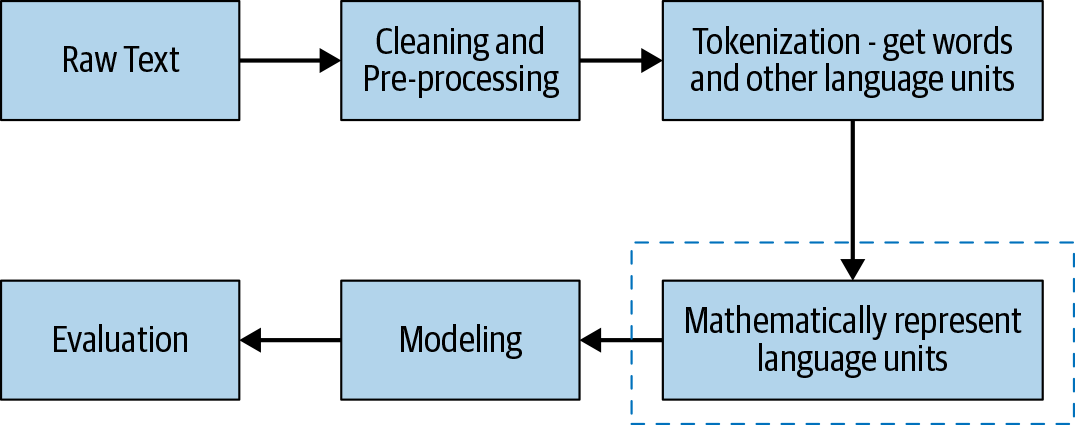
2. Text Representation: From Bag-of-Words Models to Word Embeddings
This tutorial is based on a Kaggle Notebook by Ankit Gupta. It systematically explains text representation methods such as One-Hot, bag-of-words, N-gram, TF-IDF, Word2Vec, GloVe, and FastText, and uses t-SNE to visualize the semantic space of word embeddings.
Run online: https://go.hyper.ai/F0cH7
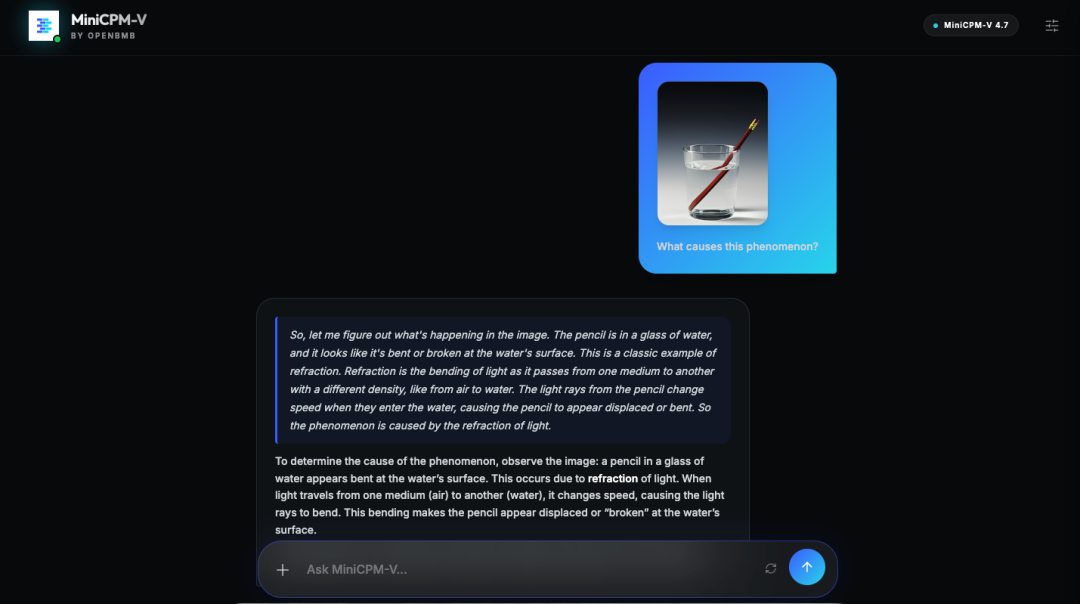
3. MiniCPM-V 4.7: Multimodal VLM
This tutorial demonstrates MiniCPM-V 4.7 (35B-A3B MoE), a multimodal vision-language model released by OpenBMB in October 2026. It supports single-image, multi-image, and video understanding, OCR, and document parsing, and covers GGUF quantized model loading, real-image inference, and local WebUI interaction.
Run online: https://go.hyper.ai/J3CeK
4. Introduction to Interactive Dimensionality Reduction: PCA, LDA, and t-SNE
This tutorial is based on a Kaggle Notebook by Arthur Tok. It systematically introduces three dimensionality reduction methods—PCA, LDA, and t-SNE—implements PCA from scratch on MNIST (784-dimensional features), and uses scikit-learn to compare the clustering performance of the three methods.
Run online: https://go.hyper.ai/gW6Kn
5. PyTorch Getting Started - Faster R-CNN Training
This tutorial is based on a Notebook by Kaggle user pestipeti. It uses PyTorch and torchvision to train Faster R-CNN to detect wheat ears: a ResNet50-FPN backbone loads COCO pretrained weights for transfer learning and is replaced with a two-class prediction head for “background + wheat ear,” making it suitable for an introduction to object detection and agricultural remote sensing.
Run online: https://go.hyper.ai/AnnGI
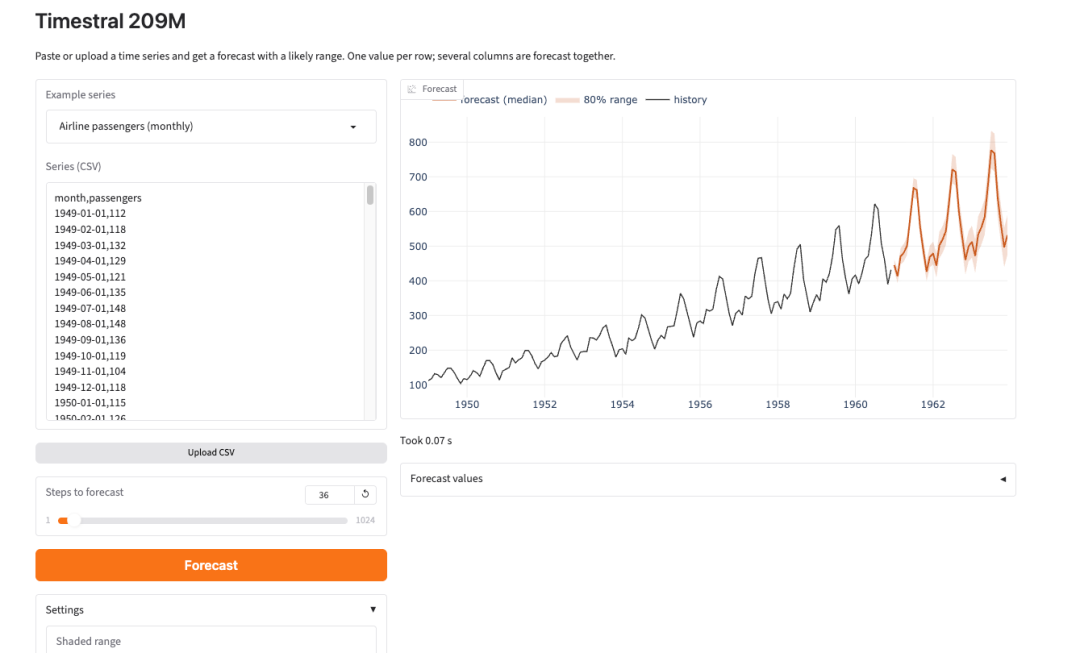
6. Timestral-209M: A Zero-Shot Time-Series Forecasting Foundation Model
This tutorial is based on Timestral-209M, a time-series forecasting foundation model released by Mistral AI in October 2026. It demonstrates zero-shot time-series forecasting and visualizes confidence intervals; the model uses a patch-based Transformer architecture (about 209 million parameters) and outputs probabilistic forecasts at 21 quantiles.
Run online: https://go.hyper.ai/lTEZr
7. Training BERT with PyTorch to Extract Key Phrases for Tweet Sentiment
This tutorial is based on PyTorch and the classic BERT Base Uncased model. It demonstrates how to extract key phrases from tweets that support their sentiment labels, and is a hands-on introduction to extractive question answering and sentiment analysis in NLP.
Run online: https://go.hyper.ai/F5oxY
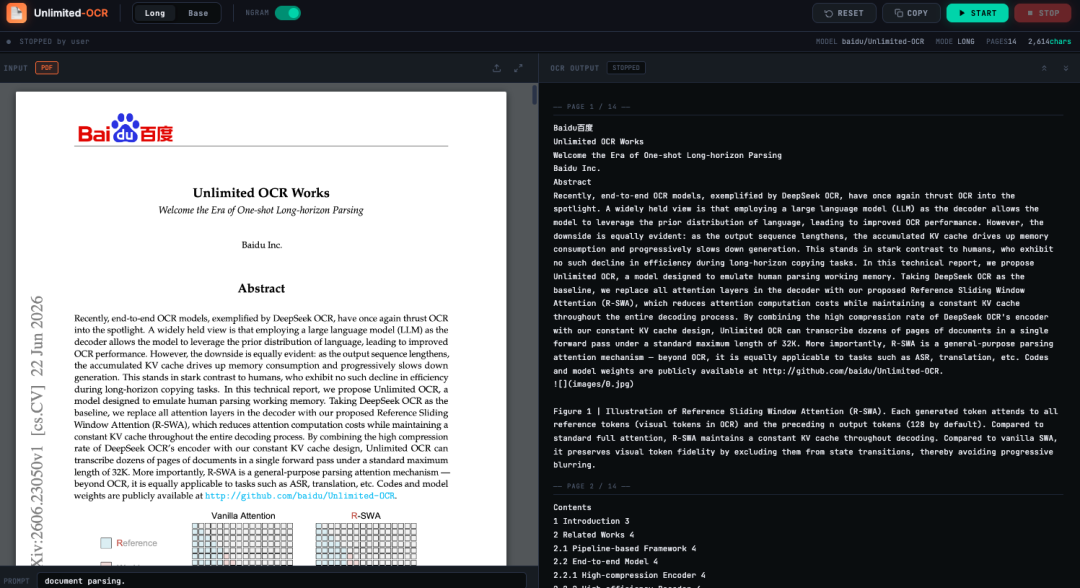
8. Unlimited-OCR: One-Click Deployment for Long-Document OCR and Layout Parsing
This tutorial provides a one-click deployment solution for long-document OCR and layout parsing. It maintains stable parsing efficiency even in longer contexts, making it suitable for text recognition and structured layout analysis of long documents such as papers, contracts, and reports.
Run online: https://go.hyper.ai/mYUwG
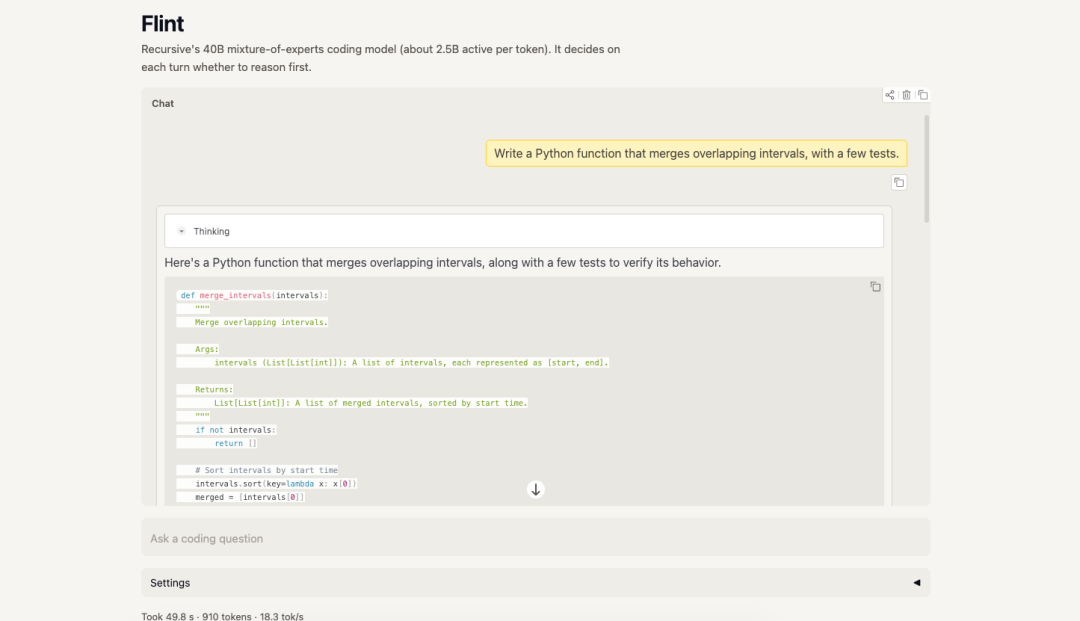
9. Flint: A Mixture-of-Experts Large Language Model for Coding Agents
This tutorial demonstrates a mixture-of-experts large language model for Coding Agents released by Recursive in October 2026. It has 39.8B total parameters and activates about 2.5B per token. It targets codebase investigation, bug fixing, feature implementation, and test writing, supports multi-turn tool calling, and scored 54.9% on the official Terminal-Bench 2.1 evaluation.
Online run: https://go.hyper.ai/oprHJ
1. Flower Recognition CNN: Flower Recognition Based on Convolutional Neural Networks
This tutorial builds a convolutional neural network from scratch based on Keras to complete a 5-class flower image classification task, covering data preprocessing, CNN architecture design, training, and result visualization. It is a classic introductory project for deep learning image classification.
Online run: https://go.hyper.ai/C5BIT
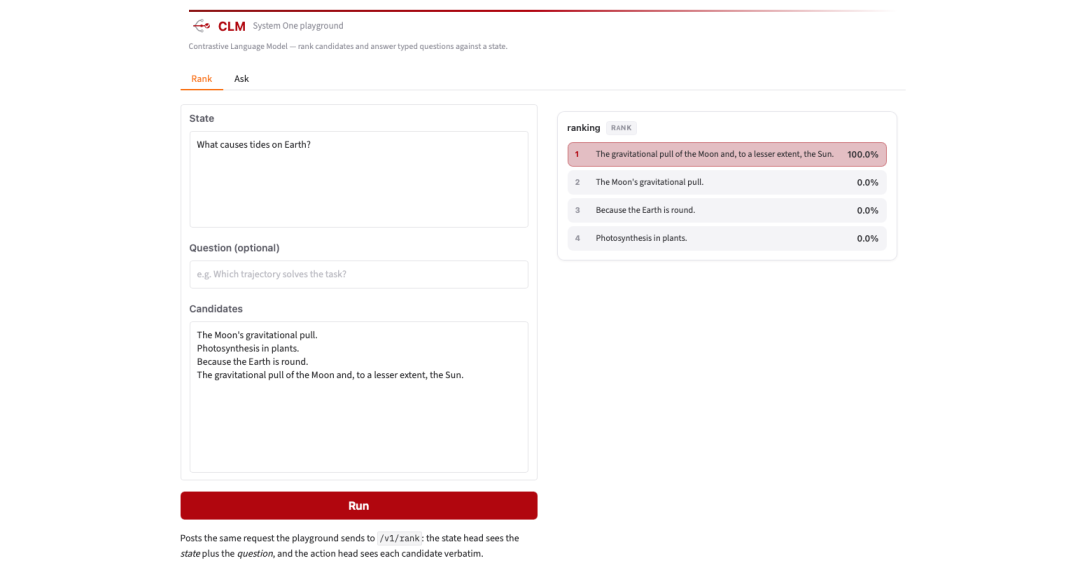
2. CLM-v0.1-8B: A System One Ranking and Verification Model for Decision-Making
This tutorial demonstrates CLM-v0.1-8B, a contrastive language model released by the Contrastive-LM team in September 2026, aimed at fast System One decision-making: instead of generating text token by token, it scores and ranks candidate answers. It consists of a frozen Qwen3-8B encoder plus two projection heads and is used for reranking, verifier, and Agent tool routing.
Online run: https://go.hyper.ai/EPQ2u
3. MiniCPM-V 4.7: Multimodal Vision-Language Large Model (35B-A3B MoE)
This tutorial demonstrates the multimodal vision-language model released by OpenBMB in October 2026. The 35B-A3B variant is the first MoE model in the series, supporting single-image, multi-image, and video understanding, OCR, and document parsing, and achieving lossless on-device inference through LES (Lookahead Expert Scheduling).
Online run: https://go.hyper.ai/OZ600
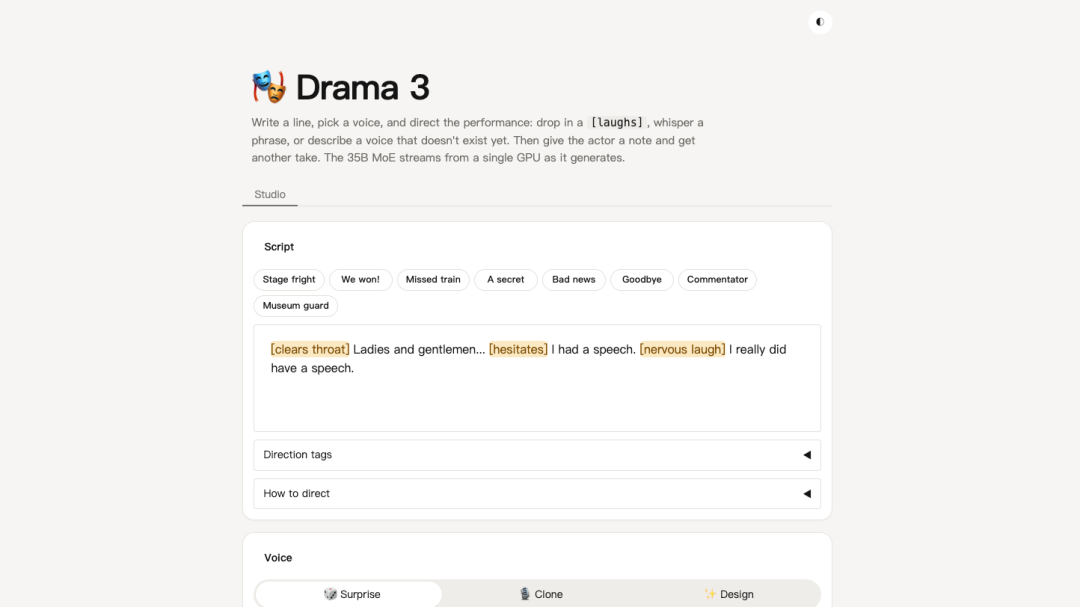
4. Fish Audio Drama 3: Multi-Speaker Speech Synthesis Model for Multi-Character Scenarios and Long Texts
This tutorial demonstrates the new-generation text-to-speech model released by Fish Audio in October 2026. It is a 35B-parameter MoE (3B activated per token), can carry up to 16 characters in a single text, supports multi-person dialogue generation, voice cloning, and natural language control, and is suitable for scenarios such as audiobooks and radio dramas.
Online run: https://go.hyper.ai/l3q6p
5. Granite Speech 5.0 TurboCTC: 470M-Parameter English Speech Recognition Model
This tutorial demonstrates the 470M-parameter English speech recognition model released by IBM in August 2026. It uses a pure encoder Conformer architecture and CTC non-autoregressive decoding, is small enough to be deployed on edge devices, and is suitable for high-speed speech transcription.
Online run: https://go.hyper.ai/vFoEV
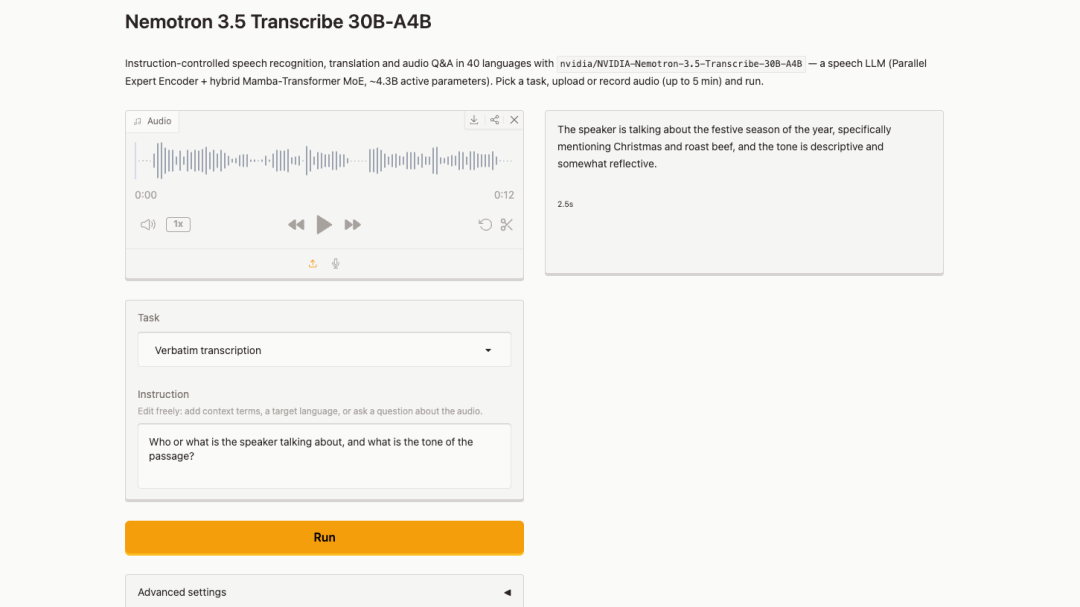
6. NVIDIA-Nemotron-3.5-Transcribe-30B-A4B: Instruction-Controlled Speech Recognition, Translation, and Audio Question Answering
This tutorial demonstrates the open-source speech and audio model released by NVIDIA in October 2026. It uses a hybrid MoE architecture of Mamba-2 and Transformer (34B total parameters, about 4.3B activated), and supports transcription, translation, and audio question answering for 40 languages and recordings up to 1 hour long.
Online run: https://go.hyper.ai/AR0C1
Selected Popular Encyclopedia Entries
-
World Action Model WAM
-
Robustness/Stability Robustness
-
Generative Pre-trained Transformer GPT
-
Video Generation Video Generation
-
Embedding Models Embedding Models
Here are hundreds of AI-related entries compiled so you can understand “Artificial Intelligence” here:
Top conferences with November deadlines
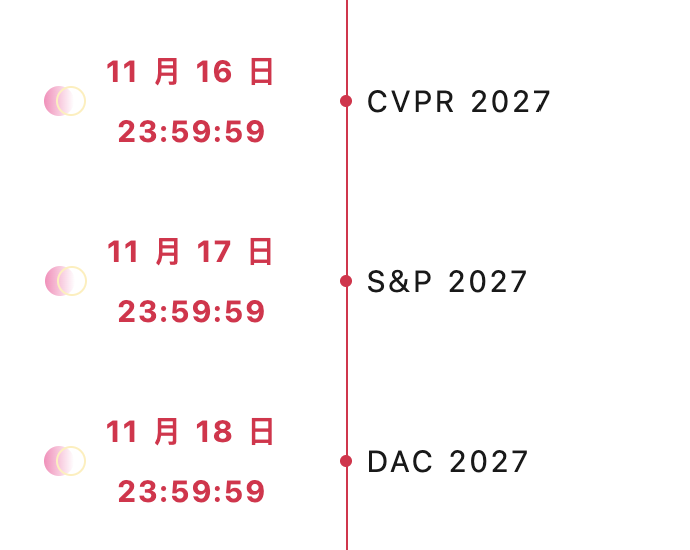
- Deadline is AoE time
One-stop tracking of top AI academic conferences: https://go.hyper.ai/event