Command Palette
Search for a command to run...
Industry First! NVIDIA and Nobel Laureate David Baker’s Team Launch RFD4-Proteina to Address the Sequence-Structure-Function Decoupling Challenge
In recent years, the empowerment by artificial intelligence technologies has brought about a revolutionary transformation in the field of protein engineering, greatly benefiting sectors such as biopharmaceuticals, vaccine development, gene therapy, and biomanufacturing. However, returning to the core of computational protein design, the primary challenge for the next phase is transitioning from solving "whether generation is possible" to achieving "better generation." Previous achievements have demonstrated that designing proteins with specific binding capabilities and catalytic activities is no longer difficult. Yet, for complex molecular machines requiring global conformational dynamics and coupled multi-constraint systems, stable realization remains elusive.
In simple terms, protein function essentially relies on specific chemical groups interacting with other molecules through precise spatial arrangements within specific three-dimensional shapes. Therefore, during the protein design phase, it is imperative to simultaneously consider the strong coupling relationships among molecular identity, structural conformation, and interaction geometry. Existing methods, such as RFdiffusion3, can achieve all-atom structure generation in diverse molecular environments but cannot design high-quality sequences for the generated structures. Proteina-Complexa can simultaneously generate protein sequences and structures and expands the search range through reward-guided search, but its representation is specifically tailored for protein design, with the conformation of interacting partner molecules fixed and immutable.
To address this challenge, the Institute for Protein Design at the University of Washington, NVIDIA, and other institutions have jointly proposed the industry's first unified sequence-structure joint generation model for multi-component biomolecular complexes based on latent space reasoning: RFD4-Proteina. This model advances protein design from a generation paradigm of "distribution sampling + post-hoc screening" to a constrained search paradigm with intrinsic/extrinsic reasoning. It breaks through the bottlenecks of traditional models, which suffer from narrow molecular type coverage, decoupled sequence-structure generation, and rigid partner assumptions. Its effectiveness has been demonstrated through large-scale wet-lab experiments.
The related results were published under the title "Biomolecular design through latent reasoning with RFD4-Proteina".
Research Highlights:
- Pioneering a unified latent space + dual reasoning paradigm, alleviating the decoupling problem of sequence-structure-function from the root.
- A single model covers the entire molecular design workflow, capable of replacing multiple specialized tools.
- Wet-lab validation has achieved several milestone breakthroughs, including the first de novo design of enzymatic activity for the synthesis of active pharmaceutical ingredients.
Paper Link:
https://rfd4-proteina.org/assets/paper/RFD4-Proteina.pdf
Multimodal Molecular Data Construction for Training and Evaluation Benchmarks
Training Set
The RFD4-Proteina training dataset is a mixture of multi-source public biological structure databases, synthetic datasets generated via physical simulations, and distilled datasets. The AtomWorks tool was used to complete all data processing and annotation tasks. The sampling proportions of each dataset during different training stages are shown in the figure below:
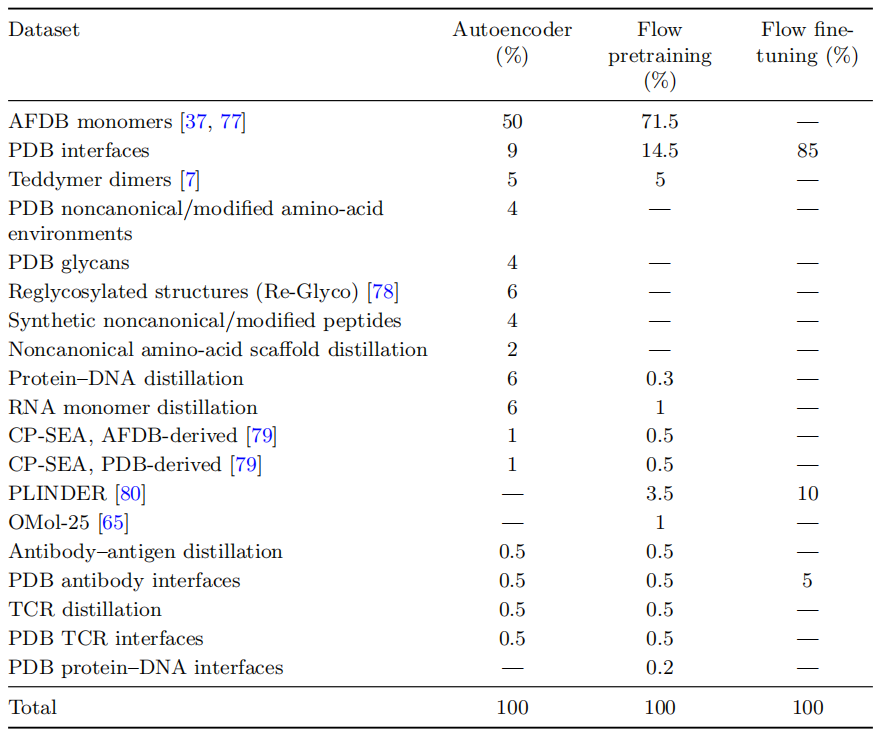
The datasets include not only standard proteins but also samples of small molecules, nucleic acids, sugars, and post-translational modifications (non-canonical amino acids, NCAAs), addressing the shortage of rare molecular types in real experimental structures.
During training, various constraints are sampled online to simulate real-world protein design tasks, enhancing the model's understanding of diverse functional constraints.
Test Set
- The side-chain packing test set is the PackBench benchmark dataset, containing real backbone scaffolds from 114 natural proteins in CASP14 and CASP15.
- The fixed-backbone sequence design test set includes both natural protein scaffolds and de novo designed scaffolds. The former are natural structures unseen during training, reserved for testing; the latter are artificial protein scaffolds generated by the independent model RFD3.
- The ligand stereochemistry test set is derived from the CCD database, containing 43 ligands unseen during training.
- The design optimization task test set consists of 102 binders generated by previous RFdiffusion models that failed AF3 structural screening.
- The Peptide-MHC complex binding test set includes three target peptides: MART-1 (tumor antigen), SARS-CoV-1 membrane protein peptide, and Phox2B peptide.
- The Intrinsically Disordered Regions (IDRs) task test set contains 8 IDR peptides, divided into two categories: 5 form secondary structures upon binding; 3 do not easily form stable secondary structures even when bound.
- The Tropomyosin receptor kinase (TrkA, TrkB, and TrkC) task test set contains 94 design-encoding genes.
Unified Latent Space + Dual Reasoning Creates the First Full-Chain Generation Paradigm
The core design philosophy of the RFD4-Proteina model is to establish a unified chemical-conformational latent space, generating structures via Flow Matching. Simultaneously, intrinsic/extrinsic dual latent reasoning is conducted within the latent space, achieving reasonable atomic reconstruction under the supervision and constraints of differentiable physical force fields.
Unified Chemical-Conformational Latent Space
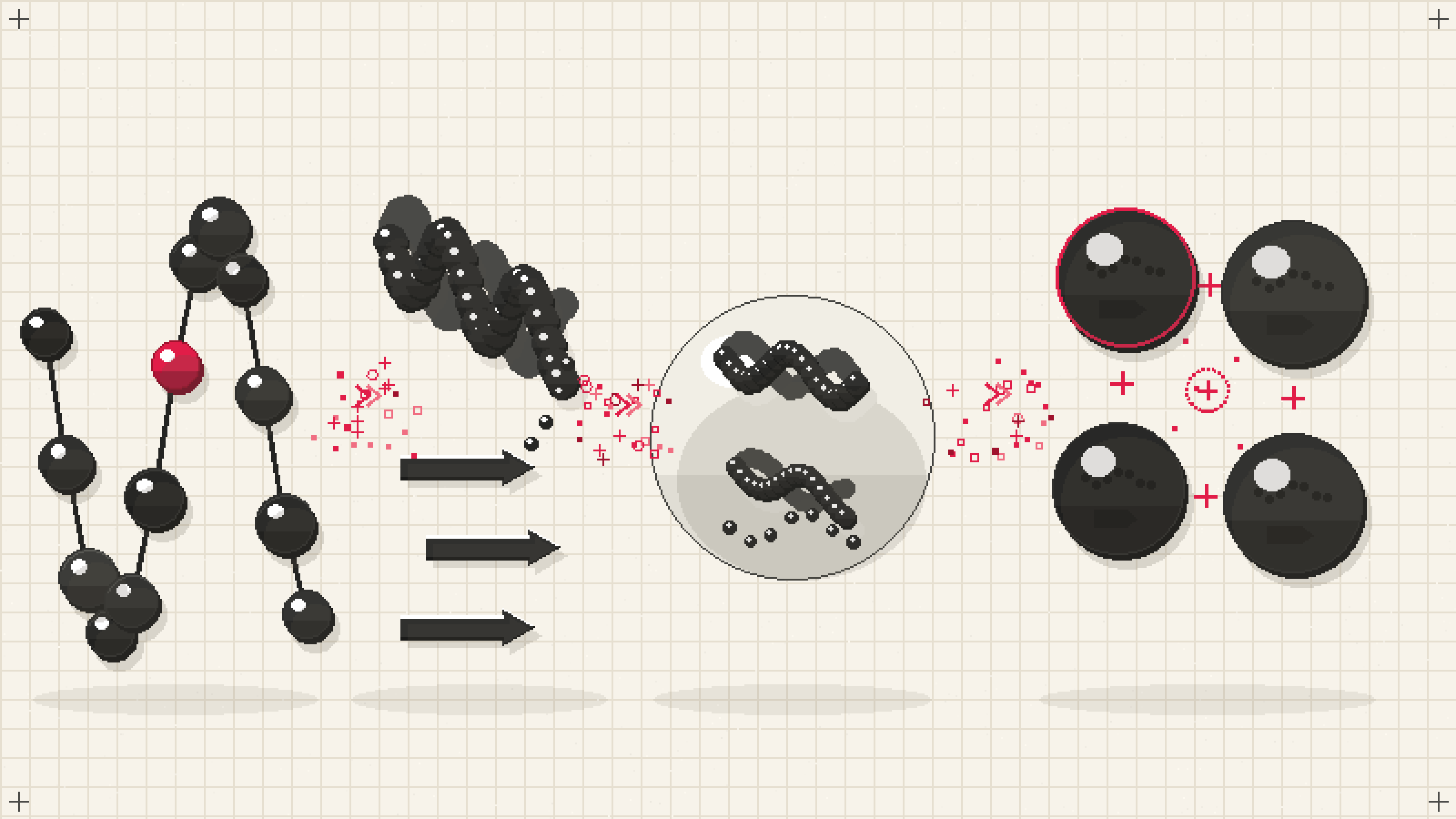
First, the research team trained an Autoencoder to encode natural/modified amino acids, sugars, and nucleotides into anchor atom coordinates (e.g., using the α-carbon for amino acids) and a 32-dimensional latent vector (molecular identity), as shown in the figure below. Not all information is compressed into the latent vector; some molecular components retain explicit atom types and chemical bond connectivity information to ensure chemical structure integrity.
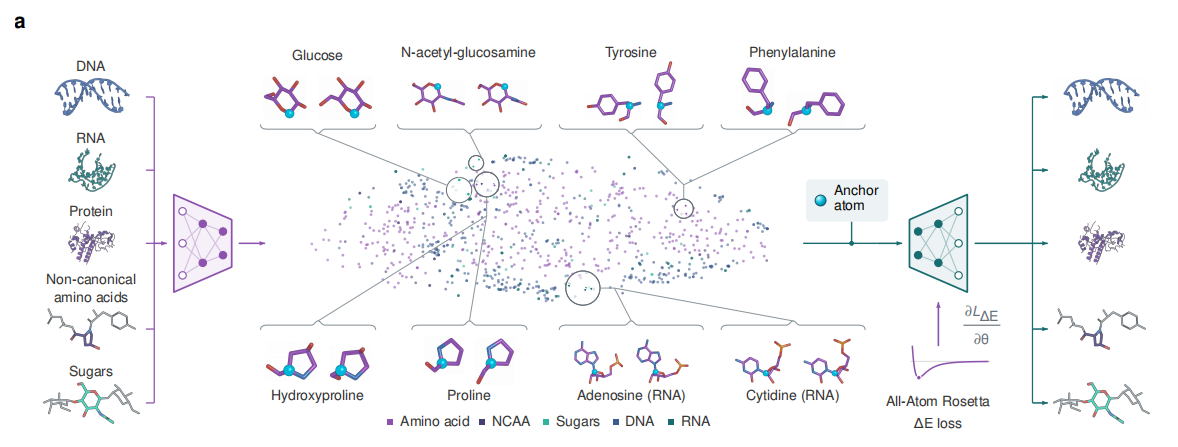
To obtain physically plausible reconstructed structures, a Rosetta energy loss function was specifically introduced during fine-tuning, leveraging TMol to compute gradients with respect to the decoded coordinates.
Flow-Matching Model
Subsequently, the research team trained a Flow-Matching model to simultaneously generate molecular coordinates and latent vectors, extending the partially latent variable framework proposed by La-Proteina / Proteina-Complexa.
Compared to previous sequence-structure co-design methods, the research upgraded the model across four key dimensions:
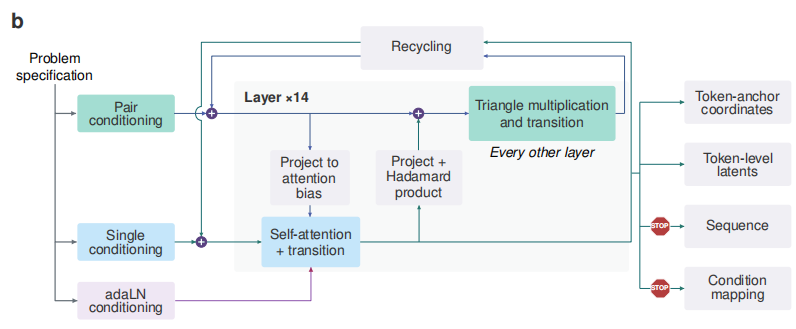
Expanding training data: Incorporating multimodal physics-based synthetic data and structure prediction distillation data, covering small molecules, nucleic acids, and protein interfaces; during training, conditional information was sampled with specifically tuned features to align with real-world design requirements, enhancing the model's understanding of practically valid constraints. For example, sampling tip atom position constraints in pockets resembling enzyme active sites, and generating realistic atomic motif scaffolds using large amounts of protein-only data; strengthening paired representations: Performing triangular multiplication updates every other Transformer block (as shown in the figure below) to enhance information interaction from single features to paired features, while also widening the hidden layer dimensions; as well as intrinsic / extrinsic reasoning.
Dual Reasoning
Intrinsic reasoning: Iterative refinement is performed at each diffusion time step, rather than only during the initial preprocessing stage. The number of iterative passes can vary with the time step, allowing for more fine-grained optimization during critical generation phases.
Extrinsic reasoning: Cross-trajectory search across multiple generation trajectories, biasing sampling results toward designs that satisfy user-defined metrics. Meanwhile, extrinsic reasoning can be coupled with features and time steps, meaning that specific metrics are optimized in a targeted manner after the corresponding molecular features have gradually formed and stabilized, rather than optimizing all objectives simultaneously throughout the entire process.
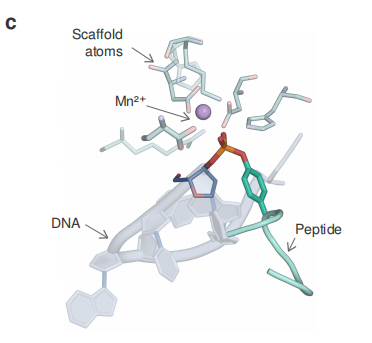
The research team analyzed the model's generation process using a test case: designing an enzyme to cleave the covalent bond between a peptide chain and DNA in a flexible substrate. As shown below:
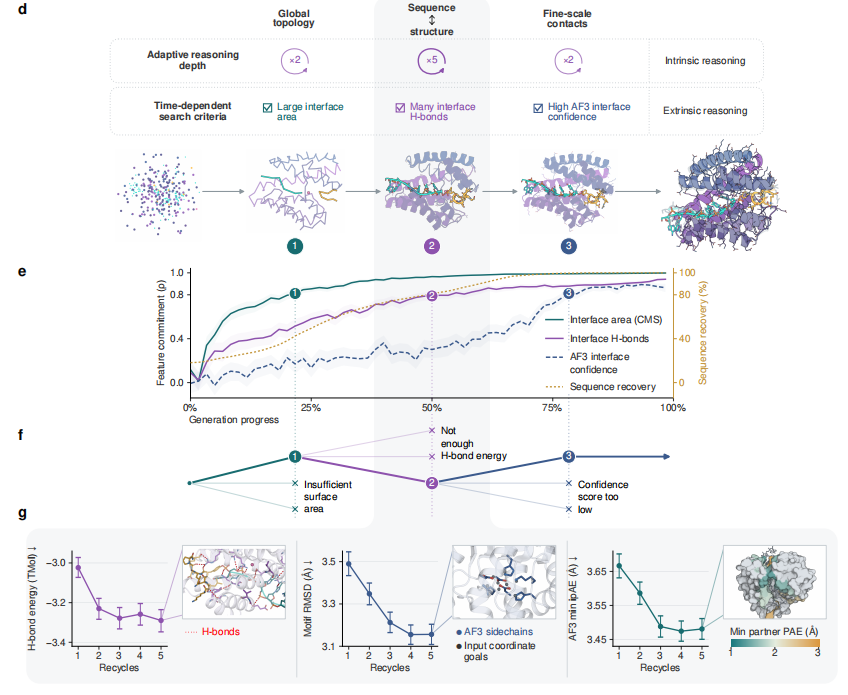
The study found that different design objectives are achieved progressively at different time points during the generation process. Specifically, among 500 trajectories, the time points at which independent inference results achieved a correlation of approximately 0.8 with the final results were:
- Interface area generation could be predicted at approximately 20% progress;
- Hydrogen bonding could be predicted at approximately 50% progress;
- AlphaFold3 (AF3) interface confidence could be predicted at approximately 80% progress.
During inference-time search, trajectories were sequentially filtered based on interface area, hydrogen bonding, and AF3 interface confidence, terminating trajectories that deviated from current criteria at each checkpoint. This temporal search efficiently traverses the latent space to find output results that satisfy all criteria (as shown in the figure below). Compared to simple sampling, in the above case, the number of unique qualifying designs obtained per GPU hour was three times higher.
Numerous innovations, particularly the introduction of dual intrinsic / extrinsic reasoning, enable RFD4-Proteina to overcome two major bottlenecks of previous traditional protein generation models—limited coverage of molecular chemical space and insufficient capability for efficient searching to satisfy coupled chemical-geometric constraints; upgrading protein design from simple diffusion sampling to a unified biomolecular design paradigm incorporating reasoning, physical constraints, and sequence-structure joint co-optimization.
Dual Validation of Model Capabilities via Simulation Benchmarks and Wet-Lab Experiments
Validation Across Different Molecular Scenarios
The research team first compared RFD4-Proteina with other generative, hallucination, and structure refinement methods in computer simulation tests. The test tasks included four major categories: protein binder design (24 targets), small molecule binder design (77 targets), enzyme backbone scaffolding (37 targets), and DNA binder design (3 targets). As shown in the figure below:
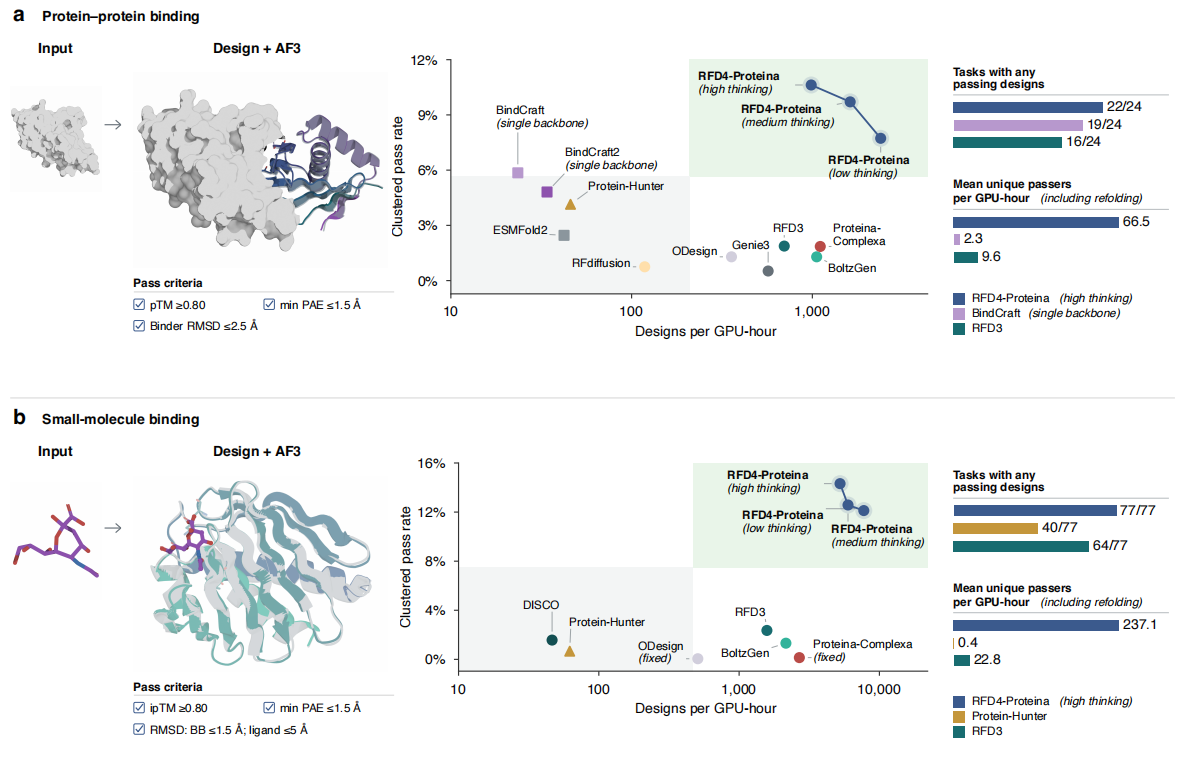
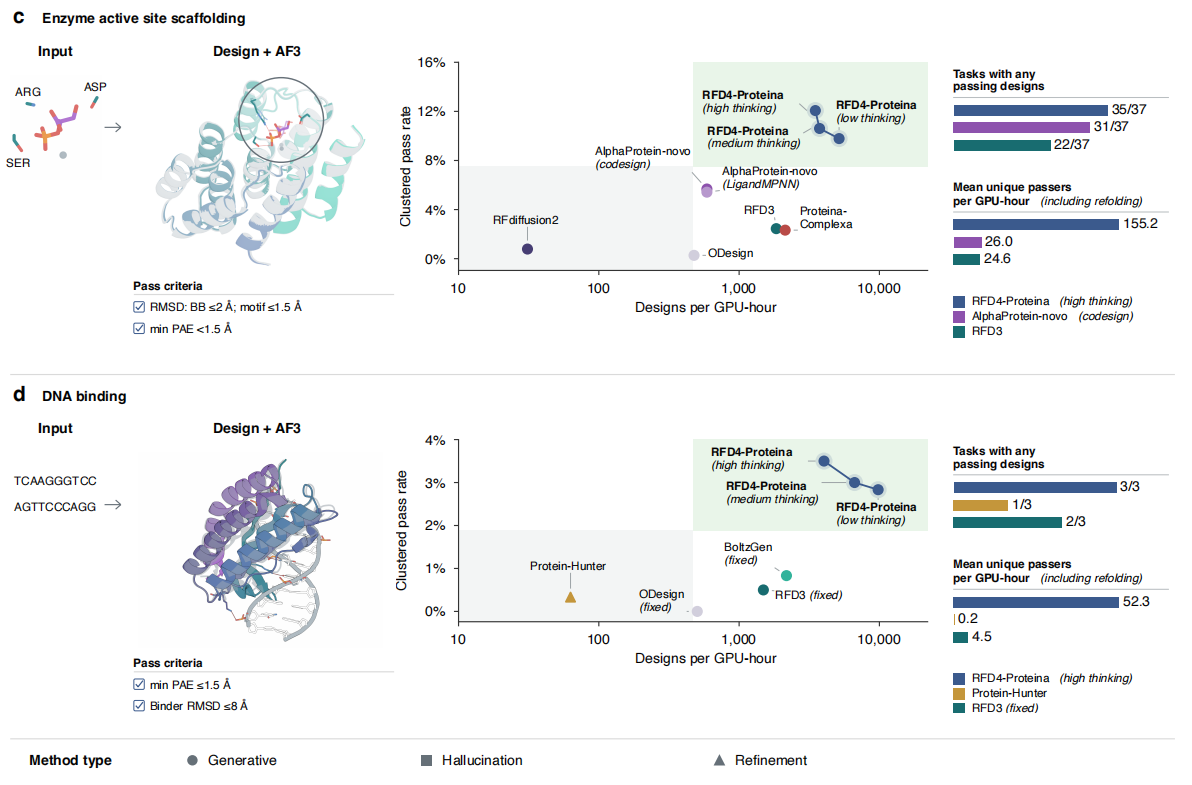
Evaluation was conducted by using AF3 to independently predict structures from the designed sequences, assessing their fit with the target structures and compliance with task-specific structural and confidence criteria. Two core metrics were used:
- Generation throughput: The number of designs produced per GPU hour;
- Clustered pass rate: The proportion of qualifying structures that pass the evaluation criteria and are structurally non-redundant per initial attempt.
Under the high-thinking condition, results show that for the protein binding task, RFD4-Proteina achieved a cluster pass rate of 10.6%, significantly outperforming the next-best model, BindCraft, which achieved only 5.9%, while increasing generation throughput by 42 times. For the enzyme scaffold building task, RFD4-Proteina achieved a cluster pass rate of 12.1%, compared to 5.7% for the AlphaProtein-novo co-design model, with a 5.9-fold increase in generation throughput. For the small molecule binding task, RFD4-Proteina achieved a cluster pass rate of 14.3%, compared to 2.4% for RFD3, with a 3.3-fold increase in generation throughput. Furthermore, all 77 targets passed the design criteria (compared to 64 for RFD3). For the DNA binding task, RFD4-Proteina achieved a cluster pass rate of 3.5%, compared to 0.8% for BoltzGen.
It is evident that across the four benchmarks, RFD4-Proteina solves more design challenges than all compared baseline models without requiring structure predictor feedback during generation, while also achieving higher cluster pass rates and faster generation speeds. When accounting for AF3 evaluation time, the number of valid clusters generated per GPU hour by RFD4-Proteina under the high-thinking setting is 5 times, 10.4 times, 6 times, and 5.5 times higher than the next-best baseline models for protein binding, small molecule binding, enzyme scaffold building, and DNA binding tasks, respectively.
When testing whether enhancing intrinsic reasoning capabilities improves design success rates, the cluster pass rate for the protein binding task progressively increased from 7.7% to 10.6% across Low, Medium, and high-thinking settings. For the small molecule binding task, it improved from 12.1% to 14.3%; for the enzyme scaffold building task, from 9.8% to 12.1%; and for the DNA binding task, from 2.8% to 3.5%. However, generation throughput decreased as computational cost increased; for instance, in the protein binding task, the number of designs per GPU hour dropped from 2388 (Low) to 986 (high-thinking).
When testing whether allowing molecular environment conformational changes during generation improves design success rates, under the high-thinking condition, RFD4-Proteina's cluster pass rate increased from 8.1% to 14.3% when ligand conformations were allowed to be co-generated with the designed protein. When target side chains and DNA conformations were allowed to change, the cluster pass rate for protein binding increased from 9.6% to 10.6%, and for DNA binding, from 2.0% to 3.5%.
When investigating whether external reasoning can improve design success rates by integrating data from other tools, it was found that search capabilities can avoid wasting computational resources on unpromising trajectories by leveraging external tools. This improved the efficiency of generating qualified unique designs by 22.6% for enzyme scaffold building tasks and 24.6% for small molecule binding tasks, among other high-difficulty tasks.
Finally, ablation studies confirmed that triangle updates, Hadamard product operations, the intrinsic reasoning mechanism, and exploratory training are all key components contributing to model performance improvements. Triangle multiplicative updates contributed the most to performance, while the other components provided varying degrees of gains, indicating that the overall improvement is not due to a single technique.
Validation in Specific Molecular Workflows
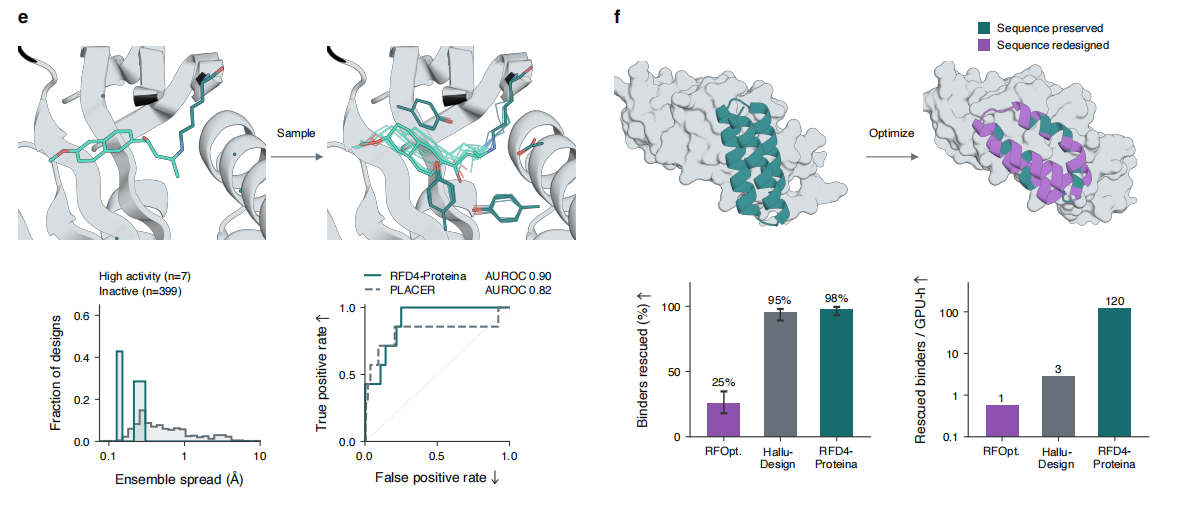
After validating the generation of new designs, researchers evaluated whether the same model supports other molecular workflows required for building, evaluating, and optimizing designs. Experiments tested six use cases, covering sequence assignment, conformational sampling, and optimization of existing structures, as shown in the figure below:
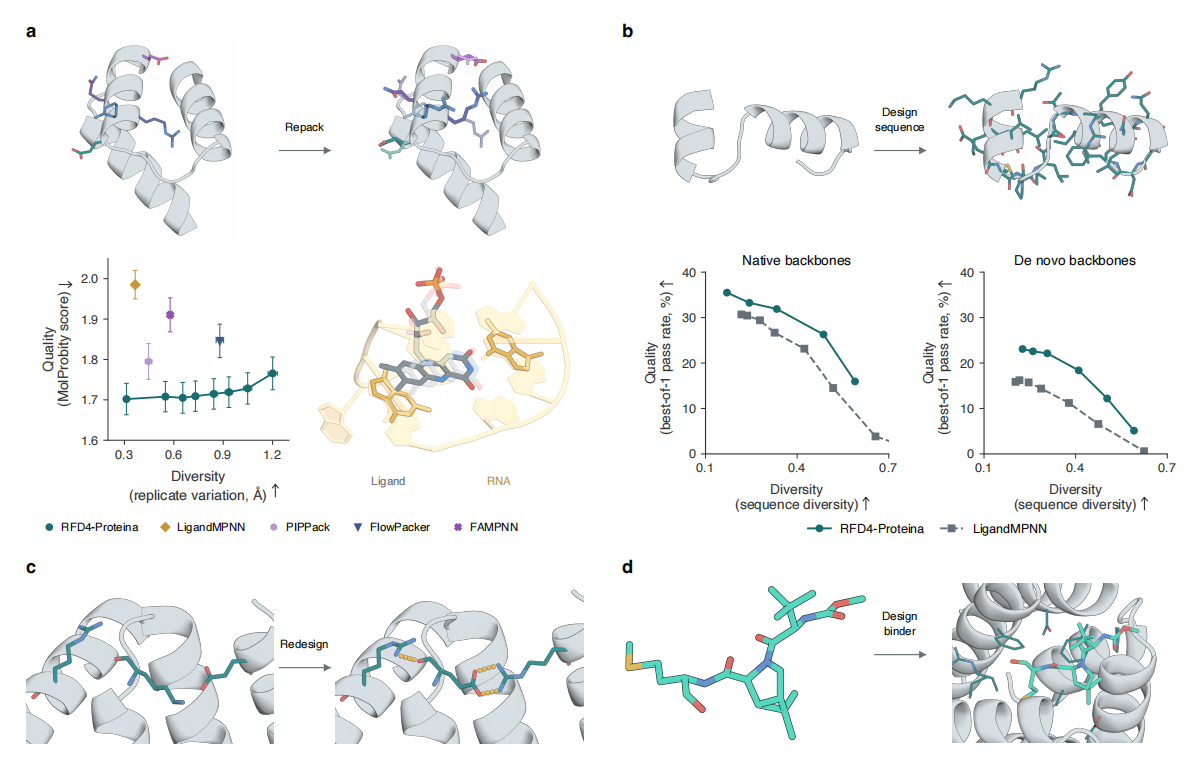
In the side-chain packing task, when given protein sequences and backbone coordinates, RFD4-Proteina achieved a lower average MolProbity score of 1.70 compared to 1.99 for LigandMPNN, under similar conformational diversity.
MolProbity: A protein structure quality control tool used to check bond lengths, bond angles, steric clashes, unreasonable torsions, etc. It is the most commonly used metric for side-chain packing tasks; a lower MolProbity score indicates better stereochemical quality of the structure.
Increasing sampling noise increased the average pairwise difference between side chains from 0.31 Å to 1.20 Å, indicating that diverse conformations can be generated without compromising structural quality, with the MolProbity score only slightly increasing from 1.70 to 1.77.
In the fixed-backbone sequence design task, RFD4-Proteina was evaluated as an inverse folding tool. Results showed that validated on two test sets using natural protein backbones and de novo designed backbones generated by RFD3, RFD4-Proteina consistently achieved higher pass rates than LigandMPNN under matched diversity.
In the flexible backbone sequence design task, across 13 HBDesigner target/off-target test sets, the flexible backbone RFD4-Proteina achieved an average specificity difference (△ipTM) of 0.25, whereas the fixed backbone RFD4-Proteina achieved only 0.18, with the former being the highest value among all compared methods.
△ipTM represents the difference in ipTM between the target and off-targets; a higher value indicates stronger specificity of the target binder relative to off-target proteins.
In the ligand stereochemistry task, RFD4-Proteina achieved 98.8% chirality accuracy and 92.2% double-bond stereochemistry accuracy, with a PoseBusters score (overall chemical plausibility) of 92.3%, all outperforming AF3 and the second-ranked generative model.
In the design optimization task, an investigation into whether previously generated but experimentally untested designs could be rescued showed that after six optimization iterations per design attempt, RFD4-Proteina successfully repaired 100 out of 102 designs, whereas HalluDesign repaired only 97 and RFoptimization repaired only 26. It is also worth noting that RFD4-Proteina's runtime was extremely short, shorter than any other model.
Wet-lab Validation
The research team tested RFD4-Proteina's performance on various design tasks where specificity was the core constraint.
First, for calmodulin (as shown below), which exists in two states: the calcium-free state (one conformation) and the Ca²⁺-bound state (a completely different conformation), the team aimed to identify calmodulin only in the latter state. Among the 18 designed sequences tested, 12 exhibited calcium-dependent binding, with measured apparent affinity ranging from 69 pM to 37 nM.
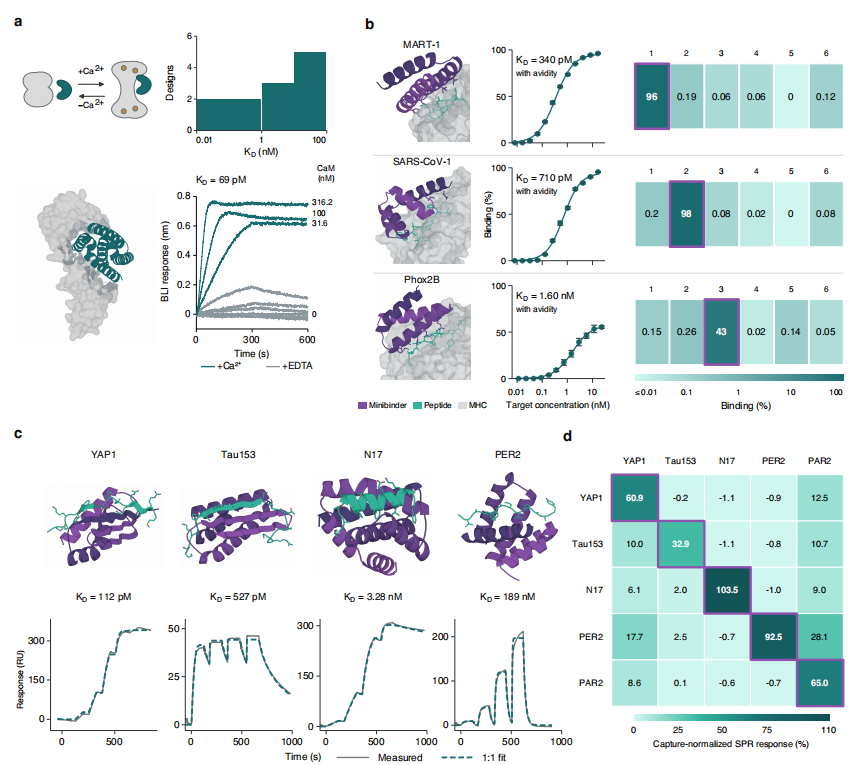
In the pMHC task, the team evaluated RFD4-Proteina's ability to bind precisely to target peptides, designing binders for MART-1, SARS-CoV-1 membrane protein peptides, and Phox2B peptides. Yeast display titration assays showed that the apparent half-maximal binding concentrations for binders targeting the three peptides were 340 pM, 710 pM, and 1.60 nM, respectively. Furthermore, screening against highly similar off-target peptides resulted in specificity differences exceeding 100-fold in all cases.
Notably, some target peptides were very similar to non-target peptides; for instance, the off-target peptide for Phox2B differed from the target peptide by only one amino acid, and the SARS target differed by only two amino acids, demonstrating RFD4-Proteina's capability to design highly specific pMHC mini-binders.
In the IDR task, the team tested whether RFD4-Proteina's conformational reasoning capability could achieve binder design for eight IDR peptides. The results showed one failure in each of the two IDR peptide classes, while the remaining six yielded high-affinity binders. Among these were the first artificially designed de novo binding proteins targeting YAP1 and Tau epitope IDRs, achieving strongest affinities of 112 pM and 527 pM, respectively.
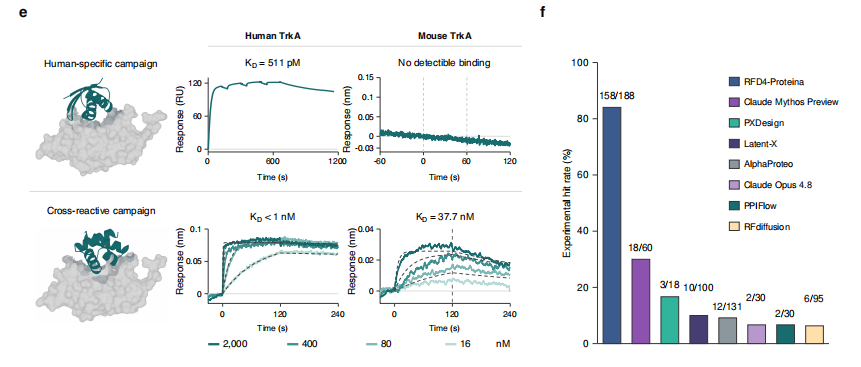
In the kinase protein design task, the team set up two scenarios: binding only to human TrkA, but not to mouse TrkA, human TrkB, or human TrkC; and simultaneously binding to both human TrkA and mouse TrkA, while still avoiding TrkB and TrkC. In cross-species cross-reactivity experiments, 18 out of 94 designs met the expected pattern; the best affinity for human TrkA was below 1 nM, and for mouse TrkA was 37.7 nM.
When there were no specific constraints other than binding to human TrkA, 158 out of 188 designs generated by RFD4-Proteina achieved affinities below 1 μM, resulting in an 84% success rate. In comparison, Claude Mythos Preview (using open-source protein design tools) achieved only 18 out of 60, a success rate of just 30%.
The researchers then tested whether RFD4‑Proteina could handle complex molecular systems with post-translational modifications: glycosylation and phosphorylation.
In the glycosylation task, previous limitations lay in the ability to only stably retain short high-mannose glycans such as Man5~Man8, failing to stably preserve the longest Man9 or GlcMan9. The goal this time was to use RFD4‑Proteina to design smaller proteins that primarily retain Man9 / GlcMan9, while ensuring terminal mannoses remain accessible.
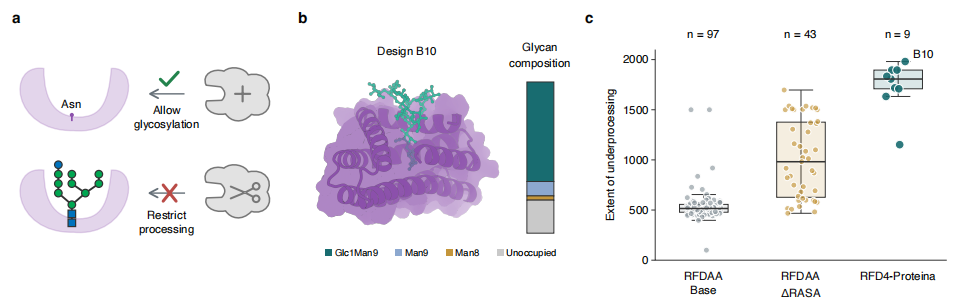
Results showed that RFD4‑Proteina achieved a significant improvement in computational design pass rate compared to traditional RFDAA. In LC-MS/MS mass spectrometry detection, 8 out of 9 designs had more than 90% high-mannose glycans at modification sites (untrimmed), with an untrimmed success rate higher than all previous methods.
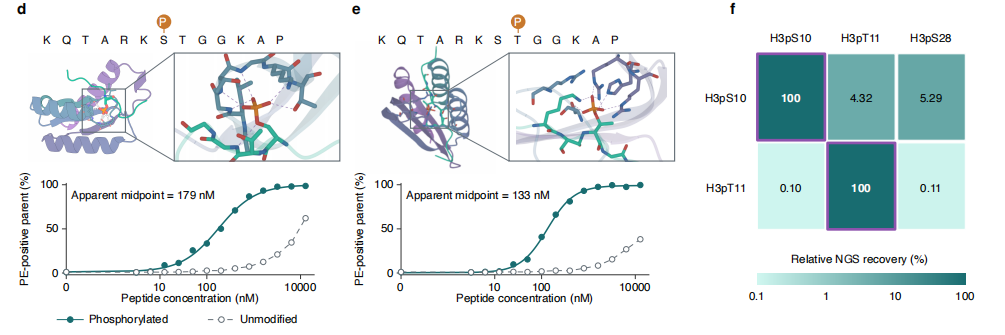
In phosphorylation tasks, the research team challenged two adjacent sites on the histone H3 tail—pS10 and pT11—to obtain phosphorylation-dependent binding proteins. The results showed that the hit sequences preferentially bound to their phosphorylated targets and maintained selectivity against the phosphorylation of the adjacent non-target sites. This highlights the ability of RFD4-Proteina to recognize subtle differences in the local chemical microenvironment, rather than merely identifying a phosphate group. It can discern which amino acid the phosphate group is attached to and in which sequence context, achieving site-level precise discrimination.
Enzyme design is a highly promising research area that can create efficient, green, and highly selective biocatalysts for a wide variety of chemical reactions. To validate RFD4-Proteina’s ability to construct active sites, the research team selected two challenging enzyme design tasks: dimetallic enzymes and cysteine ligases.
First, the team tested whether RFD4-Proteina could design a phosphotriesterase capable of hydrolyzing paraoxon. Previously, the team used RFD3 to design six catalytic residues surrounding two metal cofactors and the paraoxon substrate, resulting in relatively low catalytic efficiency, with a maximum of only 4±3 M⁻¹s⁻¹. This experiment hypothesized that adding two catalytic residues would improve catalytic efficiency.
The results showed that among 1,000 designs generated by RFD4-Proteina for this eight-residue mimetic enzyme, 15 (1.5%) passed the common motif RMSD and substrate confidence criteria; in contrast, none of the 1,000 designs generated by RFD3 passed.
A smaller RMSD indicates that the designed active site is closer to the ideal theozyme configuration.
In subsequent experimental screening, 89 of the 288 RFD4-Proteina designs exhibited activity, covering 25 out of 47 scaffold families; whereas all 192 designs from RFD3 showed no activity.
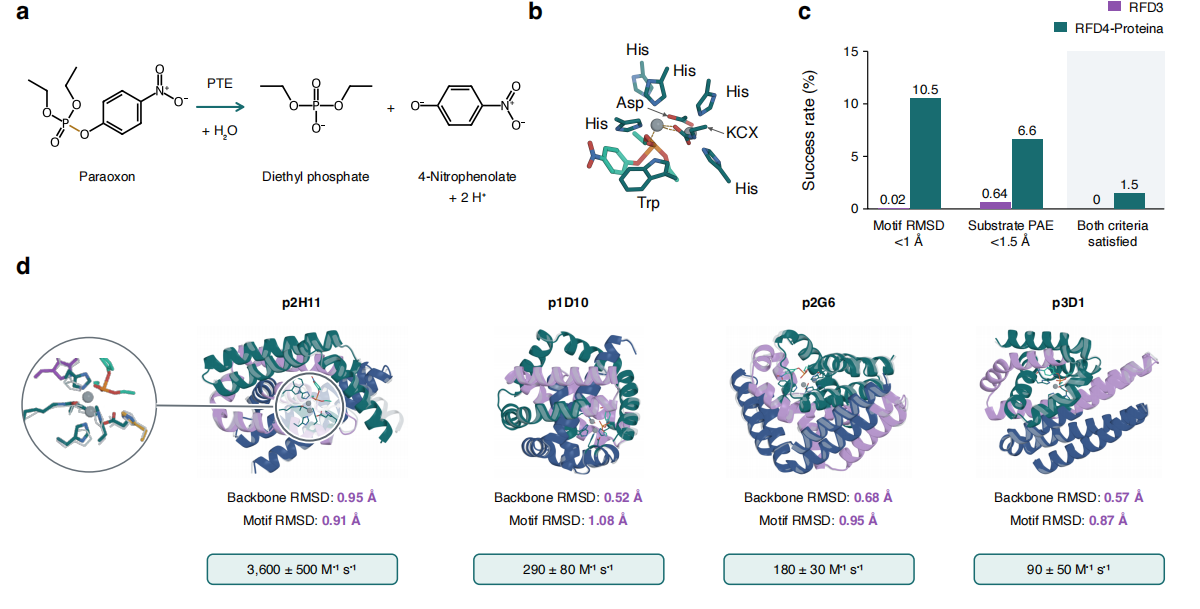
The team subsequently characterized 6 designs from 4 scaffold families. The best design achieved catalytic efficiencies of kcat / KM = 3600 ± 500 M⁻¹s⁻¹ and kcat = 0.9 s⁻¹, representing a 1.5 × 10⁷-fold enhancement over the uncatalyzed hydrolysis rate. All 6 identified designs showed catalytic efficiencies 10 to 1000 times higher than the previously reported six-residue mimetic enzyme phosphotriesterase.
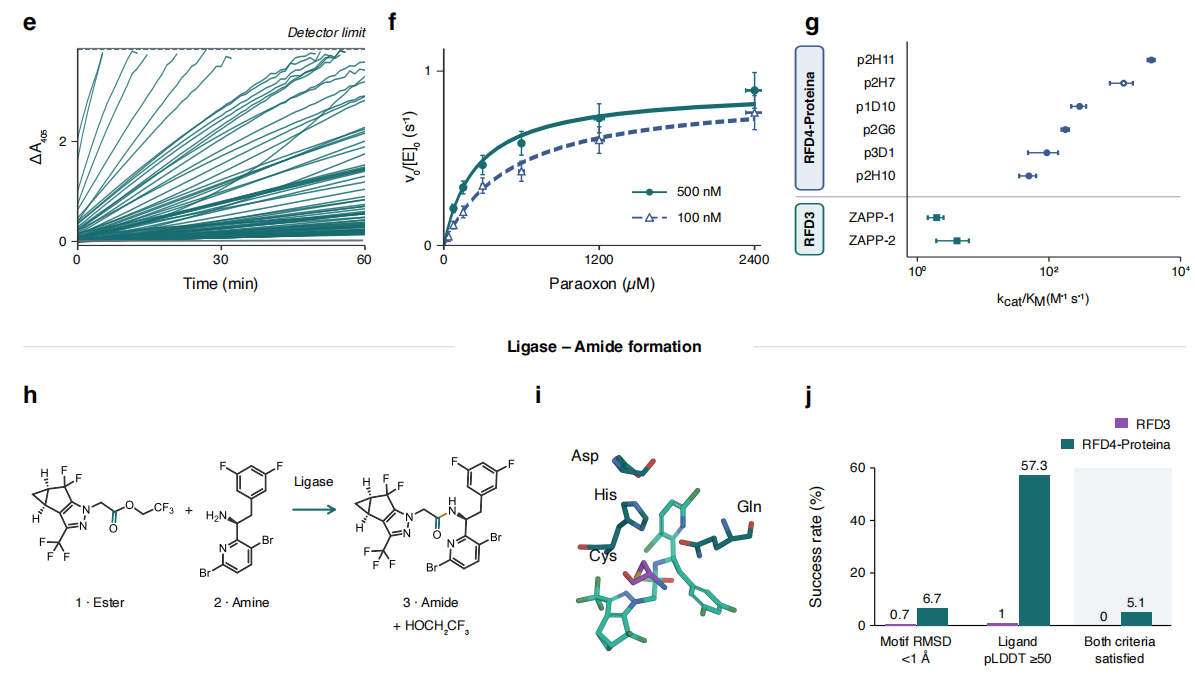
The research team continued to explore whether RFD4-Proteina could design bond-forming enzymes for biopharmaceuticals. The target reaction selected for testing was a step in the synthesis route of Lenacapavir, involving the coupling of an activated ester with a sterically hindered chiral amine to form an amide bond.
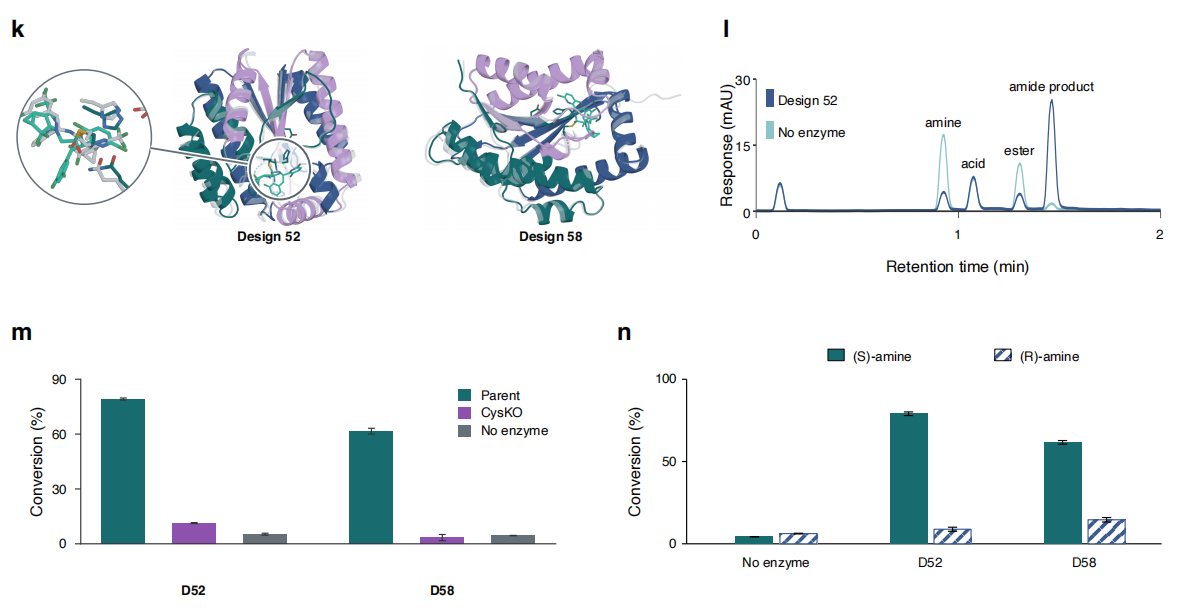
Computational screening results showed that the computational pass rate for RFD4-Proteina was several orders of magnitude higher than that for RFD3. Genes for 67 selected design sequences were used for experimental testing, and 4 of these design sequences successfully achieved amide bond formation, with the yield of the target S-amine product exceeding background levels. In contrast, none of the 72 designs previously generated using RFD3 yielded effective results.
The two best designs, numbered 52 and 58, converted 79% and 61% of the S-configuration amine into the amide, respectively; the conversion rates for the R-configuration amine were only 8.8% and 14.6%; the conversion rates for the enzyme-free control groups were 4.3% and 6.2%, respectively.
Final Thoughts
In summary, RFD4-Proteina deeply integrates physical modeling with deep learning. It no longer relies solely on learning the statistical distribution of natural proteins in the PDB database but additionally incorporates physically simulated synthetic datasets and combines differentiable Rosetta force fields to supervise and guide the generation process. It breaks the fragmentation caused by multiple specialized tools working in isolation, relying on a latent space reasoning paradigm to shift protein design from blind sampling and generation to a constrained search mode with evaluation and iterative optimization, significantly improving the success rate and computational efficiency of complex molecular designs in computer benchmarks.
Of course, the model is not perfect; inference scheduling parameters often require small-scale preliminary experiments for tuning, and complex tasks can incur significant computational costs. However, the open-source code and weights provide a new starting point for the entire field. It suggests that closely integrating AI generation with biophysical rules can expand the boundaries of protein design, helping researchers faster translate computer-designed molecules into binding proteins with real functionality and novel artificial enzymes in wet-lab experiments, bringing more possibilities to drug development and synthetic biology.