Command Palette
Search for a command to run...
Training With Real Human Text, the 12B Small Model Humanizer Ends AI-style Writing; EmbeddingGemma 2 Unifies the Mapping of Four Modalities

Humanizer is a 12B-parameter rewriting model open-sourced by developer sgaofen in October 2026, fine-tuned from google/gemma-4-12B. It addresses the naturalness issues of AI-generated drafts: rewrite drafts into versions closer to human writing while preserving every number, unit, date, person name, and quotation in the original text, and it can run locally offline.
Technically, no AI detector was used during training; the learning signal comes from real human source texts and factual consistency after rewriting. On the deployment side, the model offers five quantization levels from Q8_0 to 2-bit; the smallest 2-bit file is about 3.9 GB, can run on devices with 8 GB of memory, and supports integration with OpenAI-compatible local services. On the application side, the model covers styles such as work emails, weekly reports, policy memos, and paper paragraphs. It supports paragraph-by-paragraph rewriting of entire Markdown or .docx files via command-line tools while preserving headings, tables, and links, and can also preserve specified paragraphs verbatim. With this complete design, humanizer provides a locally executable workflow for adjusting the naturalness of existing drafts.
The HyperAI tutorial section has launched “Humanizer: Rewriting AI-Generated Drafts”. Come try it out~
Use online: https://go.hyper.ai/wCax5
October 25–October 30, hyper.ai website update overview:
- Featured quality tutorials: 10
- Popular encyclopedia entries: 5
- Top conferences with November deadlines: 6
Featured Public Tutorials
1. Image Feature Extraction
This tutorial is a step-by-step image feature extraction tutorial. Its core idea is to convert shapes in images into time series and then extract shape features from them, offering an interesting perspective for tasks such as image retrieval, shape matching, and pattern recognition.
Run online: https://go.hyper.ai/Zi4Sd
2. Unsupervised Text Selection
This tutorial uses TensorFlow and the roBERTa model to extract sentiment-related key text from tweets in an unsupervised manner via Class Activation Mapping. It can locate the sentiment segments that the model focuses on without word-by-word annotation, making it a practical case for understanding the interpretability of NLP models.
Run online: https://go.hyper.ai/OBStl
3. Blur Detection Based on Feature Engineering
This tutorial demonstrates a blur detection method based on feature engineering, modeling blur discrimination as a classification problem. It trains a classifier using handcrafted image features to identify blurred images and can perform detection without relying on large deep models, making it suitable as a hands-on project for image quality assessment and feature engineering.
Run online: https://go.hyper.ai/ZoLbP
4. Fastai Rice Leaf Disease Image Classification in Practice
This tutorial is the first in the “Rice Doctor” series and focuses on the rice disease classification task. It uses the fastai framework to complete a full practical workflow for rice leaf disease image classification, with clear steps from data preparation to model training, suitable for beginners in agricultural AI to follow along.
Run online: https://go.hyper.ai/dqcru
5. Food Classification with TensorFlow
This tutorial uses TensorFlow for food classification (CNN transfer learning). It performs image processing and exploratory data analysis on food images and uses transfer learning based on a pretrained convolutional neural network to complete food/non-food binary classification. It covers the complete workflow of data preparation, data augmentation, model fine-tuning, test evaluation, and model saving, making it a classic case for getting started with image classification and practicing transfer learning.
Run online: https://go.hyper.ai/bhl17
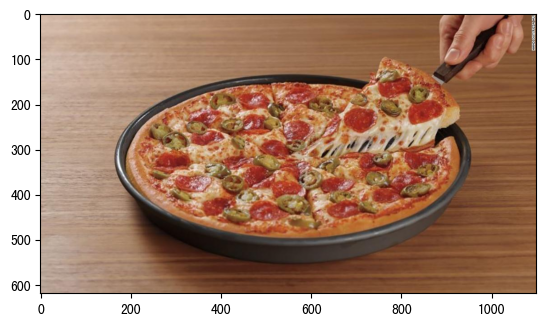
6. Humanizer: Rewriting AI-Generated Drafts
humanizer is a 12B-parameter text rewriting model fine-tuned from google/gemma-4-12B. It specializes in rewriting AI-generated drafts—emails, paper paragraphs, reports, forum posts, in both Chinese and English—into text that reads as if written by a real person. Every number, unit, date, person name, and quotation in the original text is preserved as-is, with no additional content added.
Run online: https://go.hyper.ai/wCax5
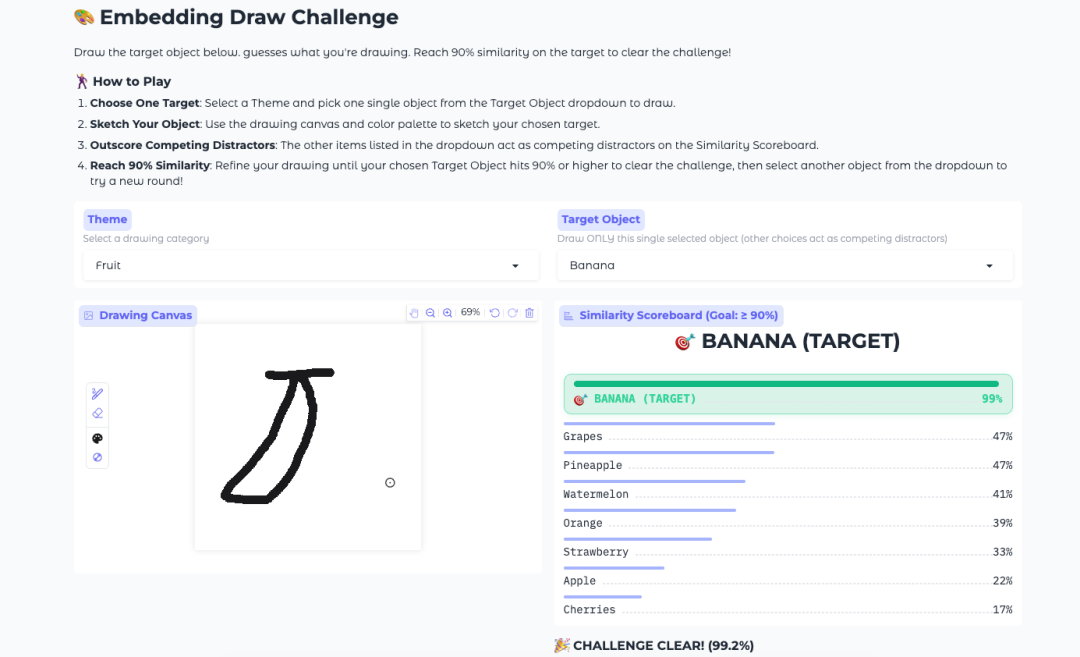
7. EmbeddingGemma 2: Multimodal Embedding Model
EmbeddingGemma 2 is a multimodal embedding model open-sourced by Google DeepMind. It can map four modalities—text, image, video, and audio—into the same 768-dimensional embedding space, allowing content from different modalities to be directly compared and retrieved in the same vector space. It is suitable for scenarios such as cross-modal search, semantic retrieval, clustering and classification, and RAG.
Run online: https://go.hyper.ai/lTHf3
8. OTTO - Getting Started Tutorial (EDA + Baseline)
This tutorial is based on the classic getting-started Notebook from the Kaggle “OTTO – Multi-Objective Recommender System” competition. The task is to build a multi-objective recommender system that simultaneously predicts three objectives—click, add-to-cart, and order—based on previous behavioral events in a user session. The tutorial covers the complete workflow of data loading, session data exploration (EDA), baseline model construction, and submission, making it a practical guide for getting started with recommendation system competitions.
Run online: https://go.hyper.ai/KcgV7
9. FB3 DeBERTa-v3-base Baseline: Training Tutorial
This tutorial is a beginner-oriented DeBERTa-v3-base training tutorial set against the Feedback Prize 3 (FB3) English argumentative essay scoring task. It fully demonstrates the baseline workflow from data processing and model training to submitting predictions, helping newcomers quickly master competition methods for Transformer text regression tasks.
Run online: https://go.hyper.ai/ebLuQ
10. HED, Kornia, OpenCV - Edge Detection (Part 1)
This tutorial is the first part of the edge detection series and covers both traditional computer vision methods and deep learning methods: on one hand, it uses OpenCV and Kornia to implement classic edge detection operators; on the other hand, it introduces the HED (Holistically-Nested Edge Detection) deep model, helping readers intuitively compare the effects and applicable scenarios of the two types of methods.
Run online: https://go.hyper.ai/ebNCG
Featured Popular Encyclopedia Entries
- World Action Model WAM
- Robustness
- Generative Pre-trained Transformer GPT
- Video Generation
- Embedding Models
Hundreds of AI-related entries are compiled here to help you understand “Artificial Intelligence”:
Top Conferences with November Deadlines
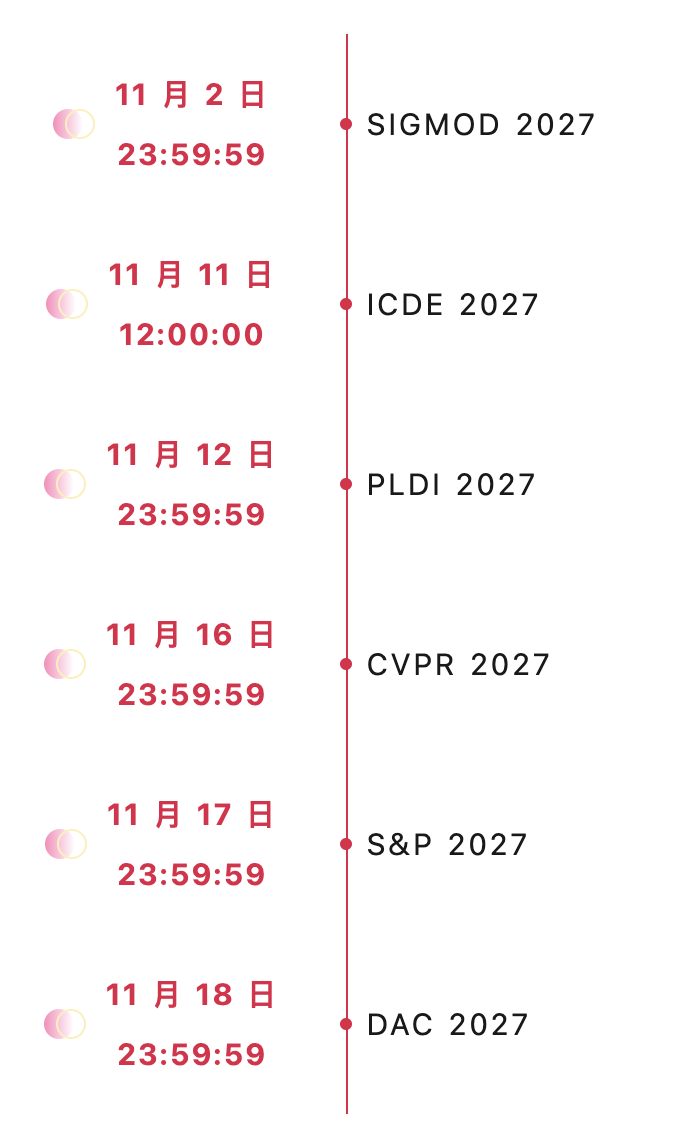
- Deadline times are in AoE time
See you next week!