Command Palette
Search for a command to run...
Will 2026 Be a Turning Point in the US-China AI Race? Behind the Shift in US Regulatory Logic, the Massive Computing Power Gamble by Tech Giants continues.
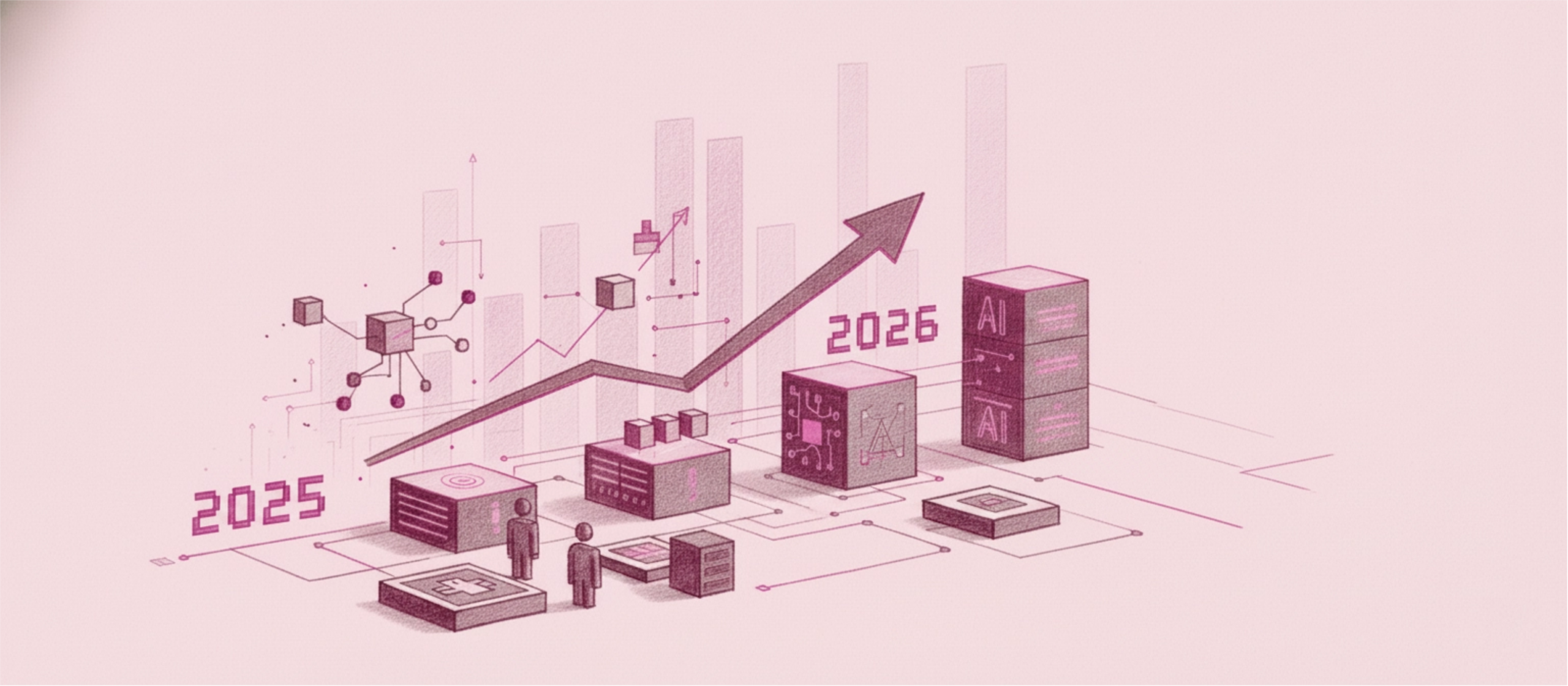
If we were to summarize 2025 with a single keyword, it would undoubtedly belong to artificial intelligence: when AI development no longer stops at competition within the tech world but deeply penetrates content production, emotional interaction, and public discourse, it has become a real force shaping the world.
Opinions on AI have never been so divided.Cambridge Dictionary has released its 2025 word of the year, "Parasocial," which refers to the increasingly prevalent one-way emotional connection between people and virtual objects, including AI chatbots."With the possibility of establishing quasi-social relationships with AI, people are beginning to see ChatGPT as confidants, friends, and even lovers," revealed Colin McIntosh, editor-in-chief of the Cambridge Dictionary. He added that searches for the word "Parasocial" on the Cambridge Dictionary website have surged, "capturing the zeitgeist of 2025. What was once a professional academic term has now become mainstream in social life."
Conversely, Merriam-Webster's Dictionary named "Slop" as its word of the year for 2025, describing the low-quality content mass-produced by artificial intelligence and flooding the internet. These two words almost perfectly encapsulate AI's profile in 2025: on one hand, content overload and quality anxiety; on the other, companionship, efficiency, and emotional projection—AI is simultaneously amplifying both human creativity and vulnerability, leading to ongoing debate about whether AI is a liberating tool or an out-of-control variable.**What is certain, however, is that the debate itself has not stopped technological progress: the AGI (Artificial General Intelligence) cause will continue to advance in 2026, and the Trump administration's tightening of AI regulations has not stopped China's growing advantage in the AI race.**Entering 2026, AI will not disappear; it will only continue to reshape the future world in a deeper, faster, and more undeniable way.
Will AGI still not be achievable by 2026?
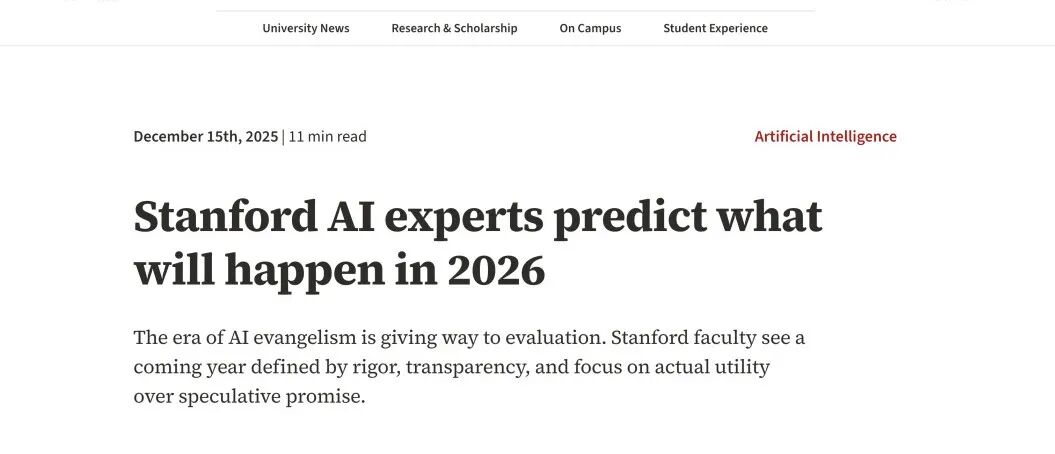
In 2024, Musk predicted that AGI would be available in 2026, and Sam Altman also made an extremely optimistic prediction about AGI's implementation timeline. However, 2025 has passed quickly, and similar projects or products seem to have failed to emerge. Amidst the clamor surrounding the "approaching arrival of AGI," assessments from leading research institutions have been very cautious. James Landay, co-director of the HAI Research Center, clearly stated in his annual outlook that...AGI will not appear in the short term, but the more realistic change in 2026 lies in the evolution of the form of AI itself.
"I acknowledge that we will see some new customized user interface AI, not just chatbots, or even just the web browser released by OpenAI. But I think in the new year, we will see previews of these technologies, not actual products," James Landay further predicted. "In 2026, we will hear a lot about failed AI projects, but people will learn from these failures and find more suitable ways to apply AI. So AGI may achieve greater success this year."
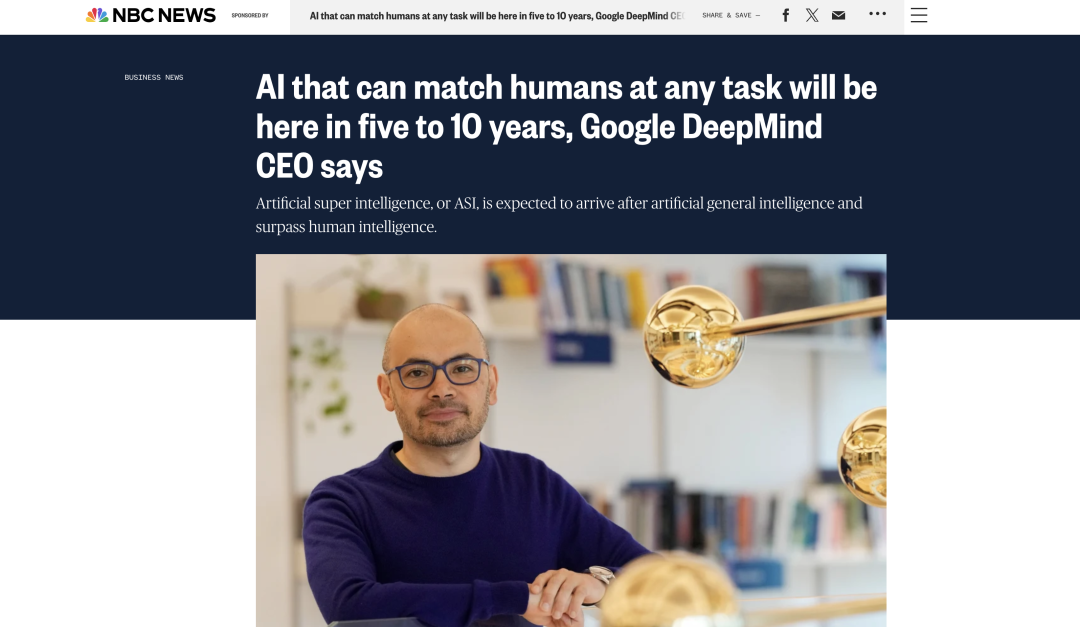
"I think the current system is very passive, and there are many things it can't do," Hassabis said at a press conference held at DeepMind's London office in 2025. "But I think in the next 5 to 10 years, AGI, which is as smart as or even smarter than humans, will begin to emerge. We will move towards what is called AGI."
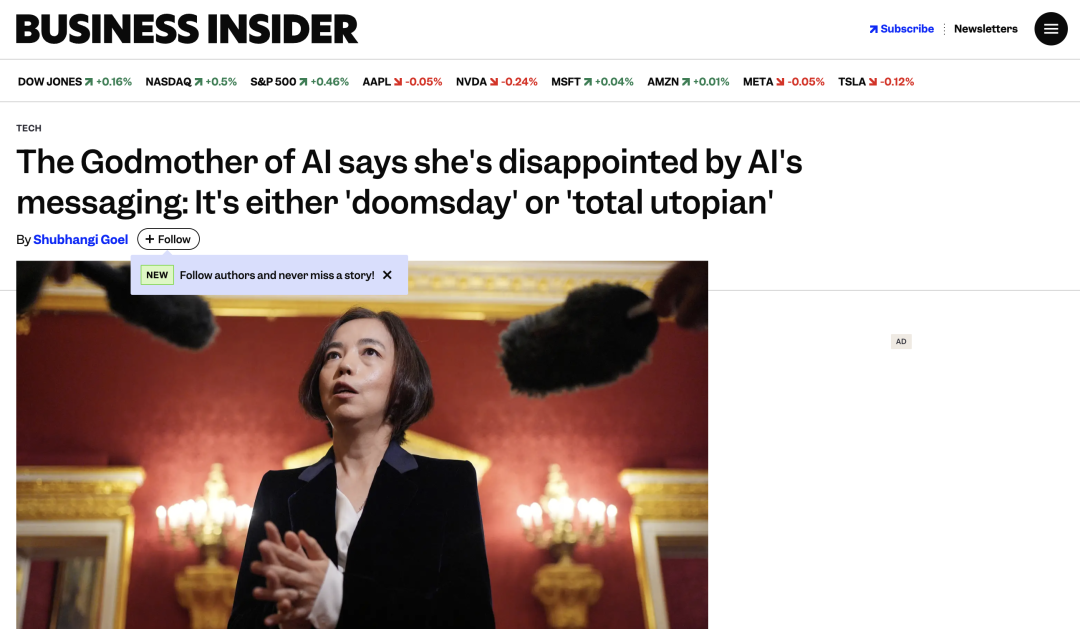
Regarding the world model and the implementation of AGI, Fei-Fei Li's views are similar to those of Hassabis.She believes that current public discussions surrounding AGI often fall into polarized imaginations of "doomsday" and "omnipotence," which are detached from engineering reality and lack scientific evidence.
"The current rhetoric surrounding artificial intelligence is far too exaggerated. We face various arguments about total species extinction, the end of the world, and AI destroying humanity and machines ruling everything. There's also a completely utopian vision where people use terms like 'unlimited productivity.'" In a Business Insider report, Fei-Fei Li humorously described herself as "the most boring speaker in the AI field today" because she insists the public needs more "non-extreme" perspectives. "People all over the world, especially those outside Silicon Valley, need to know the truth, but this discussion, communication, and public education have not yet met my expectations."
Trump bans state-level AI legislation, seemingly tightening regulations.
AGI has yet to arrive, but increasingly stringent regulatory policies are already on the horizon.
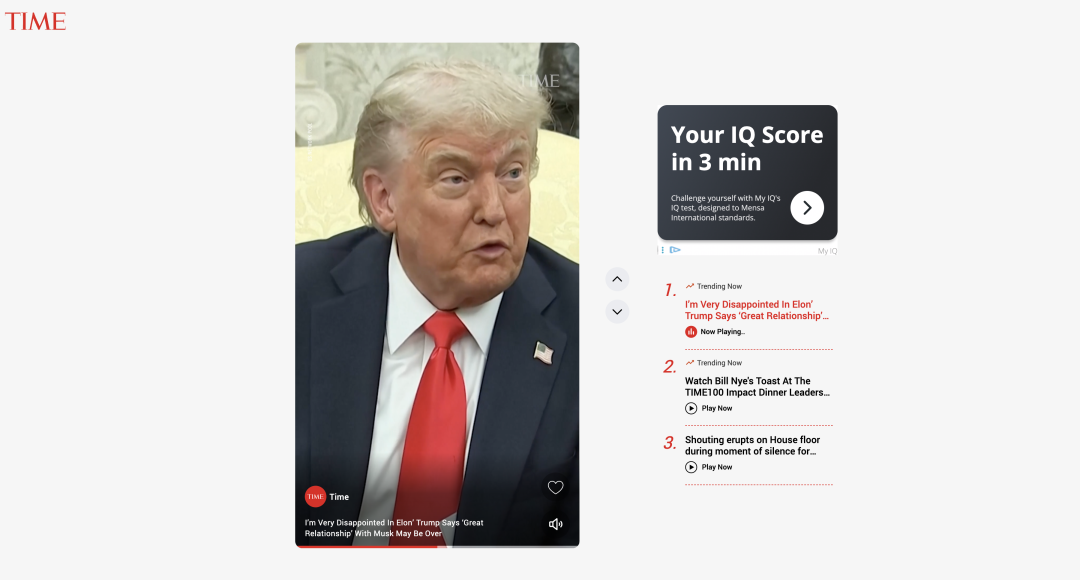
"I am very disappointed in Elon Musk." As early as the beginning of June, Trump hinted at a breakdown in his relationship with Musk in an interview, publicly expressing his dissatisfaction with his Silicon Valley ally. This personal estrangement occurred at a crucial juncture when the Trump administration was readjusting its policy stance on technology and artificial intelligence.
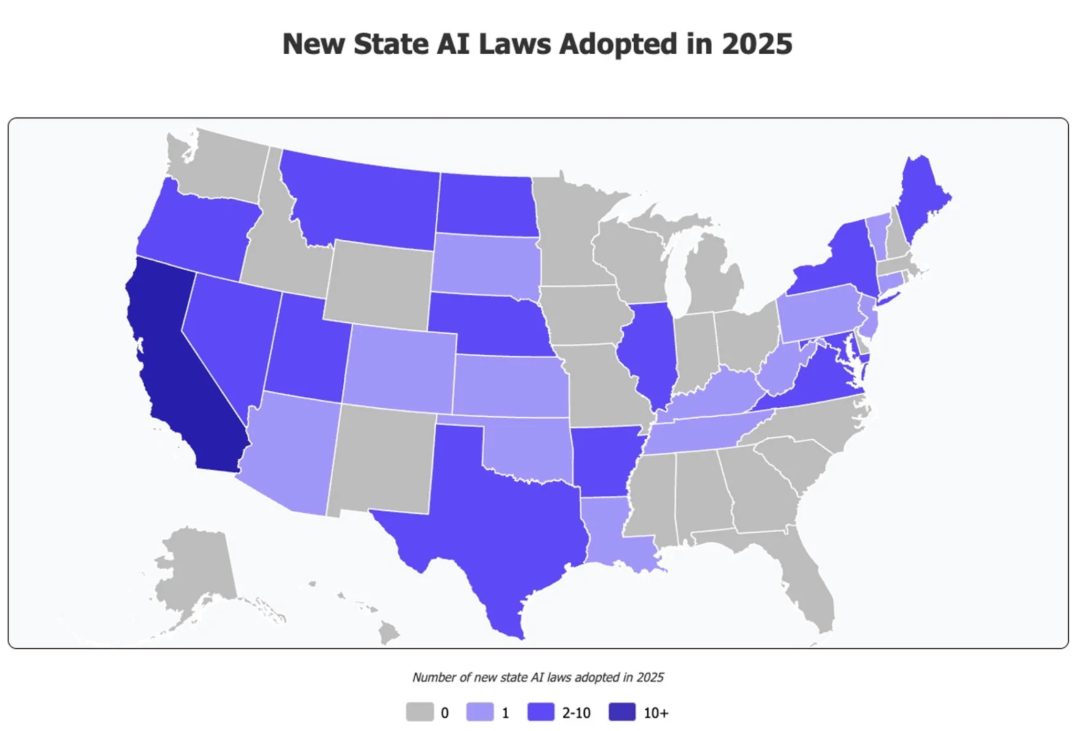
Although the draft was initially shelved, on December 11, Trump officially signed a new executive order "aimed at advancing a national artificial intelligence policy framework with minimal burden." In this document,The Trump administration’s core stance is clearer: it opposes the fragmented regulatory model of “50 sets of state-level AI rules running in parallel”, emphasizes the establishment of a unified national AI policy framework, and explicitly proposes to prioritize federal authority over the initiative of local regulation.
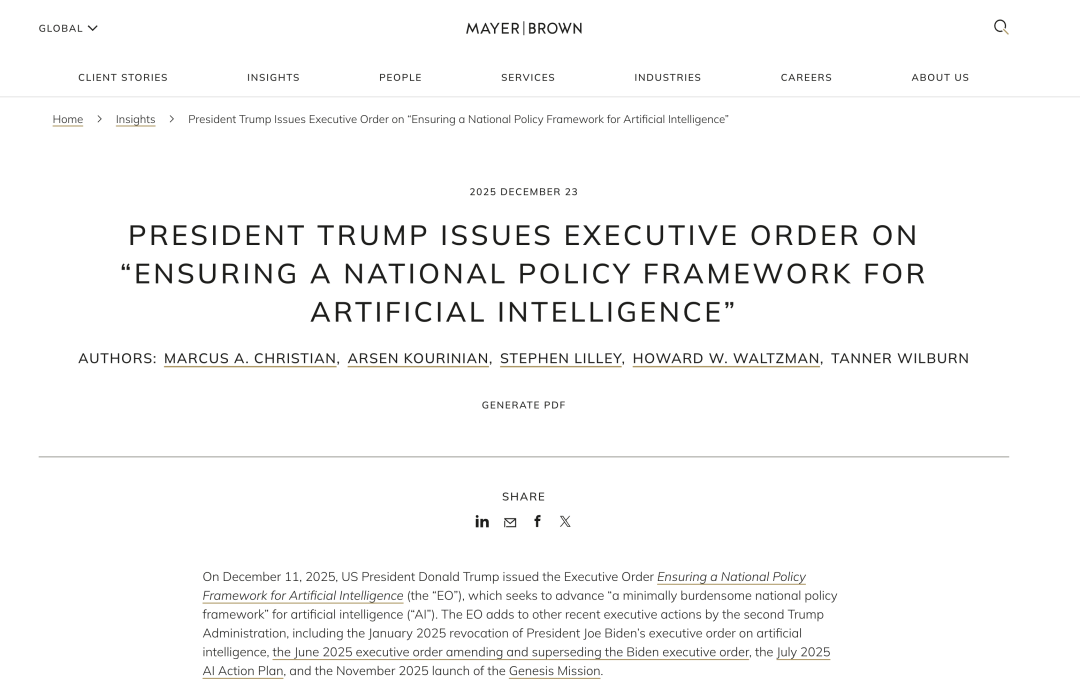
"This marks the U.S. government's formal challenge to the fragmented AI regulations of individual states, aiming to establish a unified, less regulated, and de-ideologized national AI regulatory legal system by seizing legislative power at the federal level," an editorial published by the law firm YENLEX pointed out. "Its fundamental strategic intention is to compete with China in the field of artificial intelligence by eliminating domestic legal barriers and integrating national infrastructure, computing power, and innovation resources in a national manner."
Looking ahead to the end of 2025, Trump's recent political actions, while highlighting the tightening trend of US regulation in 2026, also hint at a redistribution of regulatory power at this juncture.AI is transforming from a technological issue into a more direct tool for national competition and is entering the governance logic of political systems.
The Nasdaq is fluctuating at high levels; will China win the AI race?
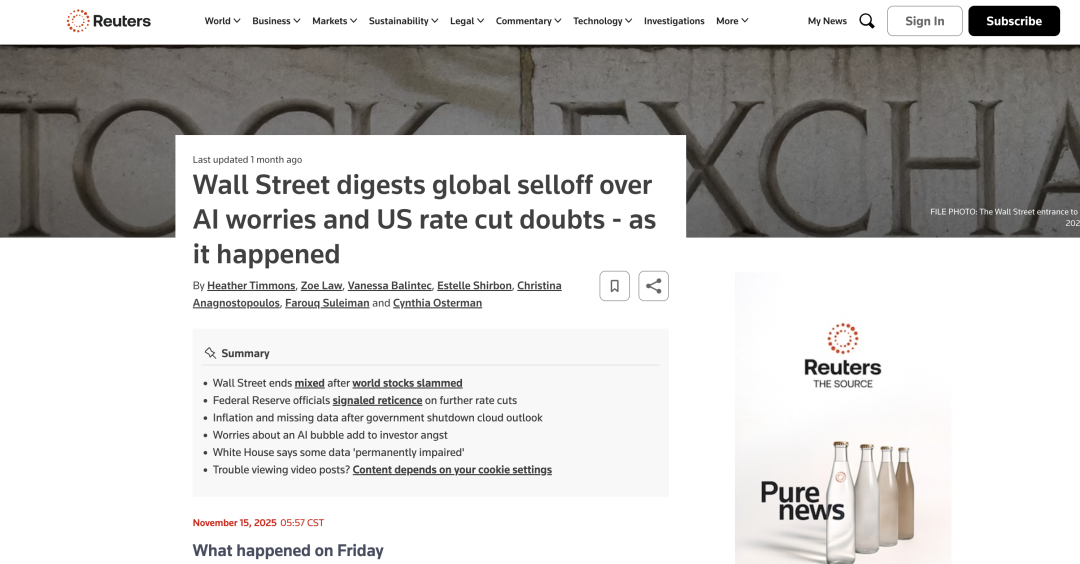
As regulatory power is being redistributed, the continued fluctuations of the Nasdaq index in its high range are becoming a signal that is being repeatedly interpreted.Over the past year, AI-related stocks have been the core engine driving the rise in US stocks, but as we enter the end of 2025, market confidence in the "long-term linear growth" of the US AI industry has begun to waver. Between November and December, the Nasdaq index fluctuated repeatedly at historical highs, with leading AI stocks experiencing significantly amplified volatility, becoming a major drag on the index. Although investment in computing power and the release of models are still underway, the combination of valuation digestion, longer return cycles, and policy uncertainties has led the capital market to reprice the US AI narrative.
"There is indeed some bubble in the market in terms of valuation and expectations. We have passed the core of earnings season and seen many companies exceed earnings expectations, but we have not seen a significant rise in stock prices, so I think it is just that the bubble is gradually deflating," the Managing Director of Investment Strategy at Pathstone told Reuters.
However, its effectiveness not only heavily relies on sustained capital investment and a stable policy environment, but also tests the global market's trust in the US technology system. On the one hand, the Trump administration strengthened domestic AI competitiveness through tariffs and industry protection policies; on the other hand, it offered Nvidia more flexibility regarding chip exports.**The attempt to maintain the "irreplaceable" status of American chips in the global AI system has objectively delayed the effects of the technology blockade, buying time and a learning window for China's AI industry.**Therefore, it was during this window of opportunity that China's AI catch-up speed began to be systematically reassessed.
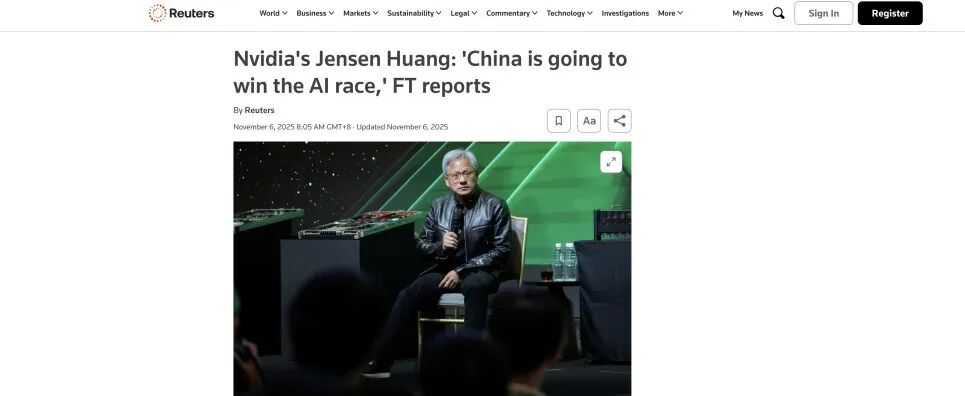
In fact, the US has long tacitly accepted the future threat posed by China's AI industry. "If you ask me who will win the generative AI race in the next 5-10 years, the answer is China. It's that simple," Huang Renxun stated bluntly at a closed-door meeting in November 2025. Meanwhile, a recent Goldman Sachs report indicates that the gap between China and the US in core AI technologies has narrowed to approximately 3-6 months.When faced with subsequent versions of top-tier American models, Chinese models have nearly reached a state of "synchronous follow-up."—The key variable in AI competition is shifting from "whether it can be made" to who can "scale it up faster and deploy it at a lower cost".
In short, looking back from the end of 2025, AI is no longer just a choice of technological routes, but has simultaneously entered the intersection of scientific boundaries, political governance, and national competition. AGI's vision remains distant, regulatory power in the United States is being recentralized, and the high-level volatility in capital markets foreshadows the complexity and uncertainty of this competition. Entering 2026, AI will not have a definitive answer, but it will accelerate its differentiation—leading to drastically different futures in different countries, under different systems, and through different industrial paths. The real question may no longer be "Can AI change the world?", but rather, in what way will the world be reshaped by AI.
Reference Links:
1.https://news.stanford.edu/stories/2025/12/stanford\-ai\-experts\-predict\-what\-will\-happen\-in\-2026
2.https://www.nbcnews.com/business/business\-news/ai\-can\-match\-humans\-task\-will\-five\-10\-years\-google\-deepmind\-ceo\-says\-rcna196771
3.https://www.businessinsider.com/fei\-fei\-li\-disappointed\-by\-extreme\-ai\-messaging\-doomsday\-utopia\-2025\-12
4.https://www.yenlex.com/news/content\_752\.html?lang\=en\-us
5.https://finance.sina.com.cn/roll/2025\-12\-23/doc\-inhcucqs0918839\.shtml