Command Palette
Search for a command to run...
With Bets From Bezos, Bill Gates, Nvidia, Intel, and Others, NASA Engineers Are Leading a Team to Create a general-purpose Robotic Brain, Valuing the Company at $2 billion.

In a world where large models can "grow infinitely" from the internet, image libraries, and massive amounts of text, robots are trapped in another world—real-world data is extremely scarce, expensive, and non-reusable. Business Insider once published a seemingly simple yet highly insightful report..."AI robots are facing a data shortage, and a startup has found an unexpected solution."
The report points out that compared to the almost inexhaustible training data for language and visual models, the data required for robots to interact with the real world is far from sufficient in terms of scale, structure, and transferability. This has become a key bottleneck for the large-scale intelligence of robots. A robotics startup called FieldAI has provided its own solution to this problem.
In response to the real-world constraints of insufficient data volume and limited structure in the physical world, FieldAI has chosen a solution that differs from the mainstream perception-first approach.To build a general-purpose robot intelligence system based on physical constraints from the ground up, so as to improve the robot's generalization and autonomy in real-world environments.
Company website:https://www.fieldai.com
FieldAI's manifesto: Not just building robots, but building a general-purpose robotic brain.
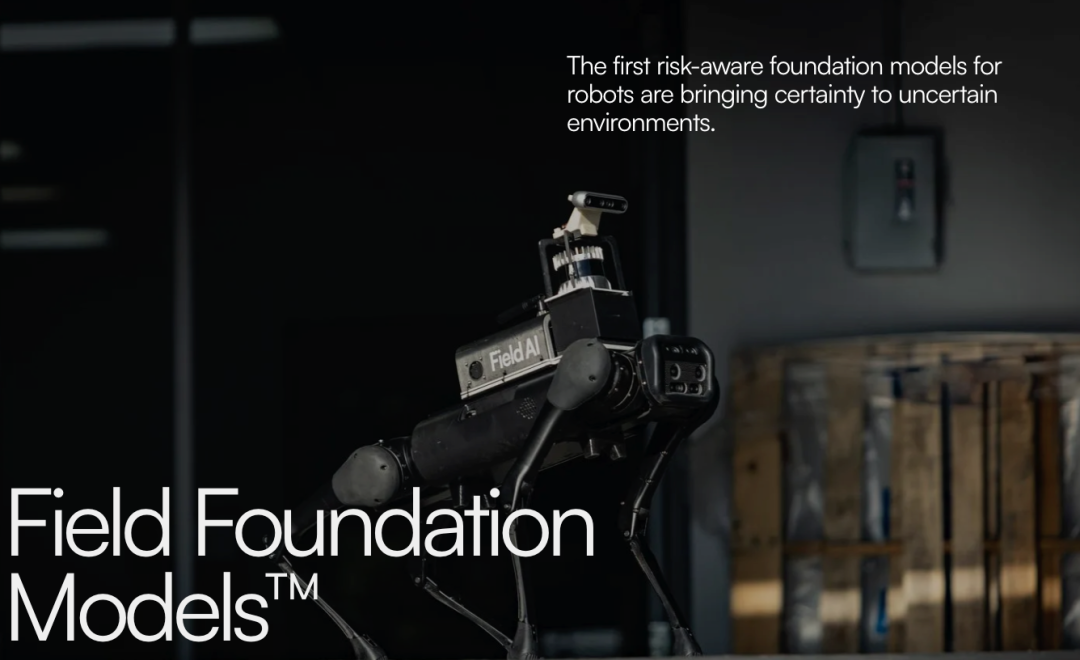
At an era where most robotics companies focus on building hardware and demonstrating complex movements, FieldAI has chosen a more long-term approach, not aiming to create a specific, individual robot as its ultimate goal.Instead, it is dedicated to creating a "universal robot intelligent brain" that can be used across different types of robots and adapt to various environments.
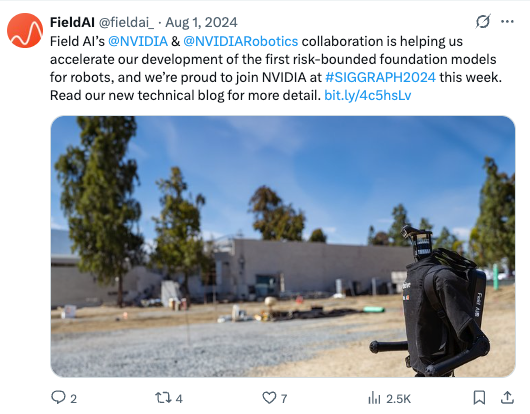
This universal brain is called Field Foundation Models (FFMs). It is not a single piece of hardware or a single-function software, but a new type of "physics-first" foundational model built specifically for embodied intelligence.
In layman's terms,**The approach of prioritizing physics differs fundamentally from the traditional AI approach of "sensing first, then controlling."**From the outset, FFMs prioritize real-world physical constraints, uncertainties, and risks as the model's primary task, rather than using rules or controllers to fall back on the model's output. This enables robots to make on-site decisions and exhibit safer and more reliable intelligent behavior when facing unfamiliar environments, such as those without maps, GPS, or pre-defined routes.
FieldAI itself also emphasizes that robot intelligence is not only about the execution of behaviors, but more importantly, about forming a closed loop of real-world data. The perceptual data generated during task execution will be continuously fed back to the model for training, optimization, and iteration, thereby allowing intelligence to continuously evolve.
When explaining the company's vision, founder Agha said, "Our customers don't need precise maps or even any training; they can simply press a button and the robot can explore every corner of the environment."
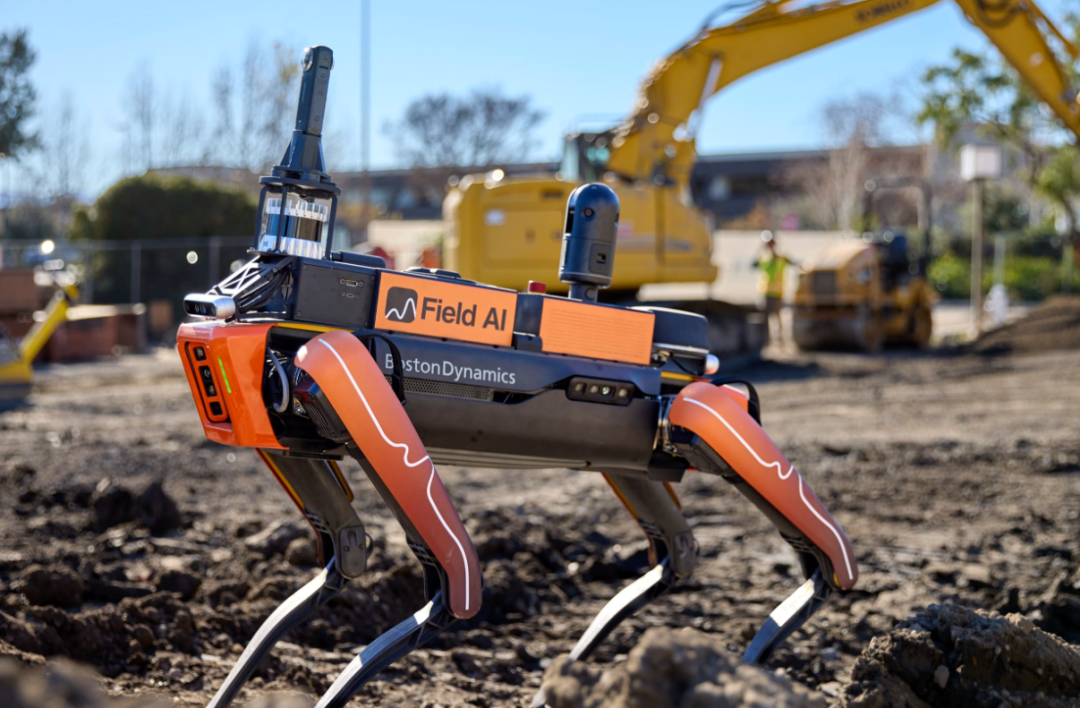
In November 2025, FieldAI's collaboration with DPR Construction demonstrated the value created on a real construction site. Robots equipped with FieldAI's AI system could autonomously patrol the site, automatically collecting tens of thousands of photos, scanning the building interior, and creating large-scale maps. This data was then transformed into real-time information for progress tracking, risk detection, and quality analysis, saving significant time compared to manual inspections and improving on-site safety and efficiency.
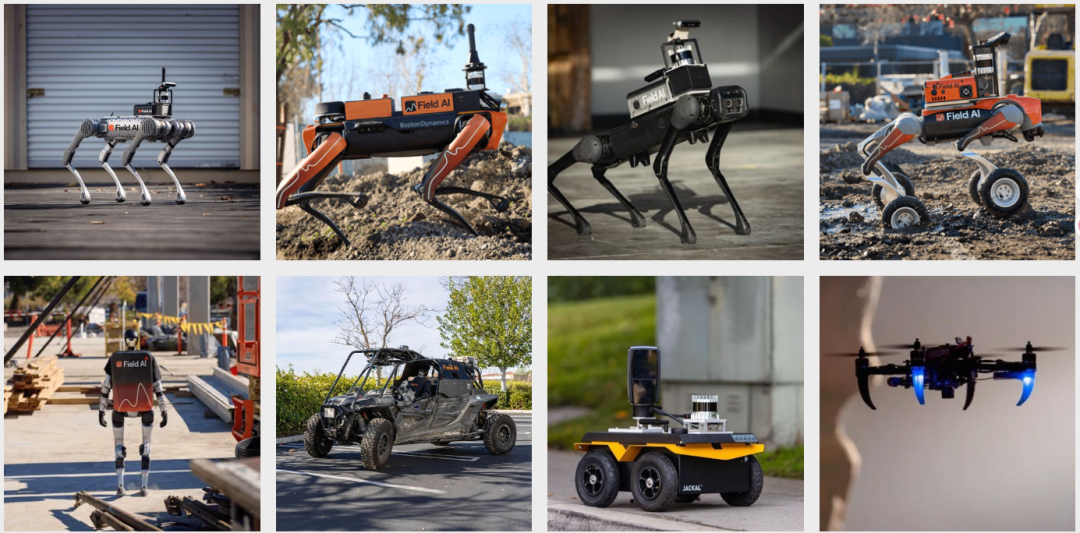
NASA engineers' "realist" revolution
FieldAI’s unique technological approach is, to some extent, deeply rooted in the engineering background of its founders.
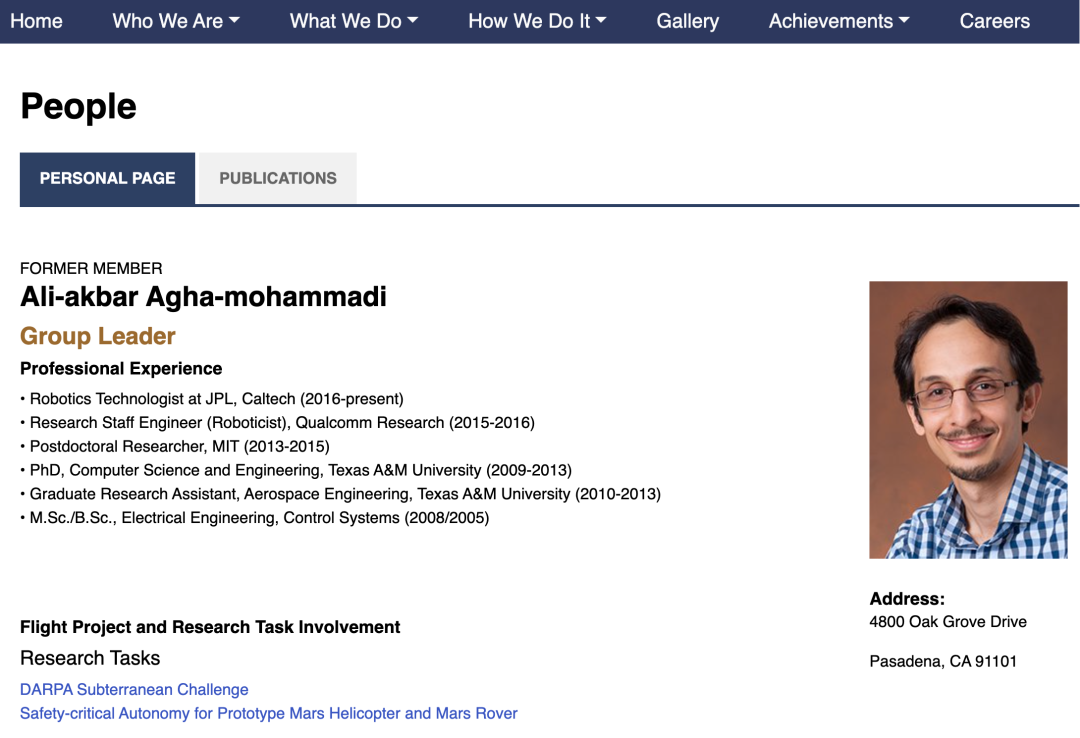
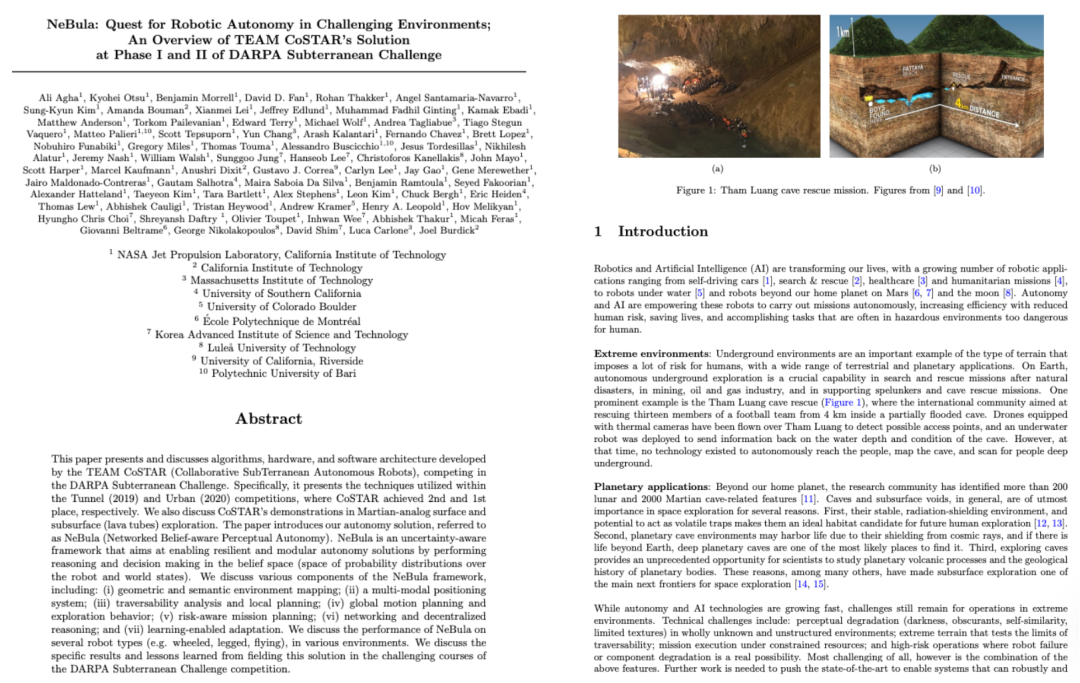
The company's founder and CEO, Ali Agha, has a well-documented career spanning seven years at NASA's Jet Propulsion Laboratory (JPL). He participated in NASA's autonomous Mars cave exploration and prototype Mars helicopter-rover collaborative autonomous project, as well as research related to DARPA RACER (an off-road autonomous vehicle).A closer look at these projects reveals a common thread: the environment is unpredictable and the cost of making mistakes is extremely high, leaving virtually no possibility of human intervention.
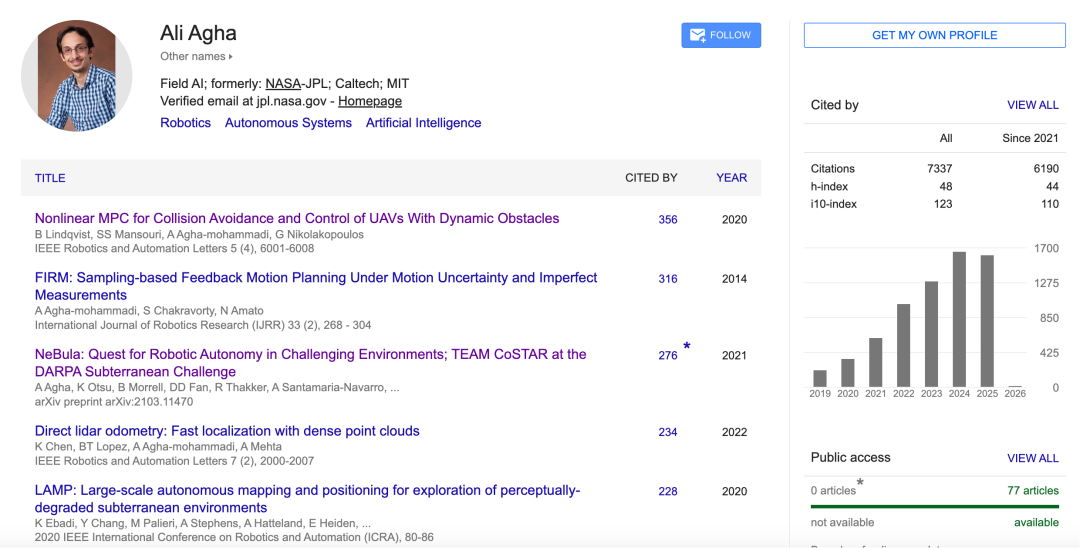
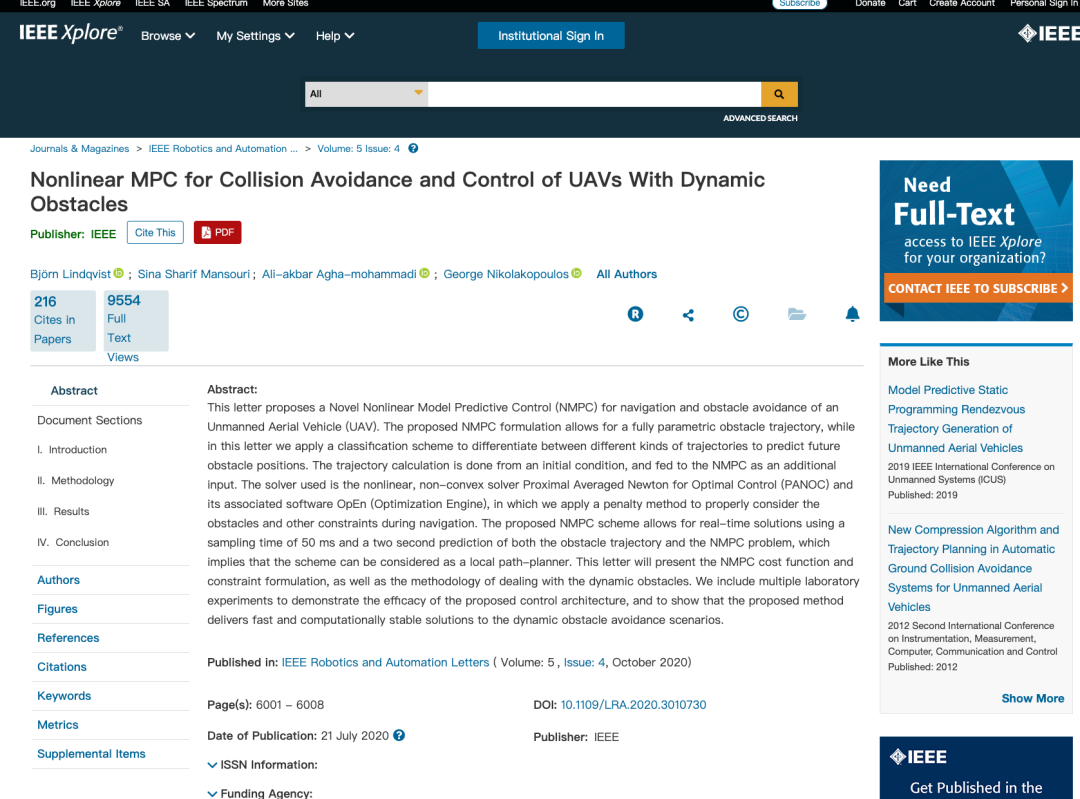
 In addition, he has participated in several research projects published in conferences and journals such as IEEE Robotics and Automation Letters. For example, in the paper "Nonlinear MPC for Collision Avoidance and Control of UAVs With Dynamic Obstacles", he explored the problem of safety control and obstacle avoidance of unmanned systems in dynamic environments; another paper, "LAMP 2.0: A Robust Multi-Robot SLAM System for Operation in Challenging Large-Scale Underground Environments", also demonstrated the specific technical details of stable map construction in large-scale, perception-degraded environments.
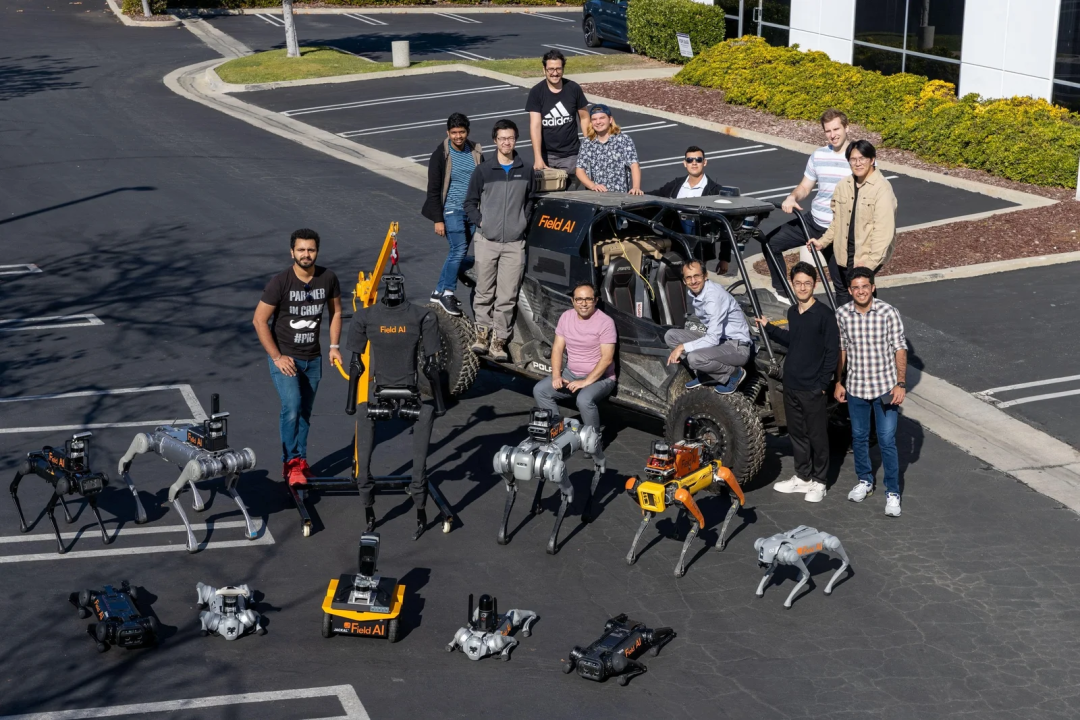
 Perhaps it was within this work and academic context that Agha developed a more "low-level" understanding of robotic intelligence. Building upon this foundation,**FieldAI brings together top technical experts from leading companies such as DeepMind, Tesla, SpaceX, NASA, and Amazon.**The shared vision is to enable robots to work stably for extended periods in the real world and make safe and rational decisions in ever-changing environments.
The battle for a universal robotic operating system
FieldAI was officially founded in 2023, but its progress in the capital market has been far faster than the typical pace for a startup. As of August 2025,**The company completed over 405millioninfinancinginlessthantwoyears,withapost\-investmentvaluationofapproximately2 billion.**Furthermore, the investment lineup is incredibly impressive, including Bezos's private investment office, Intel Capital, Nvidia's venture capital arm, Bill Gates' investment fund, Samsung, and others. This reflects not only the sheer scale of the investment but also the capital decisions it represents.
For these investors, betting on FieldAI is not just about choosing a specific robot product, but about betting on a more fundamental and universal direction for intelligent development.
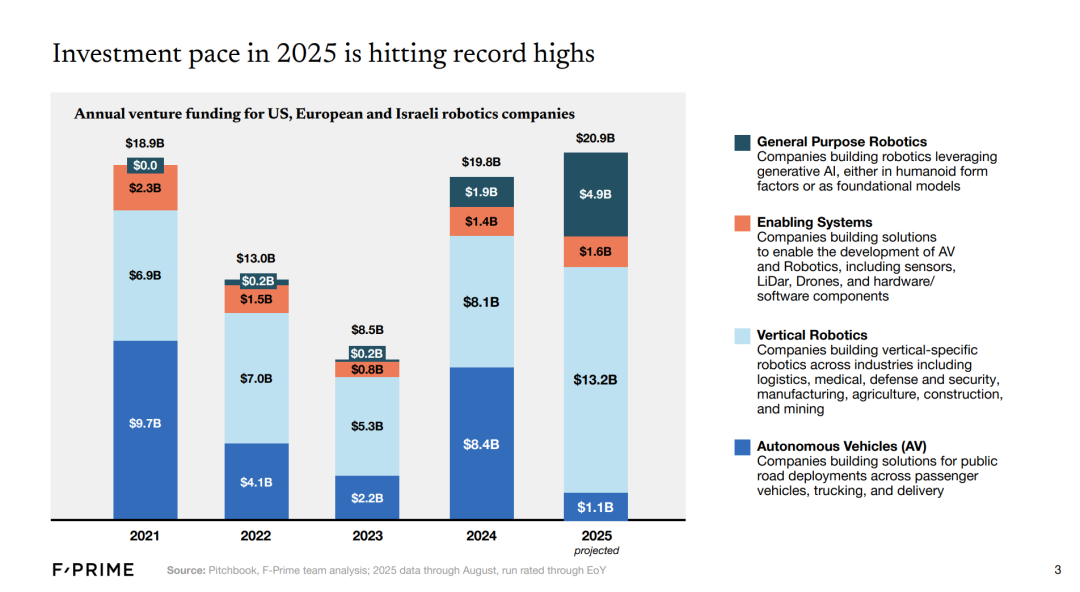
In addition, both general and vertical markets experienced explosive growth.**Investment in General Purpose Robotics is projected to surge from 19˙billionto4.9 billion;**Vertical robotics, designed for specific scenarios, accounts for half of the market, with its market size jumping from 81˙billionto13.2 billion.
These years of embodied intelligence industry
If the main theme of the robotics industry over the past decade has been innovation, then the next decade will be determined by large-scale deployment. FieldAI's approach precisely targets this structural turning point. It doesn't bet on a particular robot shape or a single scenario, but rather on a scalable, reusable, and sustainably upgradeable "general-purpose robot brain + data infrastructure".
In today's booming field of embodied intelligence, we look forward to a future robot ecosystem that is as diverse and vibrant as the current smartphone ecosystem, truly serving humanity and making life more convenient.
Reference Links:
1.https://www.businessinsider.com/ai-robotics-data-problem-fieldai-surprising-fix-ali-agha-2025-9
2.https://robobdtw2025.mapyourshow.com/8_0/sessions/session-details.cfm?scheduleid=100&
3.https://spectrum.ieee.org/autonomy-unstructured-field-ai
4.https://www.reuters.com/business/robotics-startup-fieldai-raises-314-million-new-funding-sources-say-2025-08-20/
5.https://fprimecapital.com/blog/robotics-on-the-rise-the-state-of-robotics-investment-in-2025/