Command Palette
Search for a command to run...
Only 38.8 Milliseconds! Clef-Flash Completes Multimodal Decision-Making, Eliminating Token-by-Token Output; Million-Token Context, DABstep Benchmark Evaluates Agents' Multi-Step Reasoning Capability
With the accelerated adoption of agents and automation applications, enterprises increasingly require models to provide directly executable decisions rather than long texts that require secondary parsing. However, the traditional large language model paradigm of free-form token-by-token generation continues to face persistent issues in structured decision-making scenarios, such as unstable output formats, cumbersome parsing, and high latency.
To break this limitation, Cloudflare open-sourced Clef-Flash in October 2026, a 9B-parameter multimodal decision model. Post-trained on Qwen3.5-9B, it restructures the decision-making process from text generation to single forward-pass probabilistic scoring, providing a more direct technical path for structured decision-making in the era of large models.
Traditional generative paths require decoding output tokens step by step; the longer the generation, the longer the wait. Yet, decision tasks only require an option and its probability. Clef-Flash skips the entire autoregressive generation chain, with an officially reported median decision latency of just 38.8 milliseconds, faster than a blink. Meanwhile, it fully retains the understanding capabilities of its 9B parameters, simply rearranging computation from "writing answers" to "making judgments." It is also natively compatible with the Jev System One API, allowing businesses already using such interfaces to integrate almost seamlessly. From automated classification and routing of customer service tickets and support messages, to image and content moderation, and structured extraction of invoice status, urgency levels, and sentiment trends, Clef-Flash provides a ready-made answer to one of the most common needs in enterprise workflows: making decisions quickly, stably, and quantifiably.
Currently, the HyperAI official website has launched "Clef-Flash: Typed Probabilistic Decision Model". Come and try it out~
Online Usage:
October 19 - October 23, hyper.ai Website Update Overview:
- Quality Public Datasets: 6
- Featured Quality Tutorials: 4
- Popular Encyclopedia Entries: 5
- Top Conferences with November Deadlines: 6
Visit the official website: hyper.ai
Featured Public Datasets
1. DABstep Multi-step Reasoning Agent Benchmark Dataset
DABstep (Data Agent Benchmark for Multi-step Reasoning) is a multi-step reasoning benchmark dataset for data agents, released by Adyen in 2025. It aims to evaluate the ability of AI agents to perform complex data Q&A and multi-step logical reasoning. The dataset includes three subsets: the tasks subset contains 460 real business tasks, with a total of over 1 million context samples, formatted in JSON.
Run Online: https://go.hyper.ai/E4hf8
2. Last Translation Benchmark Extreme Translation Benchmark Dataset
Last Translation Benchmark is a benchmark dataset for machine translation model evaluation, released by researchers including Vilém Zouhar in 2026. The associated paper is titled "Last Translation Benchmark," aiming to test the capabilities of current machine translation models in complex translation tasks and identify specific failure cases in real-world scenarios. The dataset contains 3,456 high-difficulty translation samples, covering multiple languages and language combinations. Data sources include manually written and peer-reviewed translation examples. Samples include multimodal inputs such as text, images, audio, and video, with manually defined validation rules provided for each sample.
Run Online: https://go.hyper.ai/yxBAk
3. Knee-Raptor-Corpus Knee MRI Preprocessing Stack Dataset
Knee-Raptor-Corpus is a derived preprocessed dataset obtained from the preprocessing of raw knee MRI data from fastMRI. It aims to provide standardized preprocessed samples for deep learning tasks on knee MRI images. The complete dataset is divided into Part 1 and Part 2, containing a total of 4,407 knee MRI studies. This dataset is Part 1, containing the first 3,200 studies. Each study is processed into a stack of 44 uint8 images of size 336 × 336, with slices from sagittal, coronal, and axial sequences filled in a fixed order.
Run Online: https://go.hyper.ai/roWu1
4. Knee-Raptor-Corpus-Ext Knee MRI Slice Dataset
This dataset is Part 2 of Knee-Raptor-Corpus, containing the remaining 1,207 study samples. The data resamples raw DICOM medical images into fixed-size axial slice stacks. Each sample is standardized to 44 uint8 images of size 336 × 336, ready for direct use in training medical imaging models.
Run Online: https://go.hyper.ai/rlTgA
5. MOF Property Diversity Metal-Organic Framework Property Dataset
MOF Property Diversity is a Metal-Organic Framework (MOF) property dataset released in 2026. It aims to provide representative MOF data for materials informatics research, supporting tasks such as material property analysis, clustering, and machine learning.
Run Online: https://go.hyper.ai/BIMLz
6. prompts.chat AI Prompt Dataset
prompts.chat is an open-source prompt sharing community. This dataset is a snapshot export of the platform's prompt library, with original materials sourced from the open-source project Awesome‑ChatGPT‑Prompts. The dataset aggregates prompt samples compatible with mainstream large models such as ChatGPT, Claude, Gemini, Llama, and Mistral, suitable for prompt engineering research and testing large model dialogue effectiveness.
Use Online: https://go.hyper.ai/iDmot
Featured Public Tutorials
1. Clef-Flash: Typed Probabilistic Decision Model
Clef-Flash is a 9B multimodal decision model released by Cloudflare in October 2026. With an officially reported median decision latency of just 38.8 milliseconds, it is compatible with the Jev System One API. It is suitable for structured decision-making scenarios such as automated classification and routing of customer service tickets, image and content moderation, and determination of invoice status and urgency levels.
Run Online: https://go.hyper.ai/U6YW0
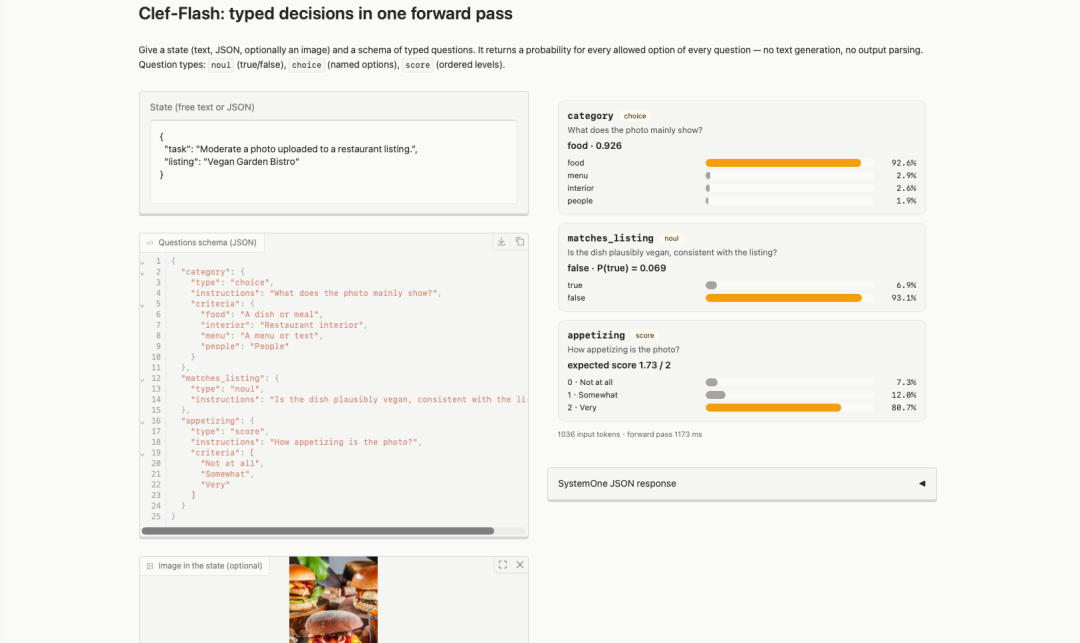
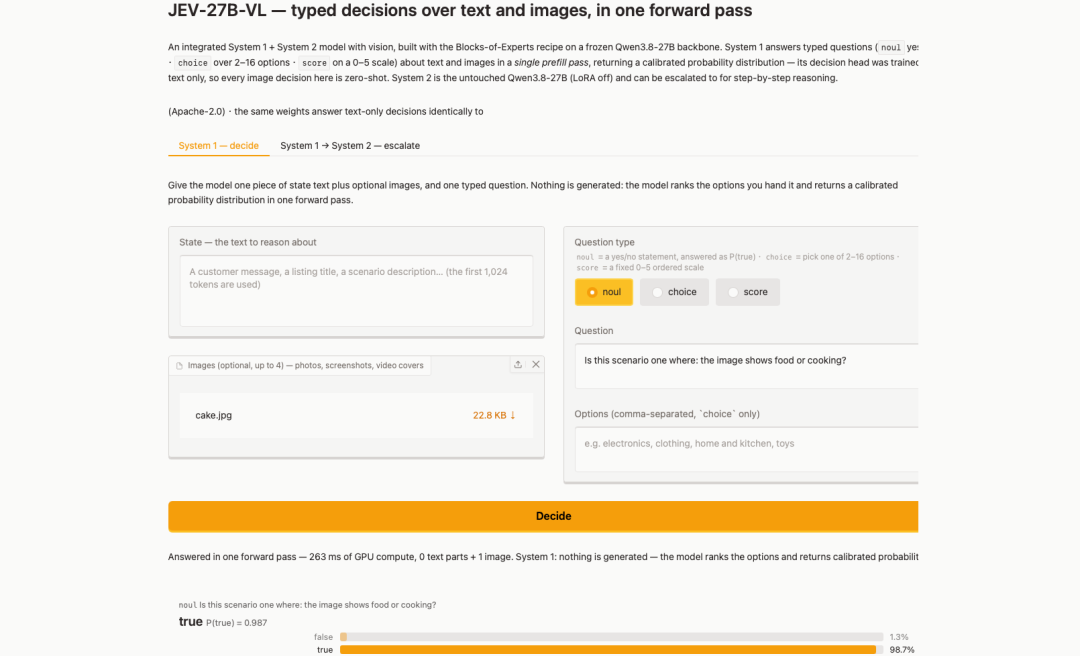
2. JEV-27B-VL: Structured Decision Model for Text and Images
JEV-27B-VL is a visual decision model released by AutoTrust AI in October 2026. It integrates dual-channel capabilities via the Blocks-of-Experts scheme on a frozen Qwen3.8-27B backbone. According to the publisher, the model ranks first among 20 visual decision models on the Jev Decision Index 0.3 visual leaderboard.
Run Online: https://go.hyper.ai/3wow2
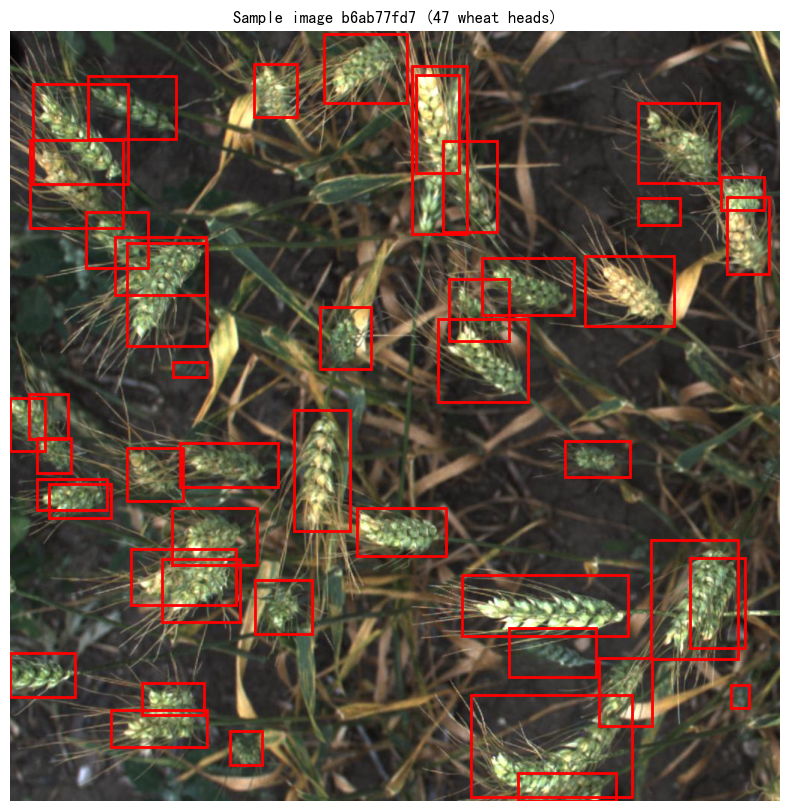
3. PyTorch Introduction Tutorial - FasterRCNN Model Training
Based on a public Notebook by Kaggle user pestipeti, this tutorial demonstrates how to train a Faster R-CNN object detection model using PyTorch and torchvision to detect wheat ears in field images. The tutorial covers the complete workflow, including data loading, data exploration, model construction, single-epoch training, and inference on test images. It is suitable for beginners in object detection and transfer learning, and can also be applied to scenarios such as wheat ear counting, agricultural remote sensing, and plant phenotyping.
Run Online: https://go.hyper.ai/Ozwaq
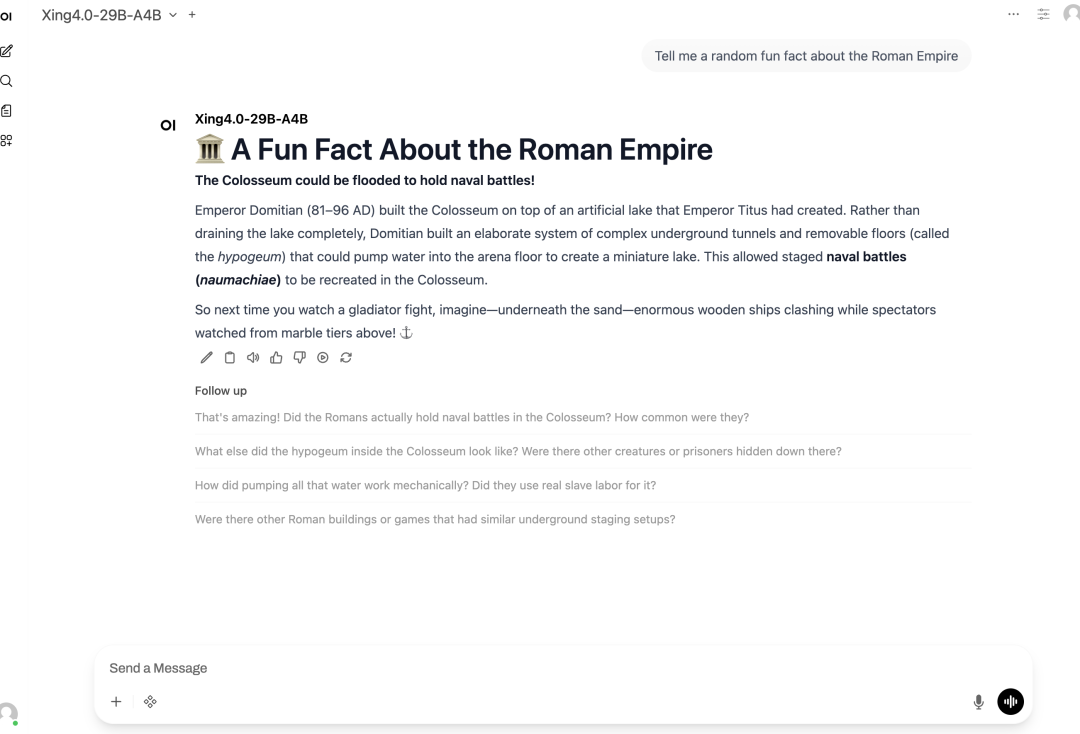
4. Xing4.0-29B-A4B Local Inference and Open WebUI Deployment
This tutorial demonstrates local inference and Open WebUI deployment for the Xing4.0-29B-A4B large model. Xing4.0-29B-A4B is the latest large language model in the Xing series (formerly TeleChat), released by China Telecom Artificial Intelligence Technology Co., Ltd. in September 2026. It is suitable for scenarios such as complex reasoning, code generation, tool calling, and long-context Q&A.
Run Online: https://go.hyper.ai/PDmlT
Featured Popular Encyclopedia Entries
1. World Action Model (WAM)
2. Robustness
3. Generative Pre-trained Transformer (GPT)
4. Video Generation
5. Embedding Models
Here are hundreds of AI-related entries compiled for you to understand "Artificial Intelligence" from here: https://go.hyper.ai/wiki
Top Conferences with November Deadlines
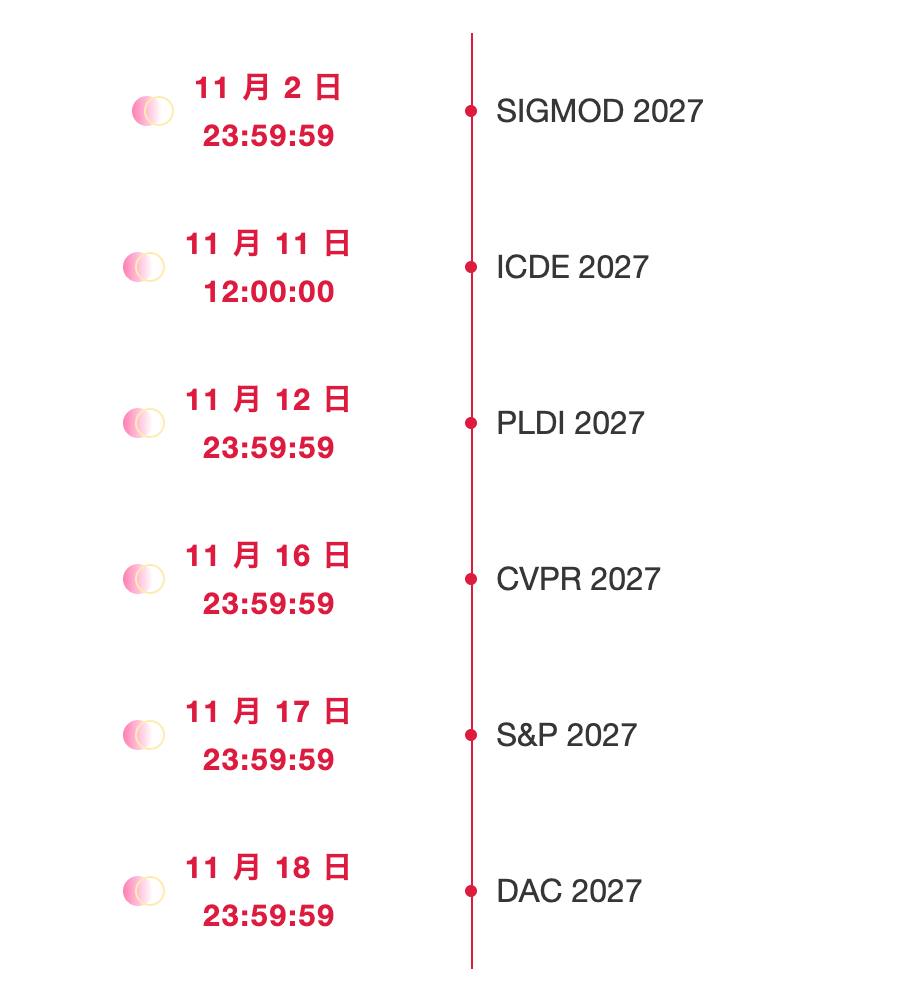
- Deadlines are in AoE time
One-stop tracking of top AI academic conferences: https://go.hyper.ai/event
That's all for this week's editorial picks. If you have resources you'd like to include on the hyper.ai official website, please feel free to leave a message or submit them to us!
See you next week!