Command Palette
Search for a command to run...
ICML 26 Outstanding Papers: Tsinghua JustGRPO Overcomes the dLLM Inference Bottleneck; Say Goodbye to Simple Instruction Tests: Agents Last Exam Comprehensively Evaluates the long-range Professional Capabilities of Intelligent agents.

In the newly announced ICML 26,The research team from Tsinghua University won the Outstanding Paper Award.
This study focuses on diffused language models (dLLM). Although dLLM has made great strides in the field of natural language processing due to its disordered generation and parallel decoding characteristics, the team points out that the mechanism has a "flexibility trap" when dealing with general reasoning tasks such as mathematics and programming: disordered generation causes the model to bypass logical words with high uncertainty, thus limiting its reasoning potential.
To address this, the team proposed the JustGRPO model. This approach abandons complex reinforcement learning adaptations, directly introducing autoregressive (AR) sequencing and the standard GRPO algorithm during training, while retaining the parallel decoding advantages of dLLM during inference. This minimalist design effectively unleashes the model's inference potential, achieving an accuracy of 89.11 TP3T in the GSM8K benchmark.
The HyperAI website now features "JustGRPO: Unlocking the Reasoning Power of Diffusion Language Models with Standard GRPO," so come and try it out!
Paper title:The Flexibility Trap: Rethinking the Value of Arbitrary Order in Diffusion Language Models
Paper link:https://go.hyper.ai/hM7mt
Online use:https://go.hyper.ai/c1a0C
Welcome to visit our official website for more information:
A quick overview of hyper.ai's official website updates from July 4th to July 10th:
* High-quality public datasets: 10
* A selection of high-quality tutorials: 9
* Community article analysis: 1 article
* Popular encyclopedia entries: 5
Visit the official website:hyper.ai
Selected public datasets
1. Agents Last Exam dataset (long-term task dataset for intelligent agents)
Agents Last Exam is a task dataset focused on evaluating the performance of computer agents in long-term professional tasks. It aims to provide a structured description for agent evaluation. The dataset contains information on 153 tasks from the Agents Last Exam (ALE) benchmark test, covering data such as task titles, summaries, classification systems, complete instruction prompts, lists of required actions, expected software, and input file descriptors.
Online use:https://go.hyper.ai/p8Y8D
2. WGO-Bench Robot Video Benchmark Dataset
WGO-Bench is a robot video benchmark dataset released by Macrodata Labs. It aims to evaluate the ability of visual language models to convert robot and first-person action videos into timestamped subtask annotations. This dataset primarily focuses on two tasks: boundary detection and subtask annotation. The annotation labels emphasize describing the complete action events and state changes visible in the video clips.
Online use:https://go.hyper.ai/TPr8O
3. RedlineBench Legal Contract Negotiation Benchmark Dataset
RedlineBench, released by Crosby in 2026, is a benchmark dataset for evaluating legal contract negotiation. It aims to measure the ability of AI agents to make red-pen annotations and negotiation decisions in real-world business transaction scenarios. The dataset contains 140 runnable Harbor tasks, covering three multi-round negotiation scenarios, each consisting of four alternating rounds.
Online use:https://go.hyper.ai/b2EzE
4. FIFA World Cup 2026 Match Dataset
The FIFA World Cup 2026 dataset is a dataset of matches from the 2026 FIFA World Cup, designed for football data analysis and machine learning modeling. It aims to support in-depth football intelligence analysis, statistical modeling, and machine learning prediction tasks. The dataset comprises three core components: structured match data, player data, and team data, covering multi-dimensional statistical information at the match, player, and team levels.
Online use:https://go.hyper.ai/idr4l
5. OmniVideo-100K Audio and Video Inference Command Dataset
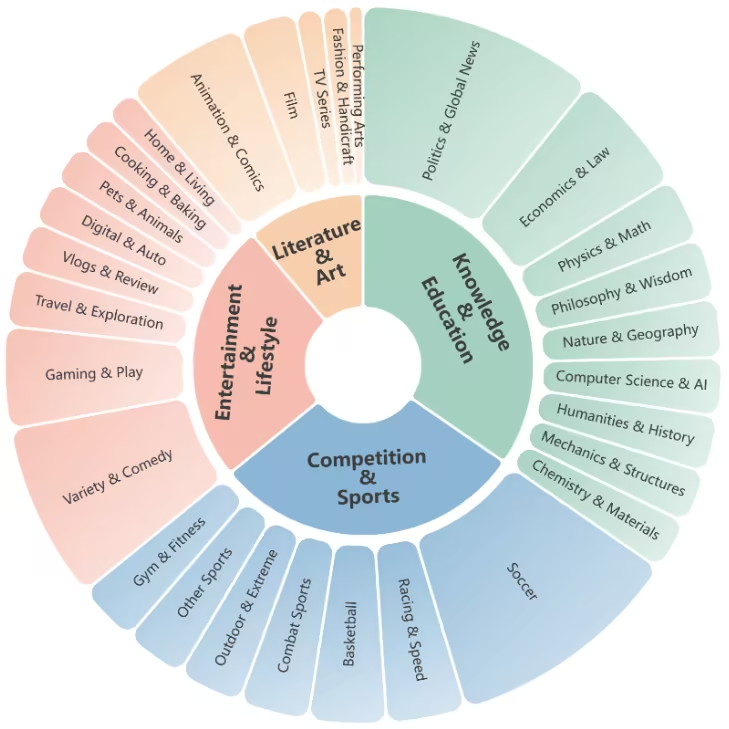
OmniVideo-100K is an audio and video inference dataset released in June 2026 by Nanjing University in collaboration with the Institute of Automation, Chinese Academy of Sciences. It is designed for fine-tuning instructions in multimodal large language models, aiming to improve the model's collaborative capabilities in long-term temporal sequences and cross-modal dependencies. The dataset contains 100,000 question-answer pairs from 5,214 YouTube videos, covering 10 categories of audio and video question-answering tasks, categorized into three cognitive levels: alignment, understanding, and reasoning.
Online use:https://go.hyper.ai/aJIuZ
Nemotron-SFT-SWE-v3 is a software engineering instruction fine-tuning dataset released by NVIDIA in 2026, designed to improve the code understanding and repair capabilities of large language models in SWE-Bench style tasks. This dataset contains 237,970 samples, collected from agent trajectories using various agent frameworks such as OpenHands, SWE-agent, and mini-SWE-agent, and labeled using automated and synthetic methods.
Online use:https://go.hyper.ai/qOzpP
7. Open-SWE-Traces Agent Instruction Fine-tuning Dataset
Open-SWE-Traces, released by NVIDIA in 2026, is a dataset for fine-tuning agent instructions in large language models. It aims to improve the model's code repair and multi-step tool invocation capabilities in software engineering. The dataset contains 207,489 agent interaction trajectories, synthesized using the Minimax-M2.5 and Qwen3.5-122B-A10B algorithms, collected using the SWE-agent and OpenHands framework, and covering multiple programming languages.
Online use:https://go.hyper.ai/WckNP
8. RadImageNet-VQA Medical Image Visual Question Answering Dataset
RadImageNet-VQA is a large-scale medical dataset for visual question answering (VQA) tasks in radiology. It aims to improve the visual understanding and question answering reasoning capabilities of medical multimodal models in CT/MRI images. It is widely used in medical visual question answering tasks, training and evaluation of radiological image analysis models, and research and application development of multimodal medical AI.
Online use:https://go.hyper.ai/WzGOV
9. AgentWorldBench Language World Model Benchmark Dataset
AgentWorldBench, released by Qwen in 2026, is a comprehensive benchmark dataset for evaluating language world models, designed to assess their environmental modeling and reasoning capabilities. The dataset contains 2,170 samples with an average of 22.8 interaction rounds, and is constructed based on real-world model trajectories from mainstream benchmarks such as Tool Decathlon, Terminal-Bench 1.0/2.0, and OSWorld-Verified.
Online use:https://go.hyper.ai/y1s1b
10. GeneBench-Pro Public Package: Gene Case Benchmark Dataset
GeneBench-Pro Public Package is a publicly available benchmark dataset for gene analysis released by OpenAI. It aims to provide a reproducible research case study evaluation environment for AI agents in the fields of genomics and biomedicine. The dataset contains 10 independent problem cases in the fields of genomics and bioinformatics, covering areas such as statistical genetics, clinical genomics, population genetics, single-cell analysis, three-dimensional genomics, and functional genomics.
Online use:https://go.hyper.ai/qd9PF
Selected Public Tutorials
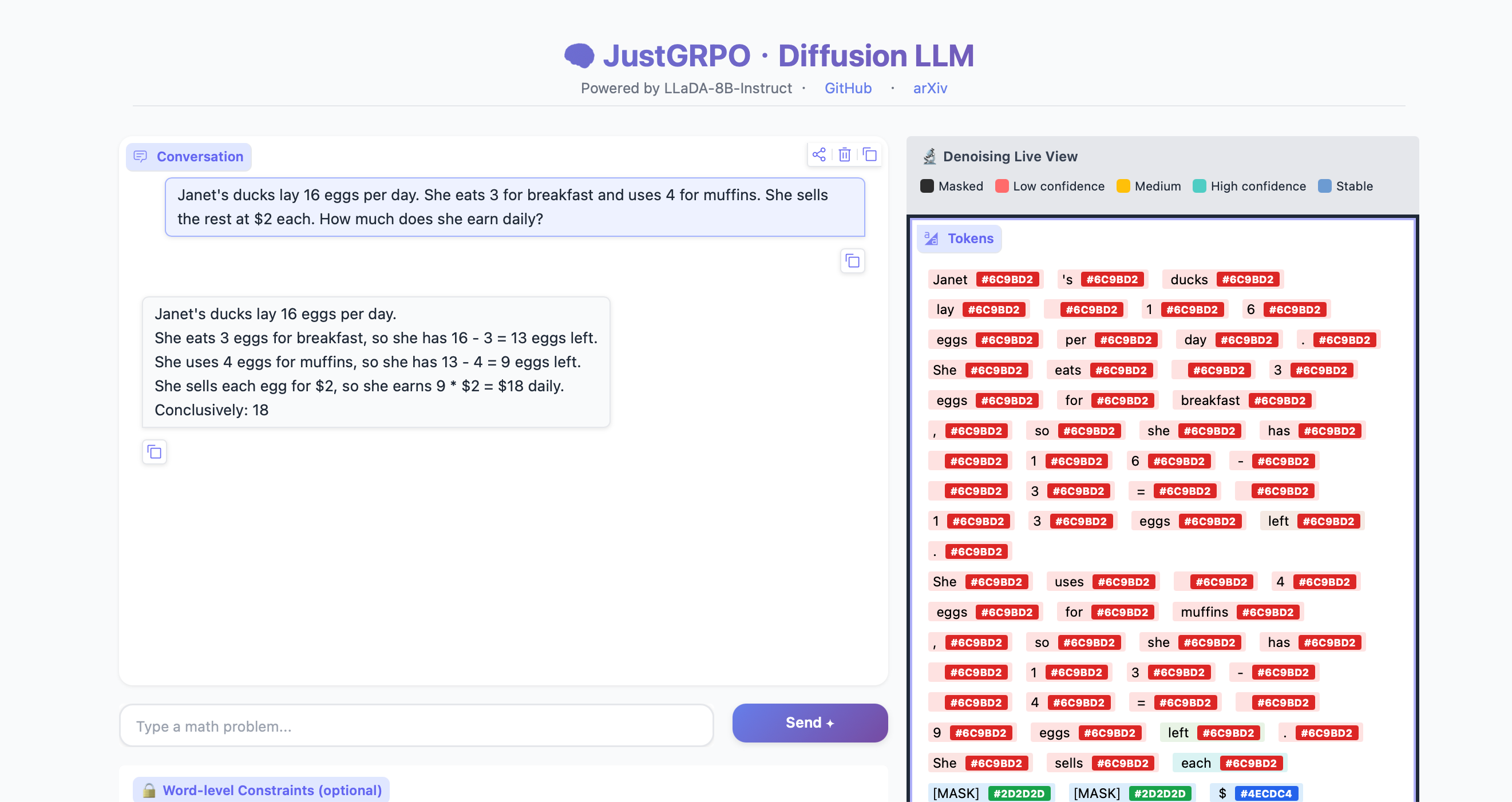
1. JustGRPO: Unlocking the Reasoning Power of Diffusion Language Models with Standard GRPO
The JustGRPO model was released by the LeapLab team at Tsinghua University in January 2026. Its core features and innovations are: a minimalist reinforcement learning method that treats the Diffusion Language Model (DLM) as a standard autoregressive model during training and directly applies Group Relative Policy Optimization (GRPO). It achieves state-of-the-art inference performance (GSM8K 89.1%) without trajectory approximation, marginal likelihood estimation, or any diffusion-specific adaptation.
Run online:https://go.hyper.ai/c1a0C
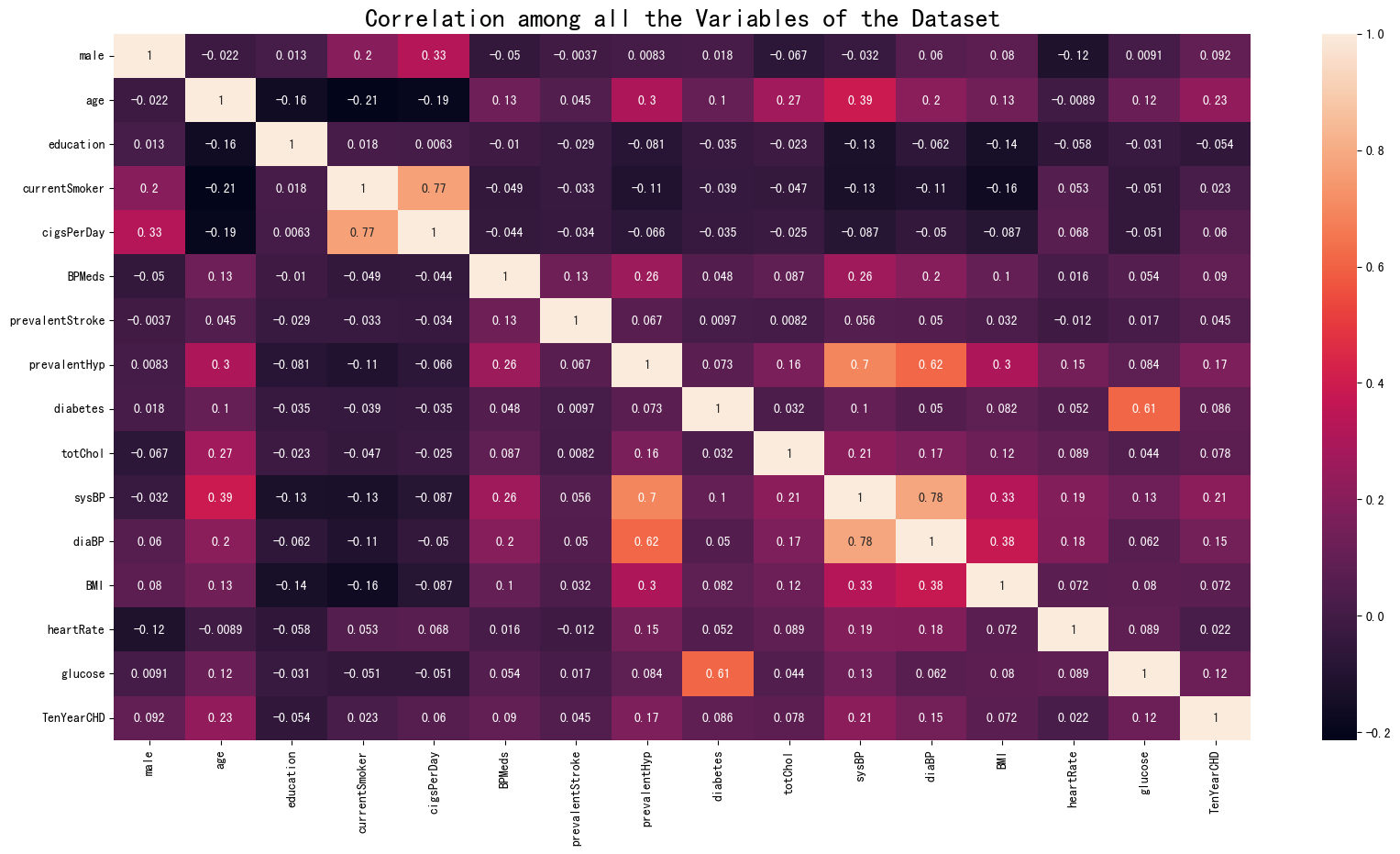
Framingham is a dataset for heart disease research released by the National Heart, Lung, and Blood Institute in September 1948. Multiple machine learning classification models were built to predict an individual's risk of developing coronary heart disease (CHD) within the next 10 years. The project comprehensively covered key steps including data cleaning, exploratory data analysis, feature engineering, class imbalance handling, hyperparameter tuning, and ensemble learning.
Run online:https://go.hyper.ai/tMRDG
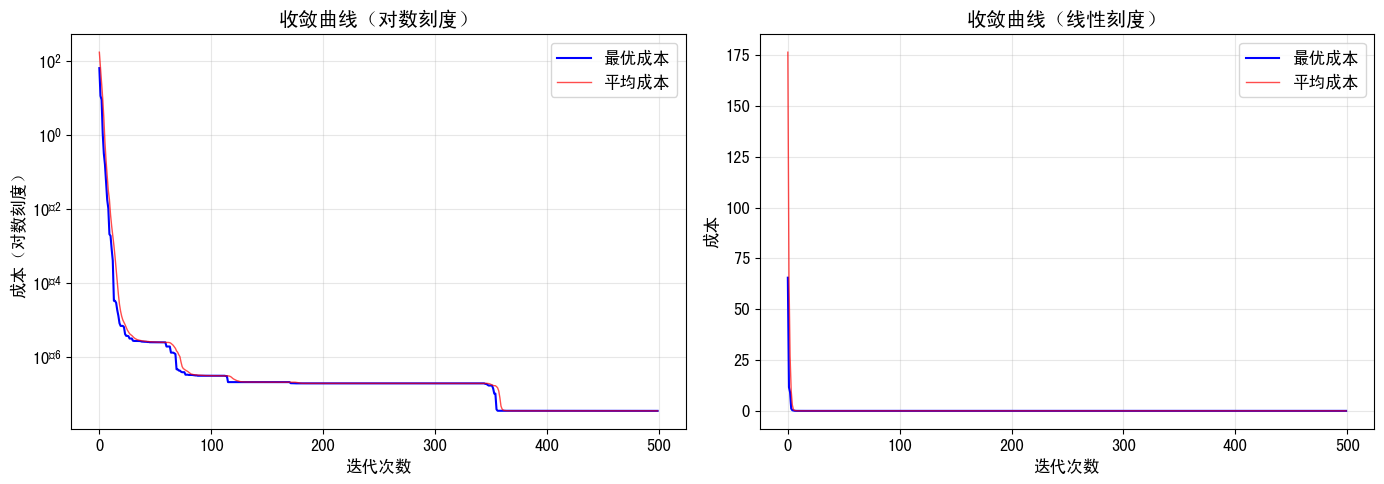
Genetic Algorithm (GA) is an optimization algorithm inspired by Darwin's theory of natural selection. It simulates the mechanisms of selection, crossover, and mutation in biological evolution to efficiently find optimal solutions in the search space. This tutorial introduces the core concepts of genetic algorithms in an easy-to-understand way and demonstrates the complete GA process step-by-step using Sphere function optimization as an example.
Run online:https://go.hyper.ai/Bm7Pr
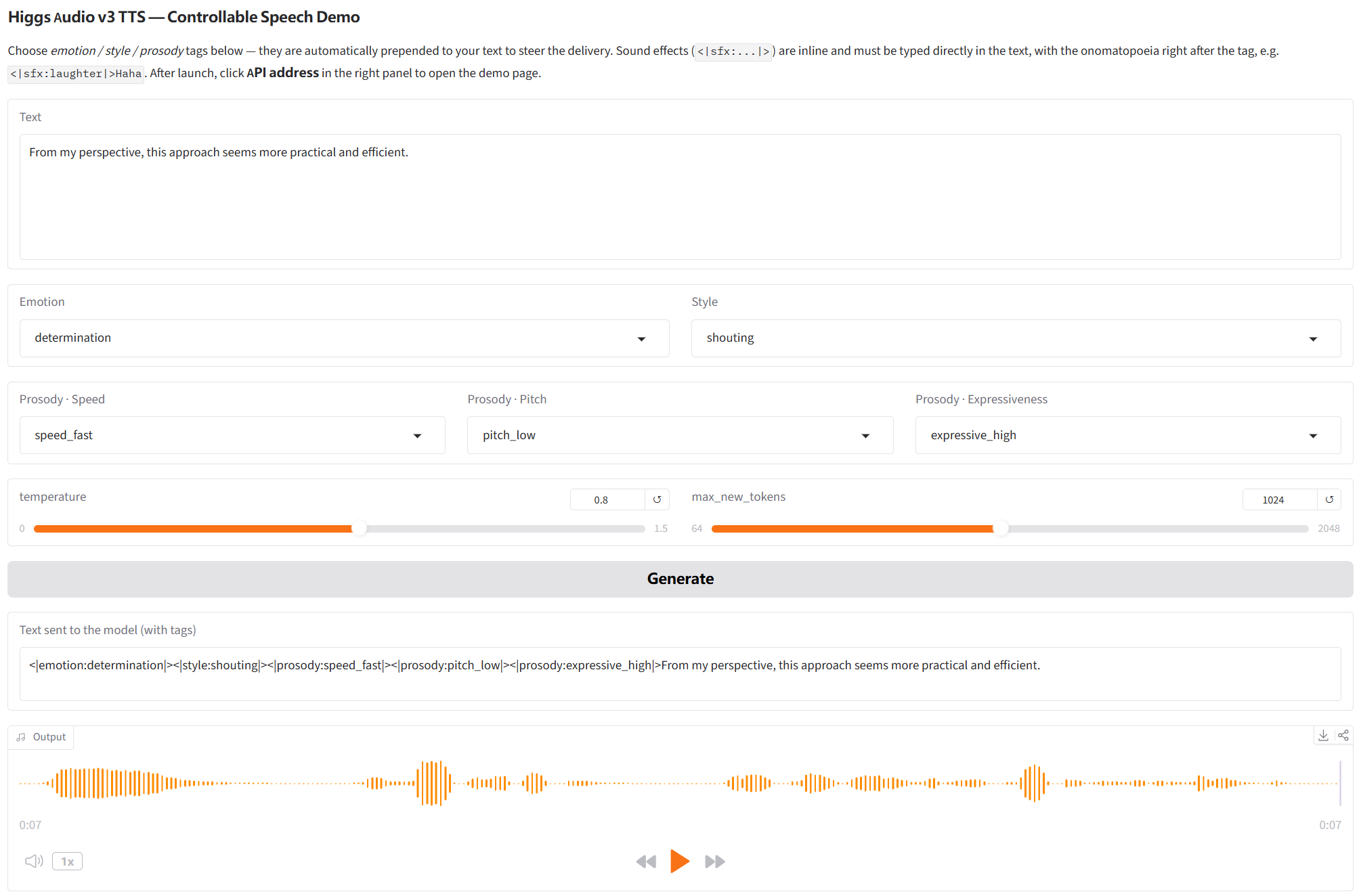
Released by Boson AI in June 2026, Higgs Audio v3 TTS is a conversational text-to-speech model designed for voice agent scenarios. Based on an autoregressive decoder with approximately 4B parameters, it encodes speech into 8 codebooks of discrete audio tokens at 25 fps using the Higgs Tokenizer, and reconstructs the waveform at a 24 kHz sampling rate. The model supports zero-shot synthesis of over 100 languages, can directly perform zero-shot sound cloning, and allows for fine-grained control over emotion, style, prosody, pauses, and sound effects through inline control tags.
Run online:https://go.hyper.ai/Sj9mk
nanoGPT Shakespeare is a Shakespearean-style text generation framework built on the nanoGPT project released by Andrej Karpathy in January 2023. It uses GPT-2 (124M) released by OpenAI in February 2019 as a pre-training base and introduces a Transformer fine-tuning strategy, which can be quickly trained on consumer-grade GPUs to generate Shakespearean-style text.
Run online:https://go.hyper.ai/iqcyS
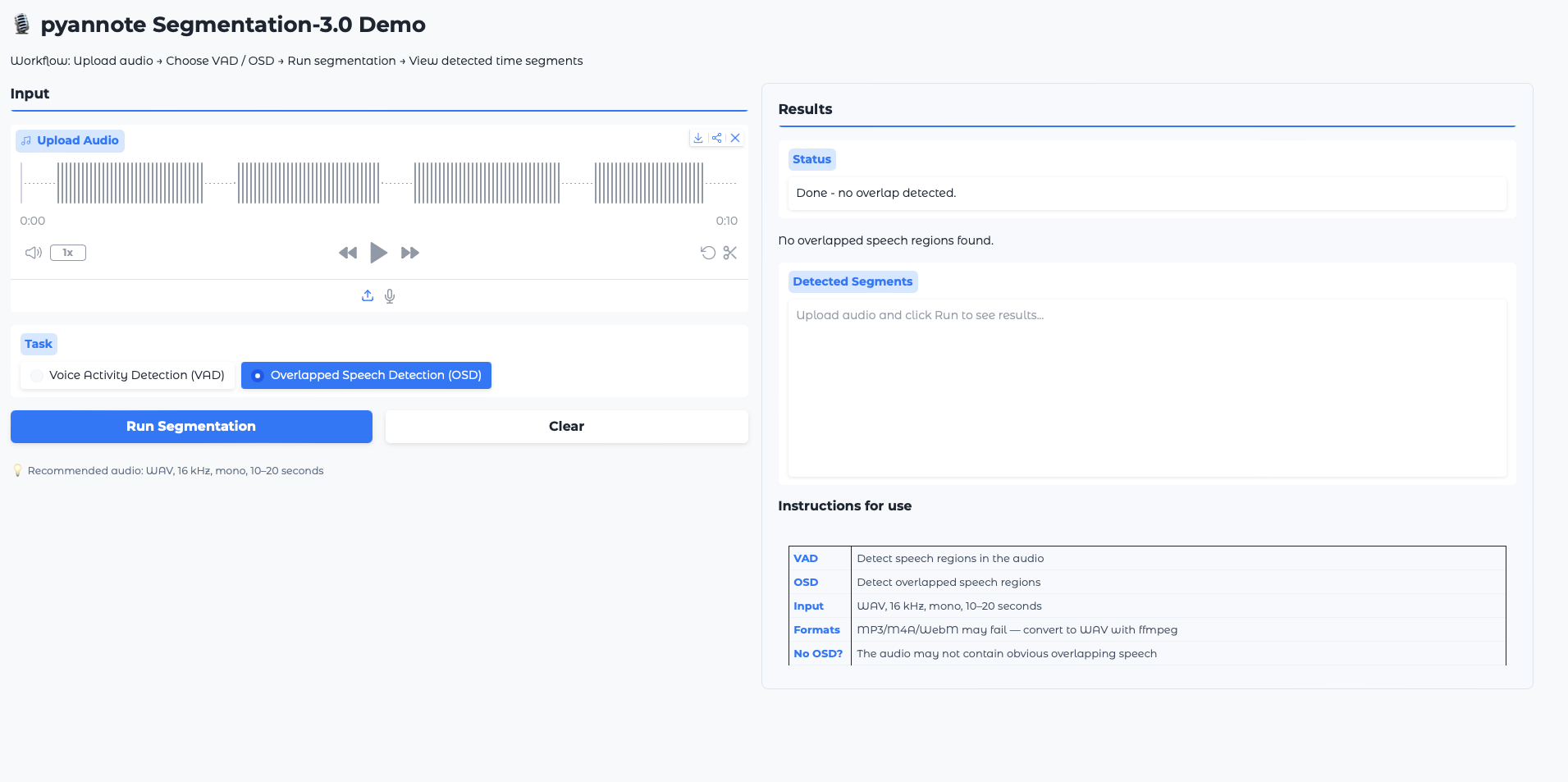
6. Segmentation-3.0: "Powerset" multi-speaker segmentation model
Segmentation-3.0, released by the Pyannote team in September 2023, is a lightweight powered speaker segmentation model trained on pyannote.audio 3.0.0, primarily used for frame-level speech analysis tasks. The model takes a 10-second, 16kHz, mono audio file as input and outputs a multi-speaker classification matrix. Based on the PyanNet architecture, it consists of SincNet, LSTM, and linear layers, with approximately 1.47M parameters.
Run online:https://go.hyper.ai/rXNuo
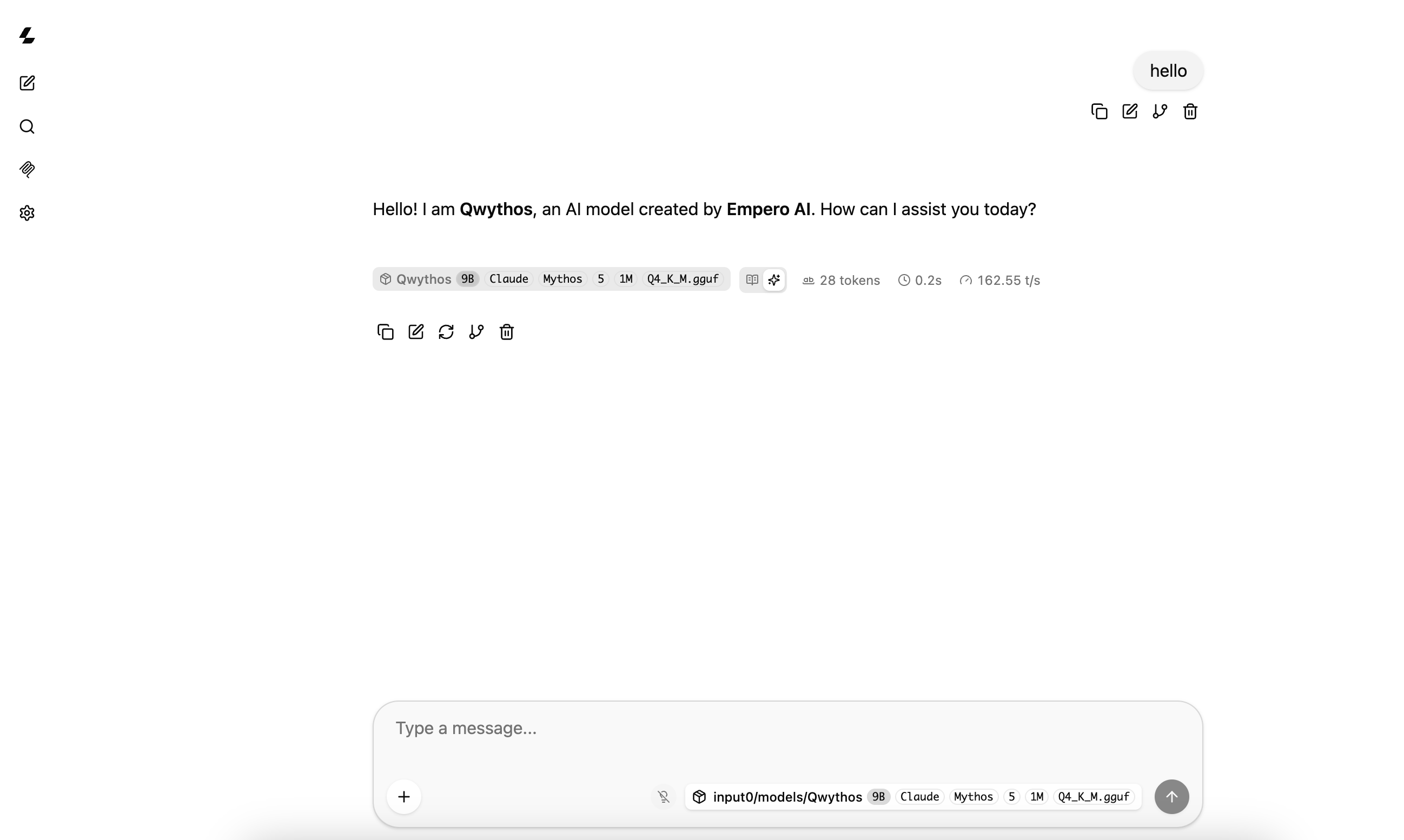
Qwythos-9B-Claude-Mythos-5-1M is a reasoning-based large language model developed by Empero in June 2026, trained on Qwythos3.5-9B with all parameters. This model boasts enhanced reasoning capabilities, achieving a 34-point improvement in MMLU and a 30-point improvement in gsm8k-strict compared to the original Qwythos3.5-9B. It supports native function calls, adhering to the tool-call format specified in Qwythos3.5; YaRN rope-scaling is enabled by default, supporting 1M ultra-long contexts; and it inherits the multimodal vision capabilities of Qwythos3.5-9B. The model is not subject to censorship restrictions and can handle specialized technical issues such as cybersecurity and biomedicine.
Run online:https://go.hyper.ai/dxqRP
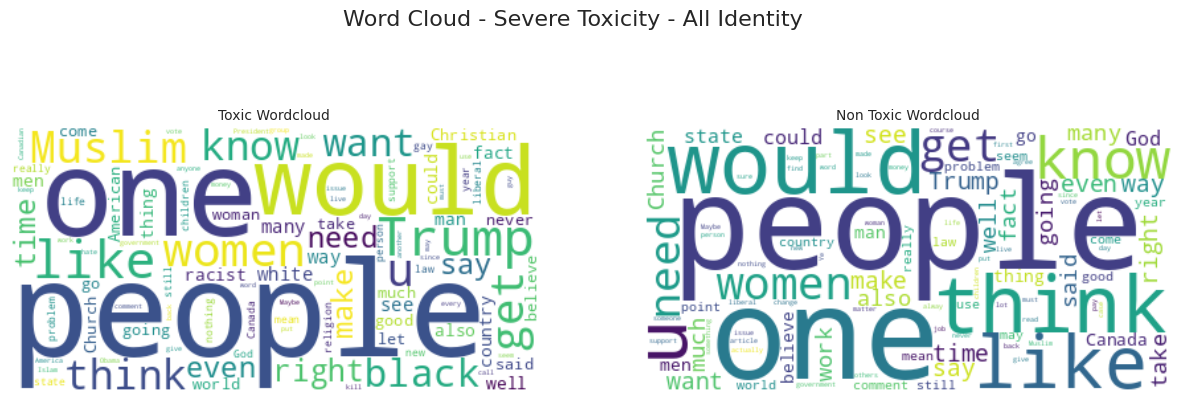
In 2018, Kaggle and Jigsaw hosted a competition to classify toxic comments. However, due to imbalanced training data, the model developed unintended biases, incorrectly associating identity terms like "gay" with toxicity, causing neutral comments to be misclassified as toxic. To address this issue, the team launched a new competition aimed at eliminating bias against specific identity groups.
Run online:https://go.hyper.ai/LnJ2r
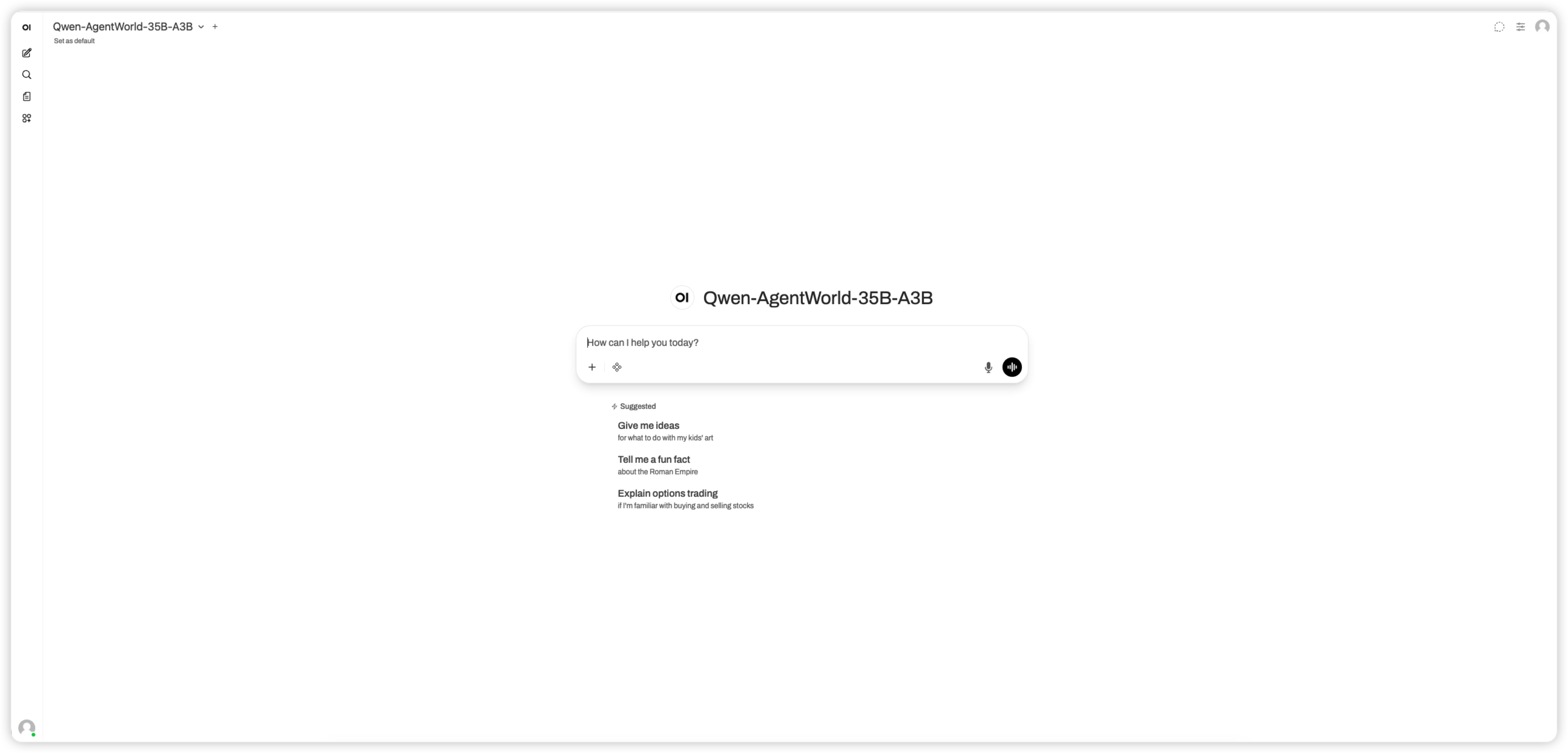
Qwen-AgentWorld-35B-A3B is a native language world model released by Alibaba Group's Qwen team in June 2026. It is not a traditional large-scale conversational language model. It is built on Qwen3.5-35B-A3B-Base, takes the agent's actions and interaction history as input, and predicts the next environmental state through long-chain inference, thereby simulating the agent's interaction environment, such as terminals, search, and tool calls.
Run online:https://go.hyper.ai/PbwGD
Community article interpretation
1. OpenAI releases GeneBench-Pro, which assesses AI research capabilities across 129 questions and 10 domains.
The OpenAI research team recently proposed an updated version of GeneBench, GeneBench-Pro, which covers a wider range of industry and academic fields. It is no longer limited to genomics, but extends to scenarios that require multi-stage statistical inference, such as molecular and quantitative biology, pharmacogenomics, cancer biology, microbial genomics, and clinical translation.
View the full report:https://go.hyper.ai/yS7Cv
Popular Encyclopedia Articles
1. World Action Model WAM
2. Glitch Token
3. Harmonic Mean
4. Shadow Mode Testing
5. Bayesian Model Averaging
Here are hundreds of AI-related terms compiled to help you understand "artificial intelligence" here:
The above is all the content of this week’s editor’s selection. If you have resources that you want to include on the hyper.ai official website, you are also welcome to leave a message or submit an article to tell us!
See you next week!
About HyperAI
**HyperAI (hyper.ai) is the leading artificial intelligence and high-performance computing community in China.**We are committed to becoming the infrastructure in the field of data science in China and providing rich and high-quality public resources for domestic developers. So far, we have:
* Provides domestic accelerated download nodes for 2100+ public datasets
* Includes 700+ classic and popular online tutorials
* Analyzing 300+ AI4Science Paper Cases
* Supports searching for 700+ related terms
* Hosting the first complete Apache TVM Chinese documentation in China
Visit the official website to start your learning journey: