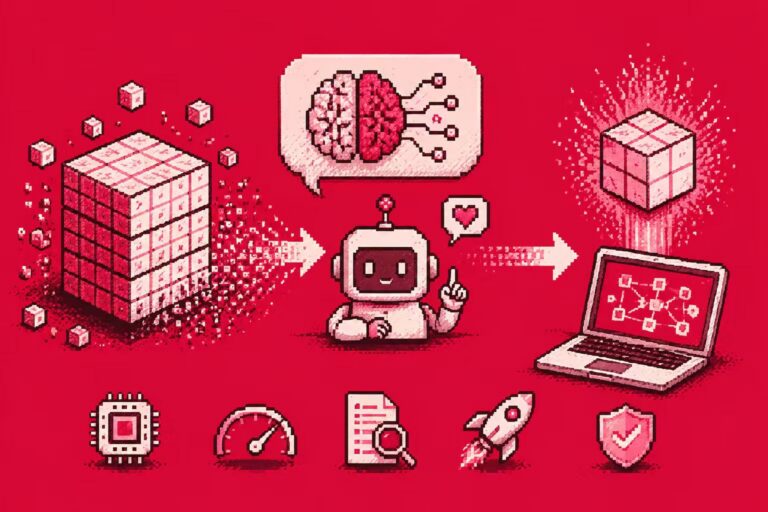
Gemini Embedding 2 arrives as first natively multimodal model
Google has officially released Gemini Embedding 2, marking a significant advancement in artificial intelligence as its first natively multimodal embedding model built on the Gemini architecture. The release is currently available in public preview through the Gemini API and Vertex AI platform. This new model expands upon Google's previous text-only foundation by creating a unified embedding space capable of processing text, images, video, audio, and documents simultaneously. It captures semantic intent across more than 100 languages. By integrating these diverse data types into a single framework, the model simplifies complex technical pipelines and enhances performance across a wide array of downstream tasks. Key applications include Retrieval-Augmented Generation (RAG), semantic search, sentiment analysis, and data clustering. A defining feature of Gemini Embedding 2 is its ability to handle interleaved inputs natively. Unlike traditional systems that process one modality at a time, this model accepts multiple input types, such as an image combined with text, within a single request. This capability allows the system to discern complex and nuanced relationships between different media formats, leading to a more accurate understanding of real-world data scenarios. The model also offers flexible output dimensions, allowing developers to tailor the embedding size to specific application requirements. This flexibility, combined with the best-in-class multimodal understanding inherited from the core Gemini architecture, ensures high-quality embeddings suitable for diverse use cases. The transition to a unified multimodal approach represents a shift away from siloed data processing. Previously, developers often had to build separate pipelines for text, image, and audio, then merge the results. Gemini Embedding 2 eliminates this friction by treating all inputs as part of a cohesive whole. This architecture enables more sophisticated search and retrieval systems where a query can match documents based on both visual and textual context simultaneously. The release underscores Google's strategy to integrate multimodal capabilities directly into its foundational models. By supporting over 100 languages, the model aims to provide global accessibility for businesses and developers looking to deploy advanced AI solutions. The public preview status invites early adopters to test the model's capabilities and provide feedback before broader adoption. Industry analysts note that embedding models are critical infrastructure for modern AI applications, serving as the bridge between raw data and intelligent decision-making. Gemini Embedding 2's ability to process mixed media in a single pass is expected to improve the efficiency and accuracy of systems relying on large-scale data analysis. As organizations seek to leverage unstructured data like videos and audio for insights, this unified approach offers a streamlined path forward. With this release, Google provides a tool that reduces the complexity of building robust AI systems. Developers can now rely on a single API to generate embeddings that reflect the full context of their data, whether it is a transcript of a meeting, a video file, or a combination of images and descriptions. This capability is particularly valuable for applications requiring deep context, such as content moderation, enterprise search, and personalized recommendations.