Command Palette
Search for a command to run...
Introduction to Transformers
Abstract
One-sentence Summary
This course introduces electromagnetic theory by presenting electrodynamics from the nature of electrical force to solutions of Maxwell's equations, emphasizing the field concept and the importance of moving electric charges in accelerator physics.
Key Contributions
- The course introduces electromagnetic theory by developing electrodynamics from fundamental electrical forces to the formulation and solution of Maxwell’s equations.
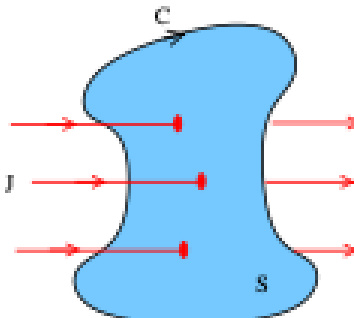
- Stokes’ theorem is applied to derive the integral forms of Faraday’s law of induction and Ampère’s law, while the linearity of the governing equations demonstrates the principle of superposition for electric fields.
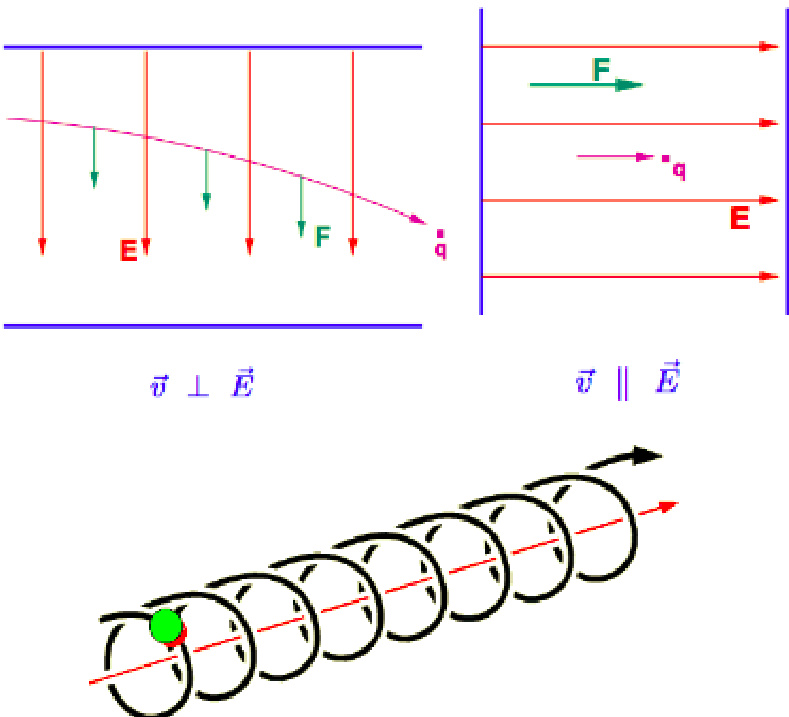
- Explicit integral formulations and physical interpretations of electromotive force clarify induction mechanisms, and field diagrams illustrate the trajectories of charged particles under electric and magnetic forces.
Introduction
Electromagnetic theory underpins critical applications in accelerator physics and wave propagation, requiring a rigorous grasp of field dynamics to effectively design and analyze charged particle systems. Prior educational materials often compartmentalize electrostatics and magnetostatics, which complicates the transition to time-dependent phenomena and creates steep mathematical hurdles when navigating between differential and integral formulations. The authors leverage a unified lecture framework that systematically integrates charge conservation laws, Maxwell's equations, and the principle of superposition into a single coherent curriculum. By explicitly mapping abstract derivations to practical mechanisms like electromagnetic induction and particle acceleration, they deliver an accessible, calculation-ready resource that streamlines the learning process for students and practitioners.
Dataset

- Dataset composition and sources: The authors compile a single foundational entry titled "1. Introduction to Electromagnetism," sourced directly from Dr. Irina Shreyber at CERN in Geneva, Switzerland.
- Subset specifications: The collection contains only this introductory segment. No additional subsets, quantitative size metrics, or filtering criteria are provided in the excerpt.
- Training and model integration: The text does not specify how the material is partitioned, mixed, or allocated for training splits or downstream model usage.
- Processing and metadata: No cropping strategies, metadata construction, or additional preprocessing steps are detailed in the provided content.
Method
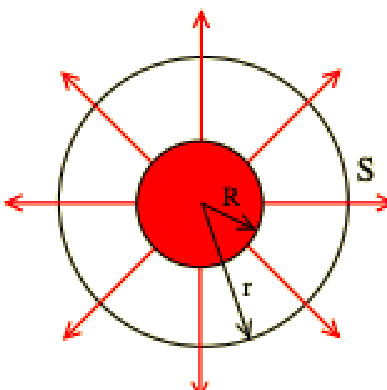
The authors present a comprehensive framework for understanding classical electromagnetism, grounded in the concept of fields as fundamental entities that mediate interactions between particles. The framework begins by establishing that forces, such as gravity and electrostatic interactions, can be described more effectively through the notion of fields—quantities that assign a value to each point in space and time. The gravitational field g and the electric field E are introduced as examples, with the latter being defined via the Lorentz force law, F=qE, where q is the charge of a test particle. The magnetic field B is introduced as a complementary field, with both E and B forming a unified description of electromagnetism. These fields are not static; they are dynamic, as moving charges generate both electric and magnetic fields, and the fields, in turn, exert forces on charges, leading to a self-consistent interplay.
The dynamics of these fields are governed by Maxwell's equations, which are presented in differential form. The first equation, Gauss's law, states that the divergence of the electric field is proportional to the charge density, ∇⋅E=ϵ01ρ. The second equation, the absence of magnetic monopoles, states that the divergence of the magnetic field is zero, ∇⋅B=0. Faraday's law describes how a time-varying magnetic field induces an electric field, ∇×E=−∂t∂B, and Ampère's law (with Maxwell's correction) describes how electric currents and time-varying electric fields generate a magnetic field, ∇×B=μ0J+μ0ϵ0∂t∂E. These four equations form the foundation for the entire theory.
To analyze specific scenarios, the framework considers limiting cases. In electrostatics, where charges are stationary and currents are zero, the equations simplify to ∇⋅E=0 and ∇×E=0, allowing the electric field to be expressed as the gradient of a scalar potential, E=−∇ϕ. This leads to the Poisson equation, ∇2ϕ=−ϵ01ρ, which can be solved using Green's function methods to find the potential and field for any charge distribution. In magnetostatics, where currents are steady, the equations become ∇×B=μ0J and ∇⋅B=0. Here, the magnetic field is expressed as the curl of a vector potential, B=∇×A, and the vector potential satisfies an equation that can be solved using the Biot-Savart law to find the magnetic field from a given current distribution.
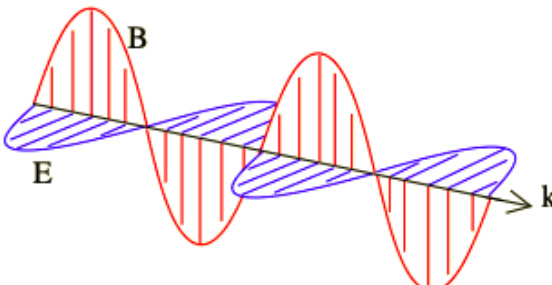
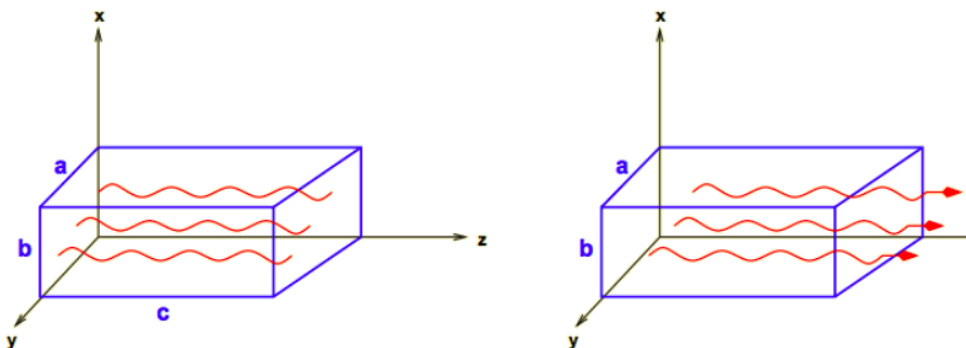
The framework also explores the behavior of electromagnetic waves. In free space, where ρ=0 and J=0, Maxwell's equations lead to wave equations for both E and B. The solutions are transverse waves, with the electric and magnetic fields oscillating perpendicular to each other and to the direction of propagation, k. The phase velocity of these waves is c=1/μ0ϵ0, which is the speed of light. The authors discuss the propagation of these waves in different media, including conductors, where the fields decay exponentially with depth, characterized by the skin depth δ. This leads to the concept of RF cavities and waveguides, where the fields are confined and supported by the boundary conditions of the conducting walls. The solutions for fields in such cavities are standing waves with discrete frequencies, determined by the dimensions of the cavity and the mode numbers, which are crucial for applications in particle accelerators.