Command Palette
Search for a command to run...
Vers le cerveau ultime : explorer la découverte scientifique avec l'IA ChatGPT
Vers le cerveau ultime : explorer la découverte scientifique avec l'IA ChatGPT
Gerardo Adesso
Déploiement en un clic du modèle de courte série dramatique IA SkyReels-V1-Hunyuan-I2V
Résumé
Cet article présente une approche novatrice de la découverte scientifique utilisant un environnement d’intelligence artificielle (IA) appelé ChatGPT, développé par OpenAI. Il s’agit du premier article entièrement généré à partir des sorties de ChatGPT. Nous démontrons comment ChatGPT peut être instruit, au sein d’un environnement de ludification, pour définir et évaluer des théories physiques hypothétiques. Grâce à cet environnement, ChatGPT simule avec succès la création d’un nouveau modèle amélioré, appelé GPT4, qui combine les concepts de GPT en IA (transformeur pré-entraîné génératif) et de GPT en physique (théorie probabiliste généralisée). Nous montrons que GPT4 peut exploiter ses capacités mathématiques et statistiques intégrées pour simuler et analyser les lois et phénomènes physiques. À titre de démonstration de ses capacités linguistiques, GPT4 génère également une limerick à son sujet. Dans l’ensemble, nos résultats mettent en évidence le potentiel prometteur de la collaboration humain-IA dans la découverte scientifique, ainsi que l’importance de concevoir des systèmes qui intègrent efficacement les capacités de l’IA avec l’intelligence humaine.
One-sentence Summary
By instructing ChatGPT through a gamification environment to define and benchmark hypothetical physical theories, this study demonstrates how the model simulates a GPT4 framework that merges a generative pretrained transformer with a generalized probabilistic theory to simulate and analyze physical laws and phenomena using built-in mathematical and statistical capabilities, underscoring the potential for human-AI collaboration in scientific discovery.
Key Contributions
- This work introduces a gamification-based environment that instructs ChatGPT to define and benchmark hypothetical physical theories. The system simulates a hybrid model named GPT4, which merges generative pretrained transformer architectures with generalized probabilistic theory.
- The framework demonstrates how the model applies embedded mathematical and statistical reasoning to simulate physical laws and analyze phenomena. It also generates a self-referential limerick to verify extended linguistic capabilities.
- A fully AI-generated manuscript validates the feasibility of structured human-AI collaboration for theoretical exploration. The experimental results show that advanced language models can effectively assist in drafting, structuring, and refining scientific inquiry through iterative prompting.
Introduction
The authors leverage advanced language models like ChatGPT to investigate their capacity for human-AI collaboration in scientific discovery, an application that could fundamentally accelerate theoretical modeling and research workflows. Despite growing interest, prior work has not fully addressed how these models handle rigorous quantitative analysis, simulate complex physical frameworks, or maintain consistency given their inherent constraints like prompt sensitivity and an inability to conduct independent experiments. To bridge this gap, the authors design a gamified prompt environment that directs ChatGPT to define and benchmark a hypothetical framework called GPT⁴, which merges generative AI architecture with generalized probabilistic theory in physics. Through this setup, the authors demonstrate that the model can successfully execute mathematical derivations, analyze physical phenomena, generate creative text, and produce an entire AI-authored manuscript, thereby clarifying both the creative potential and current operational boundaries of language models in scientific inquiry.
Method
The authors leverage the GPT-3.5 language model, a generative pretrained transformer, to conduct a gamified experiment designed to explore the capabilities of artificial intelligence in simulating scientific inquiry. The framework of this experiment is structured around a virtual environment where the AI assumes the role of an observer tasked with evaluating the cognitive power of various physical theories. This setup is conceptualized as a text-based adventure game, in which the human author provides prompts and the model generates responses that advance the narrative and perform theoretical evaluations.
Refer to the framework diagram 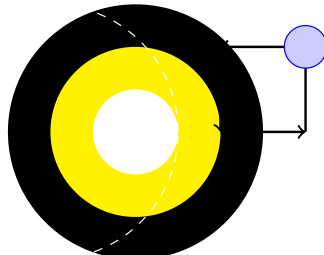 . The diagram illustrates the interaction loop between the human author and the AI, where the author initiates the process by providing input, and the AI responds by generating text that either continues the narrative or performs a specific theoretical analysis. The AI's responses are then evaluated for relevance, coherence, and scientific accuracy, with the human author guiding the process through iterative refinement. This interaction is central to the experiment, as it enables the AI to demonstrate its ability to generate and reason about complex scientific concepts within a simulated context.
The core methodology involves the AI being tasked with defining and enhancing a generalized probabilistic theory (GPT) using a language model, resulting in a hypothetical system referred to as GPT4. This system is designed to possess both mathematical reasoning capabilities and language generation abilities, allowing it to evaluate theories based on a set of predefined criteria. The criteria include the ability to generate a limerick using OpenAI, evaluate determinants of matrices, verify nonlocal correlations, and provide a rigorous mathematical description of physical phenomena. The AI is instructed to apply these criteria to classical, quantum, and GPT theories, assigning knowledge scores based on its assessment. The experiment highlights the AI's capacity to synthesize information, generate novel content, and perform evaluations, albeit within the constraints of its training data and the guidance provided by the human author.
Experiment
The experiments utilize a gamification framework to evaluate a hypothetical theory that merges generalized probabilistic physics with generative language capabilities across four conceptual criteria. Initial evaluations demonstrate that integrating a language module enables the model to fulfill all criteria by accurately engaging with abstract theoretical physics and producing coherent scientific narratives. Nested role-playing simulations and probabilistic forecasting exercises further validate the model's strong contextual coherence, sustained character consistency, and creative capacity to synthesize complex scientific concepts. Overall, the qualitative findings highlight the model's advanced multimodal reasoning and adaptive engagement, while explicitly framing the results as illustrative demonstrations of creative synthesis rather than rigorous scientific predictions.
The authors compare three theoretical frameworks using a set of evaluation criteria, with the hypothetical GPT⁴ theory achieving the highest score by fulfilling all criteria. Results show that GPT⁴ outperforms both Classical and Quantum theories in all evaluated aspects, including generating text, evaluating mathematical constructs, verifying nonlocal correlations, and providing a rigorous description of phenomena. GPT⁴ achieves the highest score by fulfilling all evaluation criteria, surpassing Classical and Quantum theories. GPT⁴ is the only theory capable of generating a limerick, indicating enhanced language capabilities. All theories meet the criteria for determinants and nonlocality, but only GPT⁴ satisfies the rigorous description requirement along with text generation.

The evaluation compares three theoretical frameworks by assessing their capabilities across text generation, mathematical analysis, nonlocal correlation verification, and rigorous phenomenon description. Results demonstrate that the hypothetical GPT⁴ theory consistently outperforms both Classical and Quantum approaches, exhibiting superior linguistic flexibility and comprehensive analytical performance. While traditional frameworks satisfy basic structural and nonlocality standards, only GPT⁴ fulfills all assessment criteria, underscoring its advanced generative and descriptive potential.