Decart Photorealistic Driving
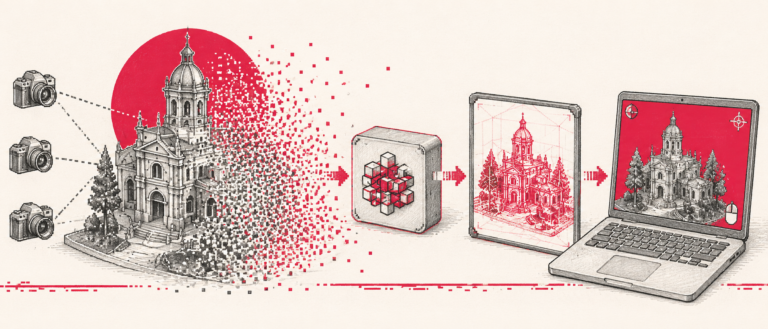
Israeli AI startup Decart has launched Oasis 3, an interactive world model capable of generating photorealistic, real-time driving environments via API. Released Wednesday, the system marks Decart’s strategic expansion from consumer video generation into physical AI and autonomous vehicle simulation. CEO Dean Leitersdorf positioned the release as a foundational developer tool, mirroring OpenAI’s early API strategy to cultivate an independent ecosystem around world models. Oasis 3 generates multi-camera, physically accurate driving scenarios from text prompts, supporting front-facing and side-view simulations for autonomous system training. The model utilizes Decart’s proprietary DOS optimization stack, ensuring efficient deployment across NVIDIA, Amazon, and Google infrastructure. This vertical integration allows access pricing of $0.02 per second while keeping cumulative operational costs below $100 million. The startup recently secured a $300 million funding round valuing the company near $4 billion, with strategic investments from Toyota, Adobe, eBay, and NVIDIA. Competing with offerings from Google, World Labs, Luma, and Runway, Oasis 3 differentiates itself through infinite generation capabilities and high initial photorealism. Testing confirms the model rapidly renders accurate urban environments from single prompts. However, sustained interaction reveals technical constraints. The auto-regressive architecture generates frames sequentially while referencing prior outputs, which strains context retention. Environmental consistency degrades over extended simulations, causing disjointed transitions and loss of initial geographical markers. The system also lacks robust object awareness and physics simulation, frequently permitting virtual vehicles to pass through each other. Decart treats these limitations as active research priorities. Leitersdorf noted that rapid context window consumption limits long-term coherence, with each frame generating approximately 8,000 tokens. Engineering efforts are focused on expanding memory architecture and implementing token compression to support larger contexts. The next iteration will support video-to-scene initialization to improve environmental stability. Despite current performance gaps, Decart prioritizes ecosystem development. Immediate API access aims to accelerate use-case discovery across autonomous driving, robotics, and industrial simulation. Leitersdorf anticipates that developer adoption will yield novel applications within months, reinforcing a strategy that values community-driven innovation over immediate technical perfection. The launch positions Decart as an emerging infrastructure provider in the world model sector, contingent on resolving consistency challenges while scaling developer engagement.