Baker and Song Le Launch GenBio AI to Build AI Digital Organisms
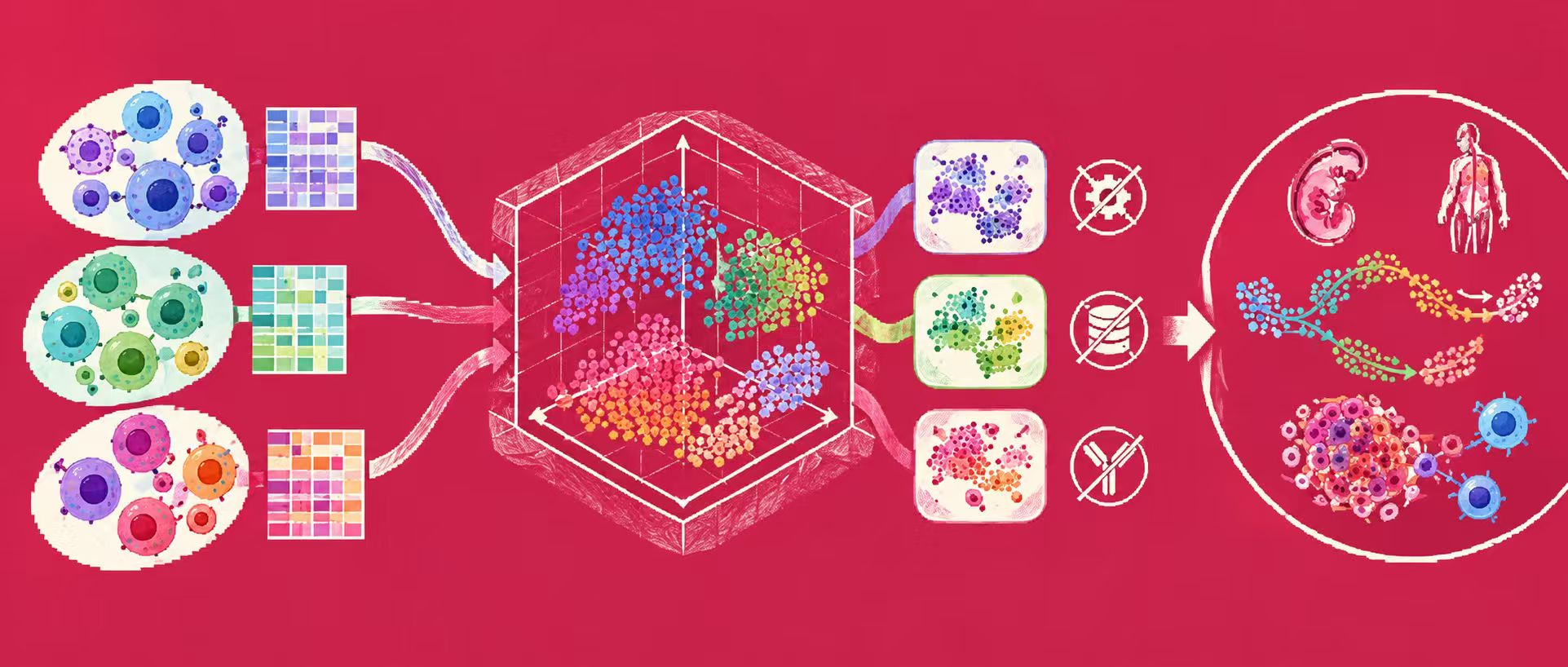
GenBio AI, a startup co-founded by Nobel laureate David Baker, CTO Song Le, CEO Fred Hu, and Chief Scientist Eric Xing, published a comprehensive framework in Nature Medicine for constructing an AI-Driven Digital Organism (AIDO). This initiative advances beyond isolated virtual cell models by proposing a unified system that integrates molecular, cellular, tissue, organ, and individual scales into a cohesive biological world model. The company has already developed six initial foundation models covering DNA, RNA, protein structure, and tissue layers, with current prototypes emphasizing bidirectional information flow between clinical phenotypes and molecular representations. AIDO's development follows a three-stage roadmap. The initial phase, Divide and Conquer, involves training specialized base models for distinct data modalities, recognizing that genomic sequences, spatial transcriptomics, and cellular dynamics require tailored architectures. GenBio is currently executing the second phase, Connect the dots, which utilizes paired multi-omics data to align these modalities. This approach employs graph neural networks and differentiable computation graphs to establish explicit mappings across DNA, RNA, protein interactions, and cellular states, enabling signals to propagate from sequence models to cellular and tissue models. The final phase aims for cross-scale optimization, where the system undergoes joint training to refine representations through continuous feedback loops between high-level disease states and low-level molecular adjustments. Functioning as a generative engine, AIDO supports prediction, simulation, inverse design, and virtual evolution. In drug discovery workflows, the system can simulate perturbations to trace effects through metabolic pathways, screen for therapeutic targets, and assess toxicity risks prior to clinical trials. Using a metabolic disease example, the framework demonstrated the ability to validate known drug mechanisms and subsequently generate novel small-molecule or gene therapy candidates. The architecture also facilitates counterfactual reasoning and virtual evolution, allowing researchers to simulate selective pressures to optimize biological functions. To achieve the status of a true biological world model, AIDO requires state retention capabilities that track system dynamics following interventions, enabling the model to build upon previous states rather than resetting. The publication underscores the need for automated evaluation metrics approaching experimental precision and modular designs that ensure interpretability for medical use. GenBio identifies bio-safety risks and data privacy challenges as critical hurdles, advocating for built-in safety guards and federated learning protocols. The company envisions AIDO's realization depending on an open collaborative ecosystem to aggregate diverse data and ensure the safe, scalable deployment of digital life simulations.