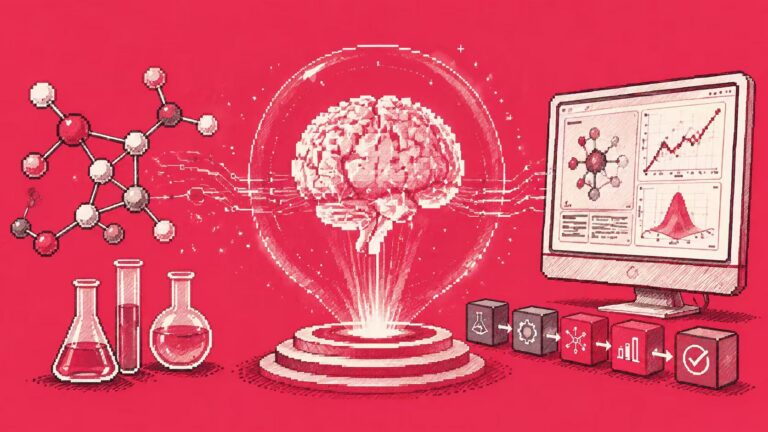
AI-Redesigned Starting Points Accelerate Protein Evolution
Researchers have successfully integrated artificial intelligence-driven protein redesign with continuous laboratory evolution, overcoming a longstanding bottleneck in enzyme engineering. Traditionally, directed evolution experiments starting from natural proteins frequently fail because accumulating mutations for novel functions compromise structural stability. To address this, scientists leveraged machine learning models, specifically ProteinMPNN and PROSS, to computationally stabilize botulinum neurotoxin proteases while preserving their native catalytic activity. These AI-optimized variants were then deployed as starting points for Phage-Assisted Continuous Evolution campaigns. Side-by-side trials demonstrated that AI-redesigned enzymes consistently outperformed their wild-type counterparts. The stabilized starting points expanded the accessible mutational fitness landscape, allowing evolving proteins to accommodate function-enhancing but destabilizing mutations that natural enzymes rejected. Consequently, redesign-initiated evolution achieved higher catalytic activities, reached functional peaks faster, and succeeded at significantly higher rates, particularly when tackling challenging new substrates. In cases where wild-type evolution failed entirely, redesign-initiated campaigns successfully engineered functional variants. The workflow practical utility was validated through the development of a protease engineered to specifically target ataxin-2, a protein linked to neurodegenerative disorders. By combining AI stabilization with dual-selection continuous evolution, researchers generated an enzyme that efficiently cleaves the disease-relevant target while eliminating off-target activity against native proteins. The AI-designed starting variants produced proteases with superior expression levels, enhanced thermal stability, and dramatically improved specificity compared to those evolved from natural templates. These engineered enzymes also demonstrated efficient target cleavage in mammalian cell models, underscoring their therapeutic potential. This integrated approach effectively decouples the traditional stability-function trade-off inherent in protein engineering. By pre-optimizing sequences for robustness before laboratory adaptation, the method accelerates the discovery of biocatalysts with tailored properties. The framework establishes a scalable pipeline for rapidly repurposing existing proteins into highly specific therapeutics, industrial enzymes, and gene-editing tools. As computational design and automated evolution systems continue to mature, this synergy promises to streamline the development of next-generation biotechnologies with unprecedented precision and efficacy.