AI Boosts Real-Time Imaging
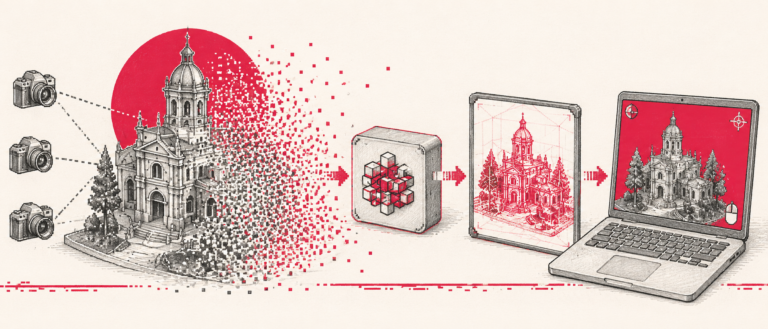
In a recent development published in Biomedical Engineering Letters, researchers at the University of Tsukuba in Japan have developed an artificial intelligence model that accelerates diffuse optical tomography by more than one million times, enabling near-instantaneous diagnostic imaging of biological tissue. The neural network predicts light propagation within tissue in approximately two milliseconds, a dramatic improvement over conventional numerical simulations that require hours to complete. Diffuse optical tomography is a noninvasive imaging technique that uses near-infrared light to detect internal abnormalities such as tumors and cerebral hemorrhages without radiation exposure. High diagnostic precision traditionally requires solving the radiative transfer equation to model how light travels through scattering tissue. Because these calculations are computationally intensive, real-time clinical deployment has remained impractical. To overcome this bottleneck, the research team trained a machine learning emulator on extensive simulation datasets. The model learns to map abnormal region characteristics directly to time-resolved optical signals detected at measurement points. During inference, the network generates predictions in roughly two milliseconds, achieving a speedup factor exceeding one million compared to standard computational methods. The model exhibits strong generalization capabilities, maintaining high fidelity across previously unseen parameter combinations. Its accuracy is constrained only by the intrinsic noise levels present in the training data. By integrating the AI emulator with statistical sampling algorithms, researchers successfully reconstructed the precise location and dimensions of simulated abnormalities from optical signal inputs. This combination allows for rapid, iterative optimization of diagnostic parameters across vast feature spaces. The breakthrough addresses a critical limitation in biomedical optics by transforming an otherwise computationally prohibitive process into a real-time capability. The technology establishes a viable pathway for continuous, bedside monitoring and rapid clinical decision-making. Future development will focus on validating the framework with clinical-grade datasets and optimizing hardware deployment for integrated medical imaging systems. The research underscores the growing role of data-driven AI in overcoming classical computational barriers in medical diagnostics, positioning neural emulation as a foundational tool for next-generation diffuse optical tomography.