Google DeepMind Unveils AlphaEvolve: AI-Powered Algorithm Discovery and Optimization Transforming Tech and Science
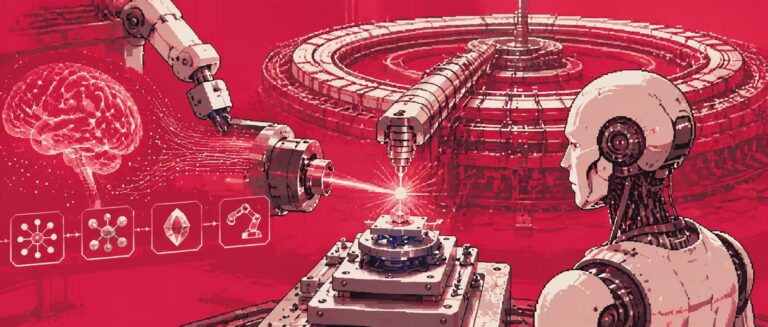
This week saw significant advancements in the realm of artificial intelligence, particularly in the areas of algorithm discovery and software engineering. Google DeepMind's introduction of AlphaEvolve stands out as a groundbreaking agent capable of discovering and evolving new algorithms, marking a significant leap in AI's ability to drive original breakthroughs. Meanwhile, OpenAI and Microsoft made notable strides in AI-integrated development tools, with OpenAI launching Codex and Microsoft open-sourcing key components of its GitHub Copilot Chat extension for VS Code. AlphaEvolve: AI's Leap in Algorithm Discovery Google DeepMind unveiled AlphaEvolve, a new AI agent designed for scientific and algorithmic discovery. Unlike traditional AI models that generate plausible code snippets, AlphaEvolve iteratively refines entire codebases, optimizing across multiple performance metrics, and grounding its improvements in actual code execution results. This approach effectively reduces the risk of hallucinations, a common issue in generative AI models. AlphaEvolve has already demonstrated its effectiveness in several Google applications. For instance, it recovered approximately 0.7% of Google’s fleet-wide compute capacity by optimizing a data center scheduling algorithm. Additionally, it simplified hardware accelerator circuit designs and accelerated the training of its own underlying language model (LLM). One of the most impressive achievements is that AlphaEvolve solved a longstanding mathematical problem from 1969, devising a more efficient method for multiplying two 4x4 complex matrices using only 48 scalar multiplications, surpassing Strassen’s classic algorithm. In its broader application, AlphaEvolve has tackled over 50 other open mathematical problems, often matching or surpassing state-of-the-art solutions. This showcases its potential to drive genuine foundational breakthroughs, not just incremental improvements. Codex: OpenAI’s New AI Coding Agent OpenAI launched Codex, a new AI coding assistant integrated into ChatGPT. Powered by a fine-tuned o3 reasoning model, Codex operates in a secure cloud environment and handles a wide range of software engineering tasks, including bug-fixing, code review, refactoring, and responding to real-time user feedback. Its unique "ask" and "code" modes allow it to clone repositories, run tests, and propose code improvements via diffs and pull requests, guided by explicit instructions in AGENTS.md files. Codex is part of a broader trend in which AI is becoming an increasingly indispensable partner in software development. While it still requires some level of human oversight, it represents a significant step toward AI autonomy in day-to-day workflows. This move aligns with the vision of AI as an ever-present, trusted engineering partner rather than a passive coding assistant. Microsoft Open-Sources AI in VS Code Microsoft announced that it would open-source the code in the GitHub Copilot Chat extension under the MIT license and refactor AI features into the core of the Visual Studio Code editor. This decision allows developers to review, contribute, and fix issues, thereby enhancing the transparency and flexibility of the tool. Integrating AI functions into the editor core will also significantly improve development efficiency. The open-sourcing move is particularly strategic given the growing competition from startups like Windsurf and Cursor, both of which are forks of VS Code. Microsoft’s initiative emphasizes its commitment to collaboration and innovation in the AI-coding space. Other Notable Developments Nous Research’s Psyche Network: A decentralized network for AI model training built on the Solana blockchain. Using DisTrO technology, it enables global participation and leverages idle compute resources to train a 4B-parameter open-source model. Notion’s AI Suite: Notion rolled out a new suite of AI tools for its workspace, including AI Meeting Notes, Research Mode, and Enterprise Search. Users can choose between GPT-4.1 and Claude 3.5, with additional features expected soon. MiniMax’s Text-to-Speech Model: China-based Minimax’s Speech-02-HD outperforms both OpenAI and ElevenLabs in the Artificial Analysis Speech Arena leaderboard. Supporting over 32 languages and capable of processing up to 200,000 characters in a single pass, this model sets a new benchmark in the field. Stability AI’s Mobile Audio Model: Stability AI launched Stable Audio Open Small, a 341M-parameter stereo audio model optimized for mobile devices. This open-source model can generate up to 11 seconds of audio in under 8 seconds on Arm CPUs, making it highly efficient and accessible. Qwen’s Parallel Scaling Law: Alibaba’s Qwen team introduced a theoretical scaling law for parallel training, validated through pretraining experiments. The law demonstrates that a model with ( P ) times the parameters can be trained in ( 1/P ) of the time using ( P ) times the computational resources, potentially enhancing training efficiency for LLMs. Industry Insights Industry insiders are enthusiastic about the potential of these developments. AlphaEvolve's ability to evolve algorithms and its practical applications suggest that AI can now play a more active role in scientific and technological advancements. Codex and the open-sourced AI functions in VS Code indicate a maturing AI-coding ecosystem where developers can benefit from advanced, yet accessible, assistance. Microsoft’s decision to open-source AI features in VS Code is seen as a strategic move to stay competitive and foster community-driven innovation. Similarly, the rise of decentralized networks like Nous Research’s Psyche highlights the democratization of AI training resources. Notion’s integration of AI tools and Minimax’s leading text-to-speech model underscore the expanding influence of AI in productivity and content creation. Overall, these advancements signal the beginning of a new era in AI, where autonomous agents can make significant contributions to both fundamental research and practical software development. As AI continues to evolve, it is increasingly becoming a powerful and indispensable partner in driving innovation and efficiency.