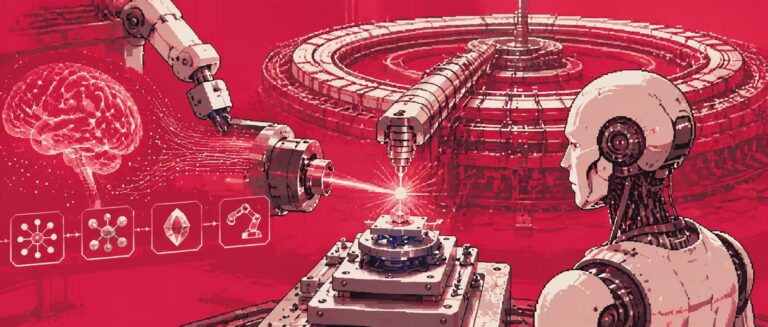
Chinese President Xi Jinping Declares AI Self-Sufficiency a National Priority Amid Tech Rivalry with the U.S.
China Declares AI Independence Chinese President Xi Jinping has recently declared achieving self-sufficiency in artificial intelligence (AI) as a national priority. This move is part of China's broader strategy to reduce dependency on foreign technology, particularly from the United States, as tensions in global tech relations continue to rise. Xi promised significant government support for the development of AI chips, software, and talent, emphasizing the importance of a nationwide effort to secure a leading position in the AI race. The timing of this announcement is significant, coming as Chinese AI labs make rapid progress. A potential second 'DeepSeek moment' may be imminent, referring to a previous breakthrough by Chinese tech giant ByteDance. Domestic AI chip alternatives are also proving effective, undermining the impact of U.S. export controls. Moreover, the gap between Chinese and Western AI models is narrowing, with recent estimates suggesting China is only about three months behind—a margin that is expected to shrink further. At the heart of China's AI push are key players like Baidu, which recently unveiled two upgraded and lower-cost ERNIE AI models at its Create 2025 event. Baidu also showcased new tools designed to integrate these models into various applications, including natural language processing and data analysis. During the conference, Baidu was vocal about its intention to compete with rival DeepSeek, a move that has put additional pressure on both domestic and international competitors to reduce costs and enhance performance. Xi's declaration underscores a strategic shift in China's approach to AI, focusing on localized solutions and homegrown talent. This shift is driven by the desire to not only catch up with but potentially surpass the West in AI advancements. The push for AI independence is multifaceted, involving governmental initiatives, academic research, and corporate investments. Key Players and Developments Baidu Baidu's upgraded ERNIE models, known for their cost-effectiveness and competitive performance, highlight the company's commitment to staying at the forefront of AI innovation. These models are designed to be more affordable and accessible, making them appealing to a broader range of businesses and consumers. By lowering barriers to entry and offering robust tools, Baidu aims to increase its market share and challenge other major players. Sana Sana has introduced an all-in-one AI platform that allows users to build and deploy custom AI agents for any department without requiring coding knowledge. Sana Agents can automate complex workflows, from sales and marketing to legal and compliance, enhancing efficiency and productivity. This user-friendly approach democratizes access to AI, making advanced technologies available to teams with varying skill levels. Anthropic Anthropic CEO Dario Amodei has published a blog post stressing the critical need for "mechanistic interpretability" in AI. He argues that understanding how AI models operate internally is essential for ensuring their safe deployment, especially as these models become more powerful. Anthropic, a leading AI safety-focused company, sees interpretability as a foundational aspect of responsible AI development. However, the pace of innovation among other AI labs raises questions about their willingness to prioritize interpretability over rapid advancement. Grok Grok, a new feature from Grok AI, allows users to create specialized legal assistants for tasks like contract review and legal documentation. The step-by-step guide emphasizes the importance of handling sensitive information carefully and always verifying AI outputs due to the risk of 'hallucination,' where AI generates incorrect or misleading information. This tool offers a practical solution for legal professionals looking to streamline their workflows with AI, while maintaining the necessity for human oversight. Recent AI Developments Several notable advancements have also been reported: OpenAI released an updated version of its GPT-4o model, which now features better memory management, enhanced problem-solving capabilities, and improvements in both intelligence and personality. Elon Musk announced that X’s social media feed will undergo an algorithm update, powered by xAI’s Grok AI model. This update aims to improve user experience and content relevance. Liquid Sciences introduced Hyena Edge, a hybrid AI with a "convolution" architecture. This model offers faster processing and superior benchmarks on mobile devices, making it a promising addition to mobile AI capabilities. OpenAI also launched a lightweight version of deep research called o4-mini, which is said to be nearly as intelligent as its full-scale counterpart but much cheaper to operate. Ziff Davis, a digital publisher, filed a lawsuit against OpenAI, alleging that the company illegally used content from its properties, including Mashable, PCMag, and IGN, to train its models. Moonshot AI released Kimi-Audio, an open-source audio model that excels in speech recognition, audio-to-text, and speech-to-speech conversations, marking a significant step forward in the field of audio AI. Industry Insider Evaluations Industry experts view Xi's AI self-reliance push as a strategic move to bolster China's technological independence and economic security. This initiative could lead to a surge in AI innovation and potentially disrupt the current global AI landscape. Companies like Baidu and Liquid Sciences are being praised for their efforts to make AI more accessible and affordable, which could accelerate adoption across various sectors. However, concerns remain about the ethical implications of rapid AI development, particularly regarding transparency and interpretability, as highlighted by Anthropic's CEO Dario Amodei. The lawsuit filed by Ziff Davis against OpenAI underscores the ongoing legal challenges in the AI training process, signaling the need for clearer regulations and standards. In the broader context, these developments reflect the intense competition and rapidly evolving nature of the AI industry. While China's push for self-reliance and cost-effective solutions is commendable, the international community must also address the shared responsibilities and challenges of AI, ensuring that advancements benefit society as a whole while minimizing risks.