Tech Stops Blown Calls
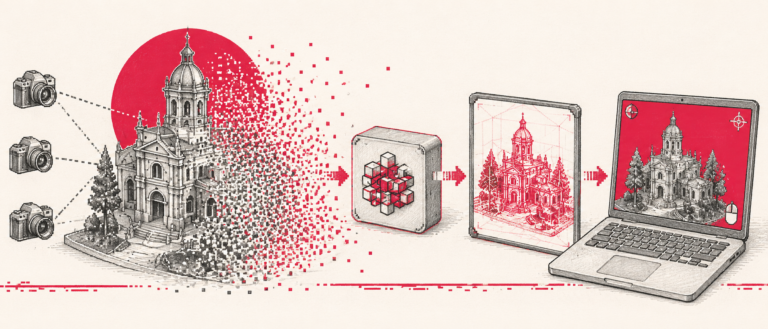
Advanced tracking and imaging systems are being deployed to enhance officiating accuracy at the current World Cup, marking a decisive shift toward data-driven sports management. Match officials will rely on a coordinated network of high-resolution cameras, wearable inertial sensors, and high-fidelity three-dimensional body scans to reconstruct gameplay with unprecedented precision. The central innovation utilizes digital twin technology, creating synchronized virtual replicas of every participant. These dynamic models merge live stadium footage with kinematic data, enabling referees to manipulate perspective and examine player movement from any vantage point. Computer vision algorithms and spatial mapping convert physical actions into measurable metrics, facilitating rapid evaluation of critical incidents. Operational execution involves continuous data streams captured from broadcast infrastructure and athlete-mounted devices. Processing servers aggregate visual and motion information to generate interactive three-dimensional environments of key sequences. Officiating crews can navigate these simulations to assess close calls, tracking spatial relationships and timing with millimeter and millisecond accuracy. This architecture removes reliance on limited camera angles and subjective human perception. The integration of this technological framework aims to significantly reduce controversial decisions and align officiating standards with modern athletic demands. By delivering immutable, multi-angle reconstructions of gameplay, the system supports consistent rule enforcement and enhances competitive integrity. The digital twin model processes complex interactions efficiently, streamlining review protocols without disrupting match tempo. As sports technology continues to mature, the World Cup functions as a global testing environment for integrated tracking ecosystems. The successful deployment of three-dimensional modeling and real-time sensor fusion establishes a precedent for future tournament officiating and may define new standards for automated decision support across professional athletics. Referees will employ these tools as supplementary resources, preserving human judgment as the final authority while leveraging computational precision to eliminate erroneous calls.