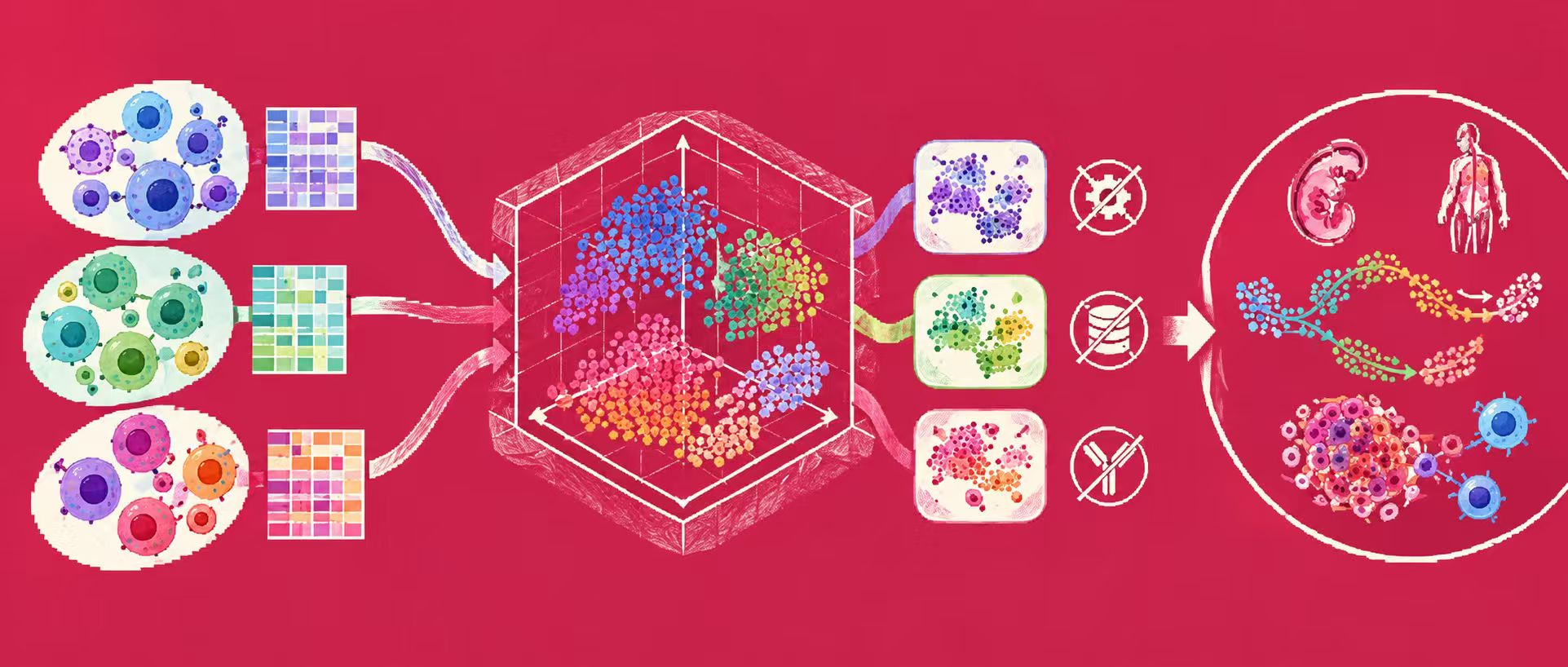
PhysMat AI Framework Grounds Material Predictions in Physical Laws.
Researchers at Tohoku University have introduced a novel artificial intelligence framework designed to enhance the reliability and experimental testability of computational materials discovery. Published in 2026 in Advanced Functional Materials, the Physics-Grounded Materials AI initiative, led by Distinguished Professor Hao Li at the university’s Advanced Institute for Materials Research, addresses a persistent limitation in data-driven material science: the tendency of conventional AI models to prioritize statistical correlations over fundamental physical laws. By embedding thermodynamics, kinetics, electronic structure, and transport mechanisms directly into machine learning pipelines, the framework shifts materials prediction from pattern recognition toward physics-based reasoning. The PhysMat AI architecture structures physical knowledge across five operational roles: prior knowledge, descriptors, constraints, verifiers, and infrastructure. This layered approach standardizes how material properties are represented, guides algorithmic reasoning, and enforces rigorous evaluation against established scientific principles. Rather than treating physical laws as optional post-hoc checks, the framework integrates them as foundational components that define viable search spaces and validate computational outputs. Practical demonstrations highlight the framework’s utility in high-impact energy sectors, including heterogeneous catalysis, solid-state electrolytes for next-generation batteries, and advanced hydrogen storage systems. In these domains, physical constraints reduce the combinatorial explosion of potential compounds, allowing AI agents to focus on chemically and thermodynamically feasible candidates. The researchers outline an evolutionary roadmap for the technology, progressing from physics-aware systems that incorporate established principles, to physics-reasoning models capable of dynamic hypothesis generation, and ultimately to physics-autonomous platforms that seamlessly orchestrate simulations, database queries, and experimental validation in continuous discovery loops. Professor Li emphasized that sustainable progress in materials science requires moving beyond purely correlation-based approaches. Embedding physical reasoning into AI not only improves model interpretability but also ensures that computational predictions align with measurable experimental outcomes. As the framework matures, it promises to accelerate the development of energy technologies by bridging the gap between computational material design and laboratory synthesis. The initiative establishes a standardized methodology for aligning artificial intelligence with the empirical foundations of materials science, offering a scalable pathway toward autonomous, physics-compliant innovation in critical technological fields.