Command Palette
Search for a command to run...
Stanford Medicine Releases SIMCO, a Single-Cell Digital Twin System Based on 9 Drugs and 218 Million White Blood Cells, to Aid Drug Development for Preterm Birth Prevention

Preterm birth (i.e., gestation < 37 weeks) is not an unfamiliar concept, but many prospective parents may only truly recognize the high risks and severe consequences of preterm birth when faced with the premature arrival of their baby. Preterm birth often occurs suddenly, even in the absence of any warning signs or known risk factors. Moreover, preterm birth is not simply a matter of "the baby being born a little early." The smaller the gestational age, the lower the natural maturity of organs such as the respiratory and nervous systems, and the more health risk hurdles the baby must overcome.
According to relevant statistical data, one in every ten pregnancies globally results in preterm birth. Even more worrying is that preterm birth remains the leading cause of death among children under five years of age worldwide.
Fortunately, preterm birth is not unpredictable or unpreventable. Current research indicates that although the triggers for preterm birth are complex, more than 60% of cases are spontaneous preterm labor (sPTL). The occurrence of this type of preterm birth is closely related to immune dysregulation during maternal pregnancy. Therefore, targeted immune regulation and intervention in the timing of labor initiation are crucial. However, at present, clinical validation during pregnancy faces dual ethical and economic constraints, making the large-scale validation of preventive strategies extremely difficult.
To address this challenge, a team led by Stanford Medicine developed an AI-driven single-cell digital twin system called Simulated Immunome Modeling of Clinical Outcomes (SIMCO). This system can simulate the maternal immune system to test drugs for preventing preterm birth—meaning that instead of directly testing drugs on pregnant women, multiple drug combinations are virtually tested via digital twins, thereby enabling large-scale validation of sPTL prevention strategies. Furthermore, this method is expected to provide guidance for personalized protocols for specific cases in future clinical trials.
The relevant research findings were published in Science Advances under the title "Single-cell–level digital twins for preterm birth prevention strategies."
Research Highlights:
- Built the single-cell resolution immune digital twin system SIMCO to break through the dilemma of clinical trials during pregnancy.
- Identified candidate drugs and combination therapy regimens with potential for preterm birth prevention, revealing cellular and molecular mechanisms.
- Introduced optimal transport learning models into obstetric immunology, providing a new computational paradigm for future precise, personalized preterm birth prevention.
Paper link:
https://www.science.org/doi/10.1126/sciadv.aed2741
Constructing a Large-Scale, Comprehensive Single-Cell In Vitro Drug Perturbation Dataset
Training Set: Mass Cytometry Single-Cell Perturbation Atlas
Regarding traditional methods, due to the lack of single-cell resolution, existing models find it difficult to detect cell-type-specific mechanisms and off-target effects, which also hinders the design of personalized intervention protocols. To solve this problem, researchers specifically generated a mass cytometry single-cell perturbation atlas for training the SIMCO model.
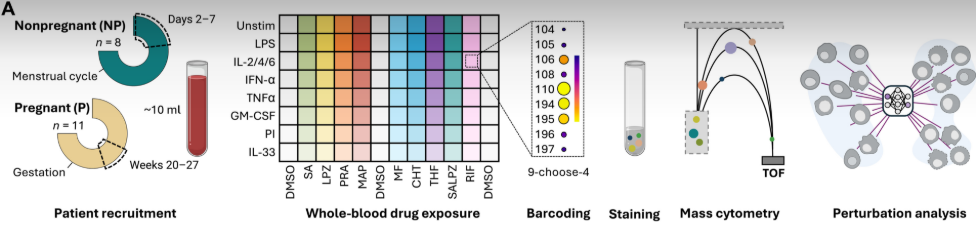
Specifically (as shown in the figure/table below), the study recruited 8 non-pregnant volunteers (within the first week of the menstrual cycle) and 11 second-trimester pregnant volunteers (gestational age 20+0 to 27+7 weeks) to conduct a multiplex drug screening assay to evaluate the immunomodulatory effects of 9 candidate drugs (chlorthalidone, maprotiline, metformin, lansoprazole, pravastatin, rifabutin, salicylic acid (SA), SA+lansoprazole (SALPZ), 5-methyltetrahydrofolate (THF)) on the prevention of sPTL.
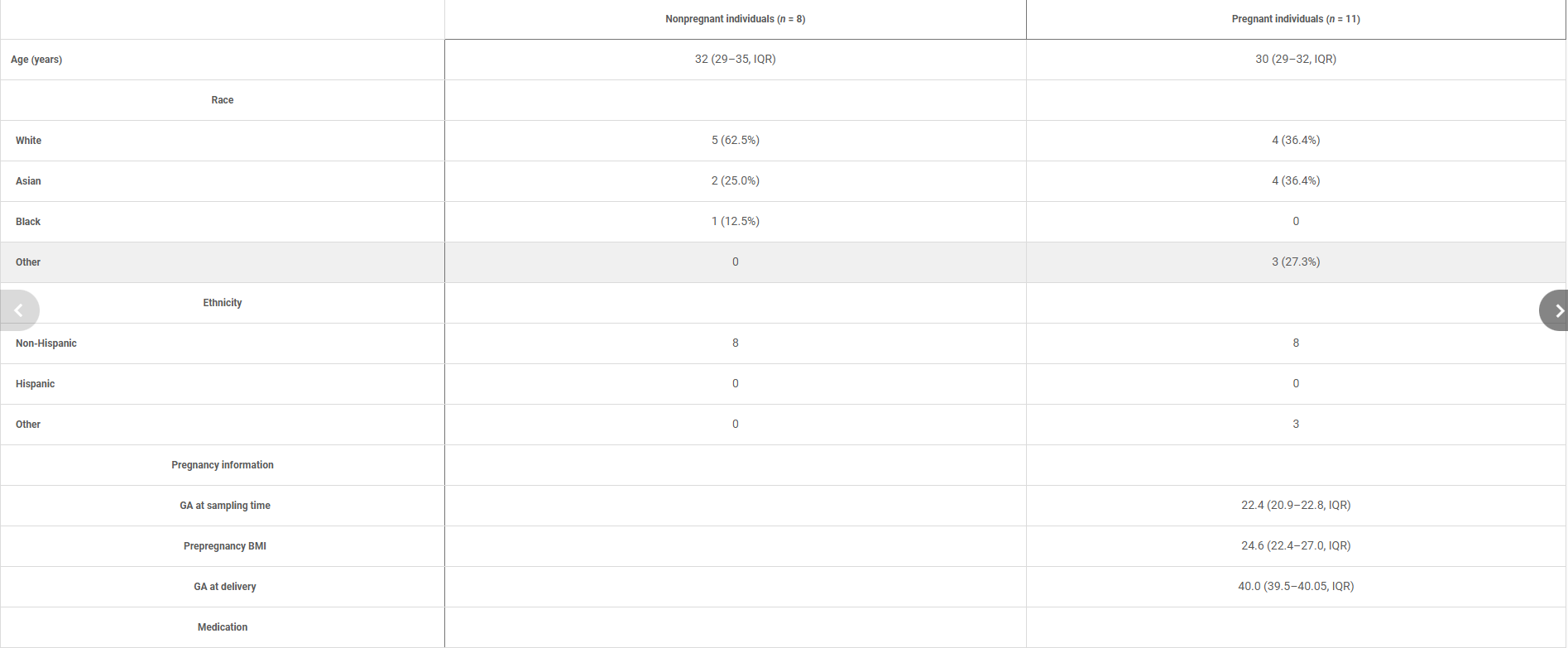
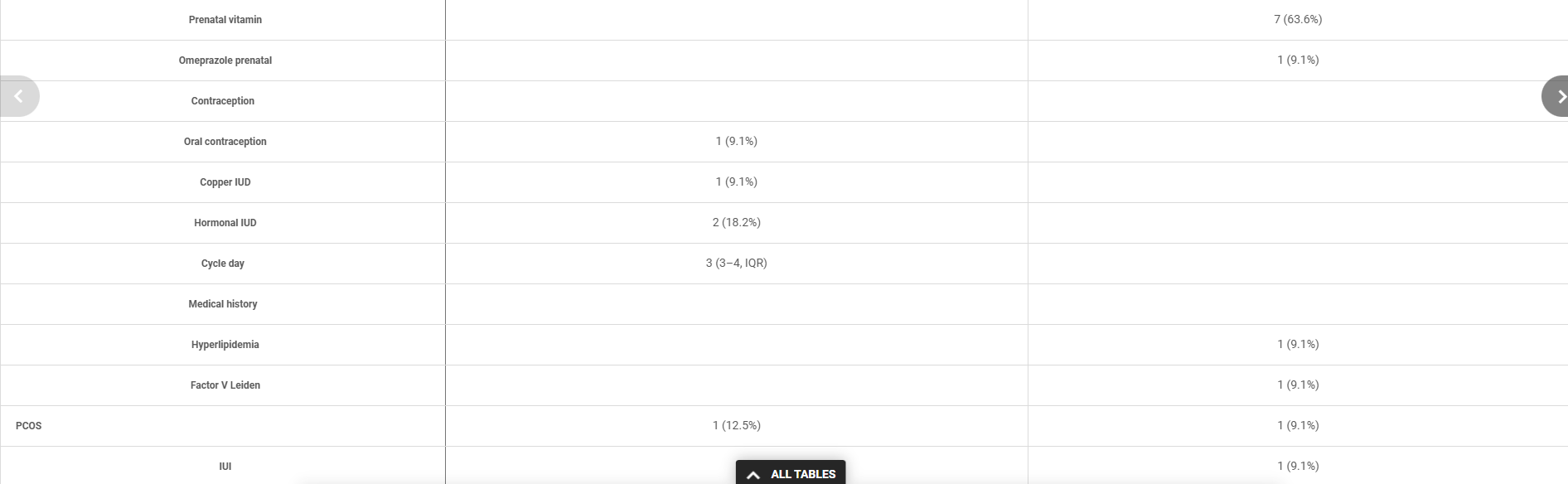
It should be noted that this test was conducted at Stanford Hospital in Stanford, California, USA, and has received IRB approval (Protocol Number 68417). All volunteers were women aged 18 to 45, with BMI < 40, and were not undergoing ongoing immunomodulatory treatment. The second trimester was chosen as the sampling time point because it is still within the pregnancy maintenance period, before the gradual activation of pre-labor inflammatory pathways, facilitating the capture of the potential impact of candidate drugs on the pregnant women's immunome. Samples for the non-pregnant control group were collected in the early follicular phase of the menstrual cycle to reflect a low-hormone state.
For each candidate, the study selected the compound form dominant in the blood after oral administration, with some drugs using their corresponding active metabolites (such as THF and SA). Experimental concentrations were set according to in vivo plasma concentrations corresponding to standard oral doses. As shown in the table below:
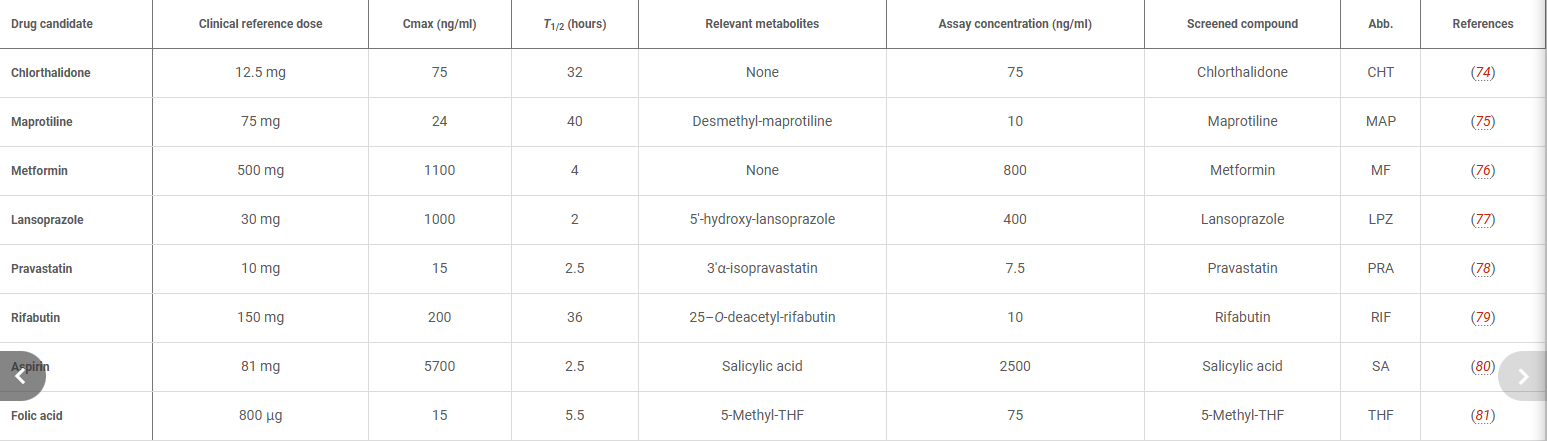
The screening experiment set up 96 detection conditions, each requiring only 100 μl of whole blood sample. Experimental processing was performed within 30-60 minutes after in vivo blood collection. Drug perturbations were conducted simultaneously for each condition, comprising 8 treatments (including LPS, IFN-α, IL-33, GM-CSF, TNFα, a mixture of IL2/4/6, PI, and an unstimulated control), with a co-incubation period of 2 hours to detect cell-type and stimulus-specific immune responses under near-physiological conditions.
To avoid batch effects while recording barcode misclassification and cell recovery rates, the study employed a newly developed four-out-of-nine doublet-depletion mass cytometry barcoding scheme. Barcodes were generated by selecting combinations of 4 isotopes from a total of 9 isotopes (Pd104, Pd105, Pd106, Pd108, Pd110, Pt194, Pt195, Pt196, and Au197), yielding 126 usable barcodes in total, of which the 96 highest-purity barcodes were selected to correspond to the 96 experimental conditions.
Simultaneously, mass cytometry was combined with synchronous analysis to evaluate functional responses across 28 immune cell subsets by assessing expression changes of 12 intracellular phosphorylated proteins and 8 activation markers. Ultimately, the constructed single-cell perturbation atlas encompassed 80 perturbation conditions and 218 million white blood cells. For each individual, the combination of 8 stimuli × 28 immune cell subsets × 20 functional proteins yielded a total of 4,480 features per group.
Test Set: An Independent Mass Cytometry Dataset Previously Collected by Stelzer et al. (Independent dataset)
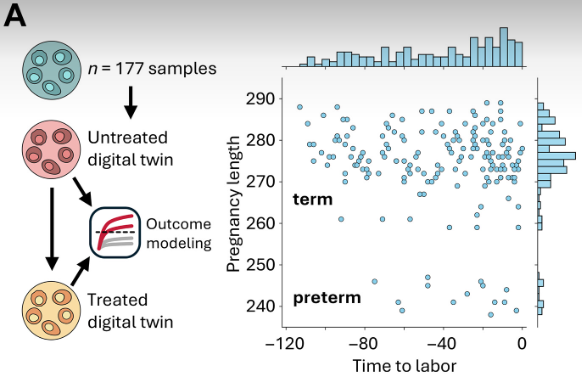
This dataset is a longitudinal mass cytometry dataset previously published by the current research team, primarily used as a clinical reference dataset for simulation experiments. The dataset collected blood samples from 63 volunteers during the final 120 days prior to spontaneous delivery, with 1-3 samples per person. Only 177 unstimulated term samples (153 samples from 58 patients) and preterm samples (14 samples from 5 patients) were used for the simulation experiments. As shown in the figure below:
CellOT+Stabl Constructs a Single-Cell-Level Digital Twin System to Simulate Therapeutic Effects
The core design goal of SIMCO is not simply to predict whether a pregnant woman will deliver preterm, but to achieve the clinical objective of preventing preterm birth by applying personalized drug interventions to specific patients. In other words, it aims to determine whether drugs can alter the final clinical outcome and whether effective results are produced for each patient. Based on this, the research team proposed an innovative design for SIMCO, integrating single-cell immune response simulation with clinical outcome modeling to meet the aforementioned requirements. Specifically, this can be divided into three steps, as shown in the figure below:
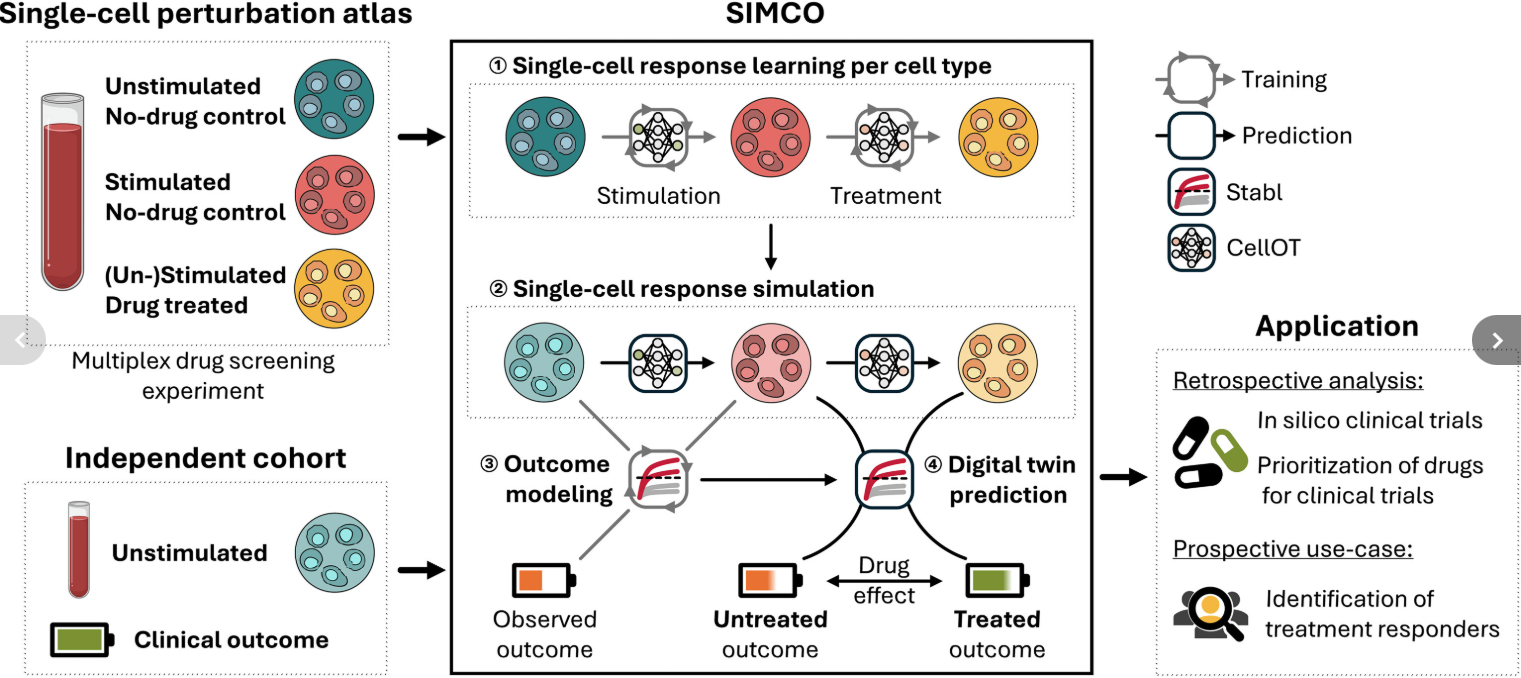
Step 1: SIMCO leverages CellOT to train on high-dimensional single-cell perturbation datasets via Optimal Transport (OT) learning, encoding immune responses following drug perturbation at single-cell resolution. CellOT implements OT learning based on Input Convex Neural Networks, featuring a network with 4 fully connected hidden layers, which offers the advantage of predicting heterogeneous single-cell perturbation responses with high precision. In this study, researchers fine-tuned the network structure by adding a four-layer bottleneck structure (128, 128, 64, and 32) and reduced the latent space dimension from 50 to 42 to prevent overfitting, with the training duration set to 50,000 epochs.
Step 2: SIMCO transfers the learned single-cell perturbation patterns to another independent immunomics dataset, which contains only baseline samples (unstimulated or untreated) and their associated clinical outcomes. Subsequently, based on these baseline samples, SIMCO simulates the immune response of single cells when facing perturbations (such as in vitro stimulation or drug treatment), thereby generating a pair of digital twins for each patient: one representing the immunomics profile when receiving candidate drugs and one when not receiving candidate drugs.
Step 3: SIMCO utilizes the sparse machine learning algorithm Stabl to construct a multivariate prediction model for clinical outcomes, based on the patient training set and simulated immune data. In the reserved patient test set, SIMCO compares the prediction results between the treated and untreated digital twins for each patient. The difference between these predictions quantifies the impact of drugs on clinical outcomes, enabling SIMCO to model the immunomodulatory potential of candidate drugs and assist in formulating personalized treatment plans.
In terms of specific computational resource configurations, CellOT was executed using the official Python package CellOT version 0.1, with training deployed on the Stanford Cloud platform Sherlock, requesting a maximum memory of 32 GB, a maximum runtime of 20 hours per task, and a maximum of 16 GPUs per task. Stabl was run using the Python package Stabl 1w. Basic data analysis included temporal variation correction and dataset regularization, relying on Python packages Scipy 1.10.4, scikit-learn 1.5.2, pandas 2.2.3, and numpy 1.26.4. Visualization was performed using seaborn 0.13.2 and matplotlib 3.10.3.
Cell-Level Digital Twins Lay the Foundation for Future Personalized Preterm Birth Prevention
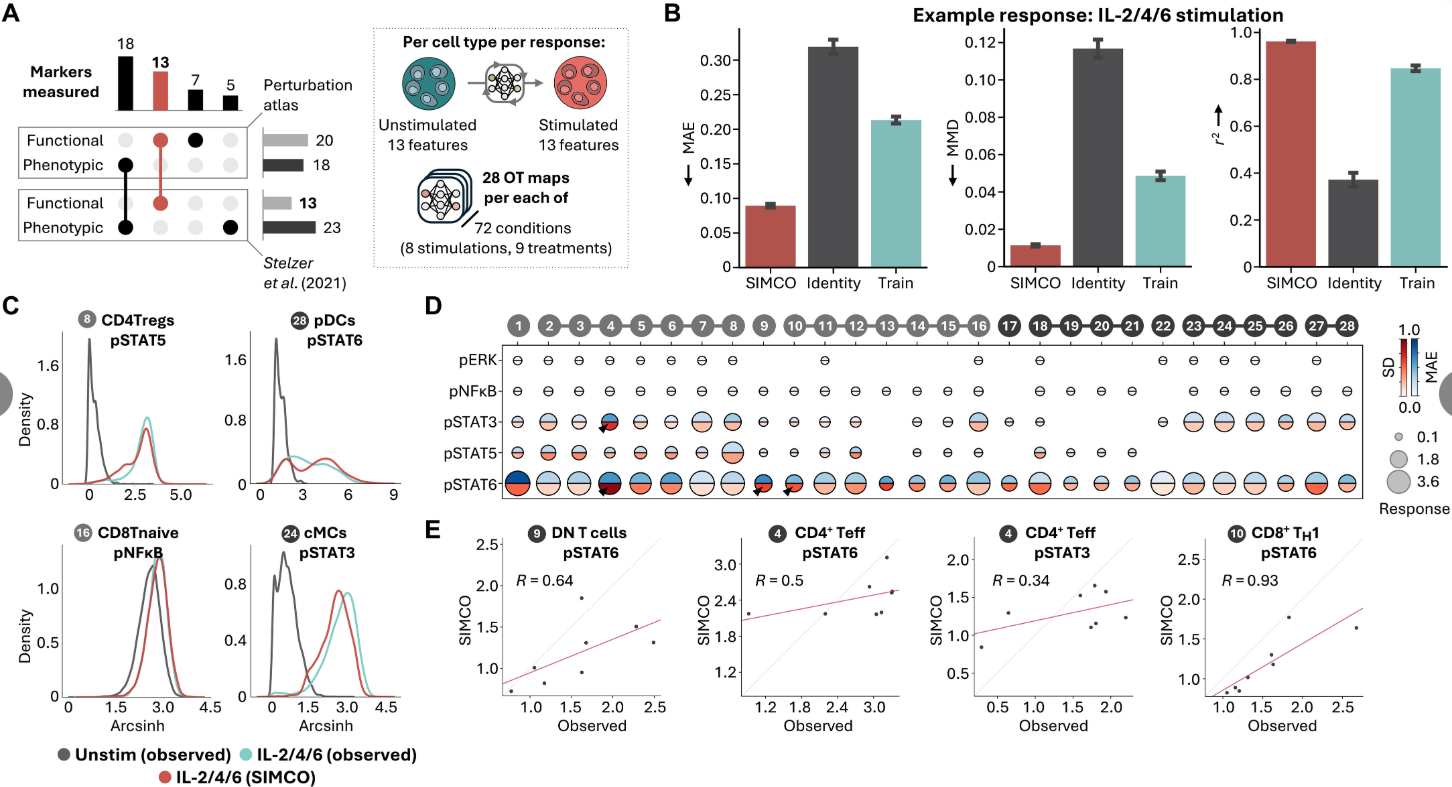
The study first validated the capability of the SIMCO single-cell perturbation prediction model. SIMCO was trained separately by cell type: learning cellular response to stimulation based on DMSO controls (unstimulated samples); and learning the response to drug treatment under each stimulation condition, also based on DMSO controls. For cross-dataset transfer simulation, the model was trained using only the 13 functional markers shared between the perturbation dataset and the independent dataset. The evaluation employed a quadruple cross-validation strategy, incorporating three metrics: mean absolute error (MAE), coefficient of determination (R²), and maximum mean discrepancy (MMD).
The results (as shown in the figure below) indicate that SIMCO outperformed all training baselines across all metrics, demonstrating its ability to accurately capture patient heterogeneity and achieve accurate individualized perturbation modeling. When comparing markers with strong responses under IL-2/4/6 stimulation (arcsinh difference > 0.1), the distributions of simulated and measured values aligned well, proving that the SIMCO model can accurately characterize cellular heterogeneity at the single-cell level. Notably, simulation error was highly correlated with the inherent differences in signal response between patients (Spearman coefficient R=0.93); even when facing the greatest individual differences in signal response, SIMCO could still preserve relative differences between patients without flattening individual distinctions.
The study then proceeded to validate SIMCO's prediction of treatment effects on time to delivery. First, a sparse multivariate model was built based on single-cell digital twin data from untreated subjects, accurately predicting time to delivery (Pearson correlation coefficient R=0.64, root mean square error (RMSE)=24.1 days, with 24 days for the term group and 25.4 days for the preterm group). Furthermore, by combining time-to-delivery predictions with sampling time points to estimate expected gestational duration, SIMCO accurately distinguished digital twin models of term versus preterm births, with an AUROC=0.75 (95% CI 0.59-0.88) and AUPRC=0.29 (0.12-0.54), as shown in the figure below.
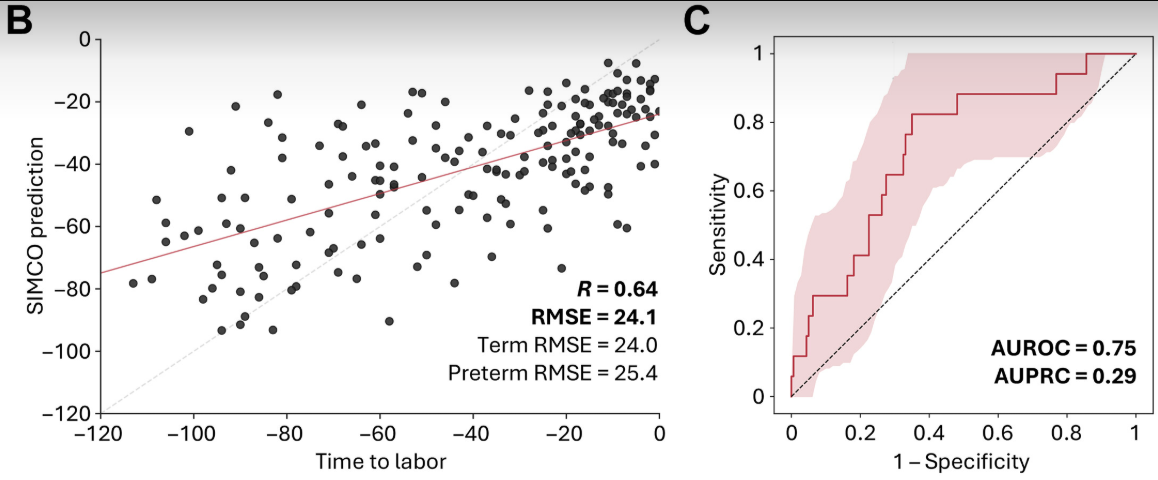
Notably, the inclusion of CellOT simulated features significantly improved SIMCO's prediction performance compared to using only real features from unstimulated data, with the Pearson correlation coefficient increasing from 0.34 to 0.61, AUROC rising from 0.69 to 0.75, and AUPRC increasing from 0.24 to 0.34. Even when compared to multivariate models built using complete real features from the independent dataset, the addition of CellOT simulated features achieved a stable, slight performance improvement, such as an increase in the Pearson correlation coefficient from 0.79 to 0.82.
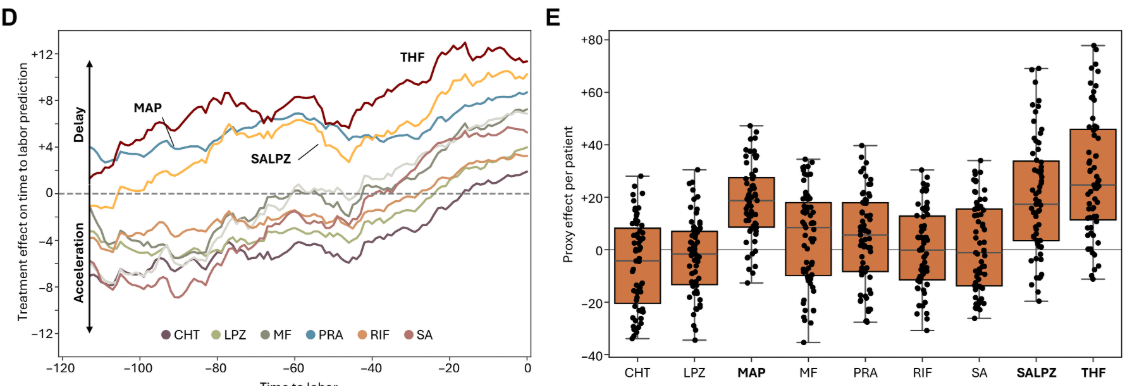
Subsequently, researchers used SIMCO to simulate the differences in predicted time to delivery between digital twins treated with candidate drugs and untreated ones. Maprotiline, THF, and SALPZ generally delayed the predicted time to delivery. In contrast, other candidate drugs exhibited biphasic effects depending on the gestational time window.
Regarding the cumulative treatment effects across patients, compared by gestational age length, the three drugs with the strongest effects in SIMCO simulations were THF (mean 24.7 days, interquartile range (IQR)= 11.4-45.9), Maprotiline (mean 18.8 days, IQR= 8.6-27.5), and SALPZ (mean 17.3 days, IQR= 11.4-33.8). Of course, not all patients would benefit from specific treatments in real clinical settings; therefore, researchers also quantified the heterogeneity of these three drugs among patients: the proportions of patients benefiting from THF, SALPZ, and Maprotiline regimens were 90.5%, 87.3%, and 82.5%, respectively, whereas standalone SA treatment resulted in gestational age extension for only 46% of patients.
Additionally, the study elucidated the black-box mechanisms in the experiments, providing mechanistic insights into stimuli and drugs. The top 21 key features used to predict the timing of delivery included 5 of the top 10 features representing CD4⁺ T cell signaling pathway responses. Notably, decreased pSTAT3 levels in response to GM-CSF, TNF-α, PI, and IFN-α were correlated with time points in early pregnancy; that is, STAT3 activation intensified as delivery approached. Conversely, baseline pS6 levels in granulocytes and TNF-α-induced pS6 levels decreased as pregnancy progressed toward delivery. In contrast, THF and SALPZ counteracted these pregnancy-progression-associated immune signatures by persistently inhibiting pSTAT3 signaling in naive CD4⁺ T cells and enhancing pS6 responses in granulocytes. Overall, THF and SALPZ exerted beneficial effects on 7 of the top 10 features.
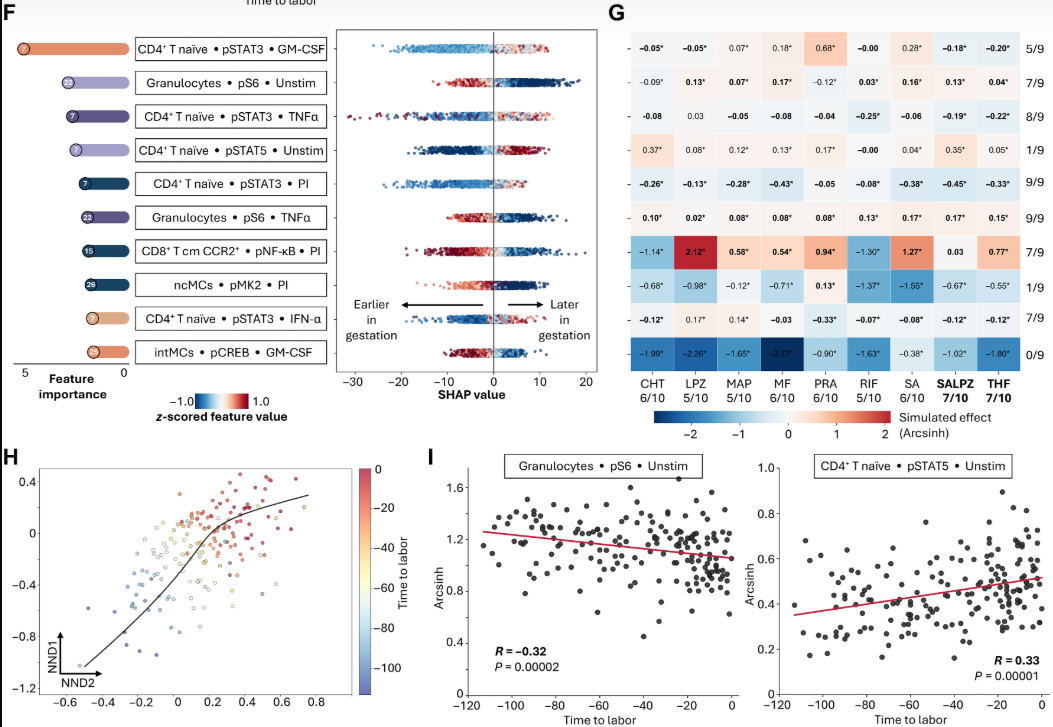
However, the study also found that certain drugs caused some immune markers to shift toward characteristics associated with late pregnancy and imminent delivery. For example, THF and SALPZ strongly inhibited pMK2 activation in non-macrophage cells (ncMCs) following PI stimulation, and suppressed pCREB activation in intermediate monocytes (intMCs) after GM-CSF stimulation. These features should typically exhibit earlier activation prior to delivery. Meanwhile, when predicting outcomes using therapeutic digital twins, SIMCO does not classify a drug as promoting preterm birth based on a single "adverse signal." Instead, it intrinsically integrates the multifaceted immunomodulatory effects across all cell types, stimulation conditions, and signaling pathways to calculate the net effect, thereby systematically and quantitatively assessing whether the drug ultimately extends or shortens gestational duration.
Conclusion
In summary, in the face of the global challenge of preterm birth, the SIMCO single-cell digital twin system opens up new avenues of thought. Historically, clinical trials for new drug interventions during pregnancy have been constrained by ethical and cost considerations, making it difficult to conduct large-scale preliminary validation of candidate regimens. SIMCO offers a novel approach combining in vitro experiments with computational virtual screening, allowing for the prioritized assessment of candidate drug potential before entering human trials. This single-cell tool can predict the regulatory effects of drugs on maternal immune status and timing of delivery, and may also provide reference for designing personalized preterm birth prevention strategies in the future.
The study simultaneously found that the SALPZ combination regimen possesses unique immunomodulatory characteristics distinct from those of aspirin or lansoprazole monotherapy. The efficacy is not simply additive, suggesting the presence of drug-drug interactions. The SIMCO framework itself, along with candidate regimens such as THF and SALPZ that showed potential in simulations, points to promising directions for future mechanistic research and clinical trials in preterm birth prevention.