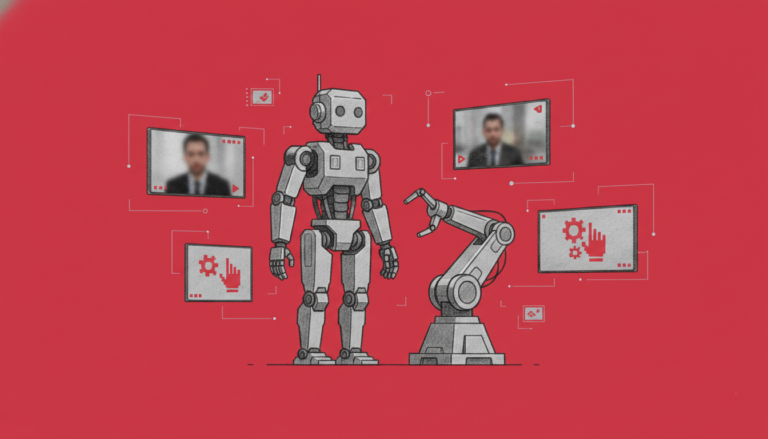
Major AI firms invest heavily in world models as LLM progress plateaus, focusing on physical world understanding through video and robotic data.
As progress in large language models (LLMs) begins to plateau, major artificial intelligence companies are shifting their focus and pouring significant resources into developing world models—AI systems designed to understand and interact with the physical world. Unlike LLMs, which excel at processing and generating human language, world models aim to build comprehensive, dynamic representations of reality by learning from vast amounts of video, sensor data, and robotic interactions. These models are being trained to simulate environments, predict outcomes, and guide physical actions—capabilities essential for advancing robotics, autonomous vehicles, and embodied AI. Companies like OpenAI, Google DeepMind, Meta, and NVIDIA are investing heavily in this area, recognizing that true AI intelligence will require more than language understanding; it will demand spatial reasoning, cause-and-effect prediction, and real-world interaction. The shift comes as the rapid gains seen in LLMs over the past few years have started to slow. While current models can generate convincing text and even code, they still struggle with understanding physical constraints, long-term planning, and real-time decision-making in dynamic environments. World models are seen as a potential solution to these limitations, offering a bridge between digital reasoning and physical action. OpenAI has been testing world models in simulated environments to train robots for tasks like object manipulation and navigation. Google DeepMind has developed systems that learn from YouTube videos to infer physical laws and predict how objects behave. Meta is leveraging its massive video datasets to train models that can anticipate actions and interactions in real-world settings. Meanwhile, NVIDIA is building high-fidelity simulation platforms to accelerate training for these systems. Experts believe that world models could be a key step toward achieving artificial general intelligence (AGI), where AI systems can perform any intellectual task a human can. However, challenges remain, including the need for massive, diverse datasets, computational power, and better ways to validate model behavior in complex environments. Despite the hurdles, the momentum is clear. With major players investing heavily and research advancing rapidly, world models are emerging as the next frontier in AI development—ushering in a new era where machines don’t just understand language, but also perceive, predict, and act within the physical world.