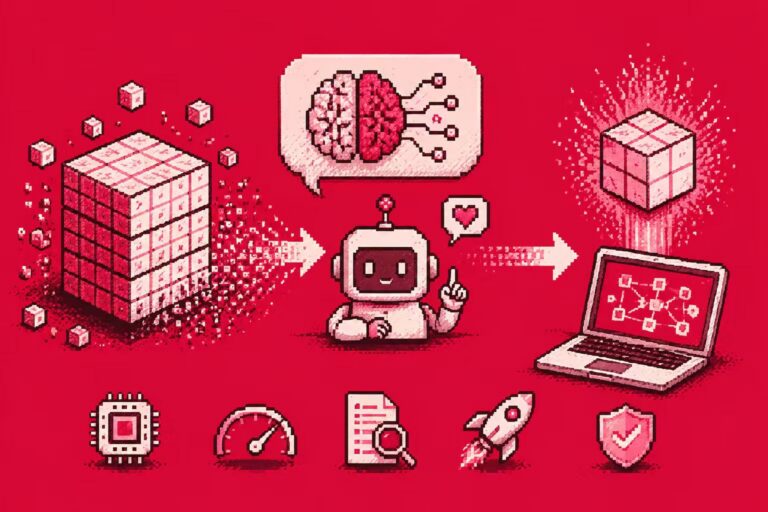
Scale Physical AI with NVIDIA Cosmos Cookbook: Generate Synthetic Data for Robotics, Autonomous Driving, and Smart Cities Using Advanced Style Transfer and Control Modalities
Scaling data generation for physical AI requires high-quality, diverse, and physically accurate data that reflects real-world complexity. Collecting such data through real-world means is often costly, slow, and risky. NVIDIA’s Cosmos open world foundation models (WFMs) offer a powerful solution by enabling scalable, high-fidelity synthetic data generation and augmentation of existing datasets. The NVIDIA Cosmos Cookbook serves as a comprehensive guide to using these models and tools effectively. The Cookbook provides step-by-step recipes for key workflows including inference, curation, post-training, and evaluation. A central component is NVIDIA Cosmos Transfer, a world-to-world style transfer model that allows developers to transform synthetic or real-world scenes while preserving structural and temporal consistency. This enables the creation of diverse, realistic data for physical AI applications. One major use case is augmenting video data. Developers can generate realistic variations of existing scenes by modifying backgrounds, lighting, object colors, or textures without disrupting motion or spatial coherence. The Multi-Control Recipes section demonstrates how to combine control modalities such as depth, edge maps, segmentation masks, visual prompts, and text inputs to achieve precise, high-fidelity results. For example, in robotics, this helps train models to recognize human gestures like waving across different environments—something difficult and expensive to capture in real life. Key recipes include: - Background change: Replace scenes using filtered edge, inverted segmentation, and visual control to maintain subject motion. - Lighting change: Shift conditions like day to night using edge and visual controls. - Color and texture change: Modify surface appearance using edge control to preserve object structure. - Object change: Alter object class or shape using low edge weight, high segmentation weight, and moderate visual control. These techniques are especially useful for training perception models in autonomous driving. By applying Cosmos Transfer to real or simulated driving videos, developers can generate data under diverse weather, time-of-day, and traffic conditions. This supports domain adaptation and improves model robustness in real-world scenarios. Another critical application is Sim2Real data augmentation for robotics. Mobile robots often fail to generalize from simulation to reality due to visual and physical discrepancies. The Sim2Real recipe uses Cosmos Transfer to generate photorealistic, domain-adapted data from simulation. When integrated with NVIDIA X-Mobility and Mobility Gen, this approach helps robots better perceive challenging elements like transparent obstacles, significantly improving navigation performance. The Cookbook also includes a full workflow for smart city applications. It generates photorealistic urban traffic scenes using CARLA simulation and processes them through Cosmos Transfer to produce high-quality, annotated video data. This accelerates the development of perception and vision-language models for traffic monitoring, safety, and urban planning. Assessing the quality of synthetic data is crucial. The Cookbook highlights the use of Cosmos Reason, a reasoning vision language model, to evaluate physical plausibility—ensuring that generated interactions and movements follow real-world physics. To use the Cookbook, developers can follow detailed instructions for inference, post-training, and model evaluation. Each recipe includes setup steps, command examples, and links to executable scripts. For deeper understanding, concept guides explain control modalities, data curation, and evaluation methods. The Cosmos Cookbook is an open-source platform welcoming contributions. Developers can fork the repository, create a branch, add new recipes following established templates, test changes, and submit a pull request. The community is encouraged to share workflows, refine techniques, and help expand the ecosystem. By leveraging the Cosmos Cookbook, teams can accelerate physical AI development with scalable, realistic, and diverse data—driving innovation in robotics, autonomous vehicles, smart cities, and beyond.