2025 Rewired AI: Breakthroughs in Physical AI, Infrastructure, Models, and Agents Shaped the Future
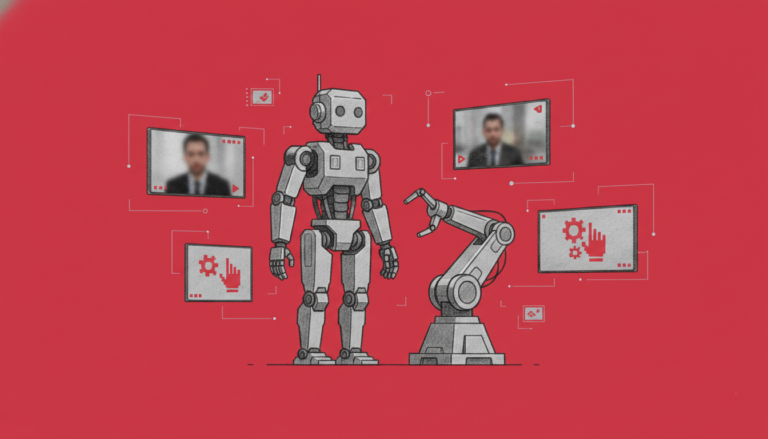
2025 marked a pivotal year in the evolution of artificial intelligence, driven by breakthroughs in AI infrastructure, model development, and real-world deployment. Developers and researchers leveraging NVIDIA technologies witnessed unprecedented progress across multiple fronts, from the rise of AI factories to the maturation of physical AI and the growing sophistication of AI agents. At the heart of this transformation was the expansion of AI factories—highly optimized, large-scale data center environments designed to train and deploy massive models with extreme efficiency. These facilities, powered by next-generation NVIDIA Hopper and Blackwell architectures, enabled faster training cycles, lower energy consumption, and improved scalability. Advances in power delivery and cooling systems allowed for higher compute density, making it possible to run trillion-parameter models in production environments. AI infrastructure also saw major strides, with the introduction of unified compute and storage platforms that reduced bottlenecks in data pipelines. Technologies like NVIDIA’s NVLink and InfiniBand networks enabled seamless communication between GPUs and across clusters, dramatically improving performance for distributed training and inference. Model development continued to evolve, with a strong emphasis on efficiency and accessibility. Open models gained momentum, with several high-performing, transparent models released under permissive licenses, fostering collaboration and innovation across academia and industry. Techniques like model distillation, quantization, and sparsity enabled powerful models to run efficiently on edge devices, bringing advanced AI to smartphones, robots, and IoT systems. AI agents became more autonomous and context-aware, capable of planning, reasoning, and executing multi-step tasks with minimal human input. These agents were increasingly integrated into enterprise workflows, from customer service automation to software development assistance, demonstrating practical value beyond theoretical benchmarks. Perhaps one of the most exciting developments was the advancement of physical AI—systems that interact directly with the real world. Robotics, autonomous vehicles, and smart manufacturing environments benefited from improved perception, control, and decision-making capabilities. NVIDIA’s Omniverse platform played a key role, enabling digital twins and simulation-based training that accelerated real-world deployment. Together, these innovations reshaped how AI is built, scaled, and applied. The year underscored a shift from pure model performance to holistic system intelligence—where compute, data, models, and physical interaction converge. As we look ahead to 2026, the momentum continues. Stay updated on the latest breakthroughs by subscribing to the Developer Newsletter and following us on Instagram, LinkedIn, Twitter, YouTube, and Discord for real-time insights and developer-focused content.