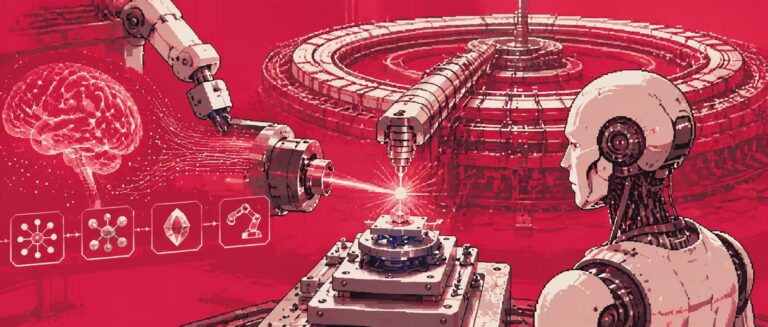
China Poised to Lead in Humanoid Robotics Amid Global Race, Driven by Manufacturing Strength and State Support Despite Tech and Cost Challenges
Elon Musk envisions a future where humanoid robots are commonplace, but China may be the first to turn that vision into reality. Over recent years, Beijing has made robotics a central pillar of its national technology strategy, with the October meeting of China’s Central Committee outlining ambitious goals in the 15th Five-Year Plan. A key focus area is "embodied artificial intelligence"—a term encompassing AI-powered physical systems like humanoid robots and autonomous vehicles. China’s push into humanoid robotics is driven by multiple factors: an aging population and shrinking workforce, the need to sustain economic growth, and a broader ambition to lead in global technology competition. According to Karel Eloot, a senior partner at McKinsey & Company, the country sees robotics as a way to address demographic challenges while advancing its position in the global tech race. China’s leading robotics companies, such as UBTech, have already begun scaling production, supported by strong government backing and local subsidies. The nation’s deep manufacturing ecosystem—proven in industries like electric vehicles—gives it a significant cost advantage in developing and mass-producing robots. Ethan Qi of Counterpoint Research noted that China’s supply chain allows for faster, cheaper production, with UBTech projecting cost reductions of 20% to 30% annually. In contrast, the U.S. holds strengths in core AI innovation, advanced algorithms, and autonomy. American firms are pursuing vertical integration—controlling more of the supply chain, from actuators to software—to build more powerful, secure, and proprietary systems. McKinsey’s Eloot said this approach aims to deliver superior performance, better safety, and defensible intellectual property. While China is expected to lead in the early stages of the humanoid robot market, long-term projections suggest both nations will converge toward similarly large markets. By 2040, widespread adoption in private households could drive mass-market penetration in both countries. Despite these opportunities, China faces several hurdles. A major bottleneck is limited access to advanced semiconductors, particularly high-performance chips from U.S. companies like Nvidia. Goldman Sachs’ Jacqueline Du highlighted this dependency, noting that many Chinese robotics firms still rely heavily on foreign technology. Charlie Dai of Forrester added that challenges remain in AI performance under unpredictable conditions, regulatory uncertainty, and the difficulty of replicating human dexterity—especially in hands and fingers, which currently lack the full range of motion and sensitivity found in humans. Another critical barrier is cost. Current humanoid prototypes cost between $150,000 and $500,000 each. To compete with human labor, prices must drop to between $20,000 and $50,000 per unit—a significant challenge requiring breakthroughs in materials, manufacturing, and AI efficiency. Concerns also linger over a potential investment bubble in China’s robotics sector. In 2025, an ETF tracking Chinese robotics firms saw strong gains, raising questions about whether market enthusiasm outpaces realistic timelines for commercial success. Still, with strong government support, manufacturing scale, and strategic focus, China remains well-positioned to lead in the early rollout of humanoid robots—though long-term success will depend on overcoming technical, supply chain, and cost challenges.