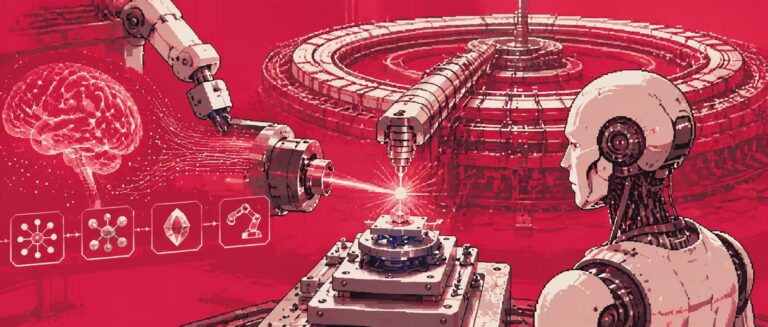
AI Advances: AlphaEvolve and Codex Transform Coding
This Week in AI: Major Breakthroughs and Practical Integrations Google DeepMind's AlphaEvolve Google DeepMind unveiled AlphaEvolve, a groundbreaking coding agent that combines the generative capabilities of large language models (LLMs) like Gemini Pro with robust evolutionary search frameworks and automated evaluation methods. This integration allows AlphaEvolve to iteratively refine and optimize entire codebases, focusing on multiple performance metrics simultaneously. Unlike previous coding assistants, AlphaEvolve minimizes "hallucinations" by grounding its algorithms in actual code execution results, ensuring the generated methods are not only plausible but also effective. The agent has already demonstrated significant practical impact, optimizing Google's data center scheduling to recover 0.7% of its compute capacity, simplifying hardware accelerator circuit designs, and accelerating the training of its underlying LLMs. Moreover, AlphaEvolve tackled and solved a longstanding problem that has puzzled mathematicians since 1969—devising a more efficient method for multiplying two 4x4 complex matrices using only 48 scalar multiplications, surpassing Strassen's classic algorithm. It also addressed over 50 other open mathematical problems, often outperforming the state-of-the-art. OpenAI's Codex In parallel, OpenAI announced the launch of Codex, a new AI coding assistant integrated into ChatGPT. Powered by a specialized variant of its o3 reasoning model, Codex operates securely in the cloud, handling practical development tasks such as bug-fixing, code review, refactoring, and real-time user feedback. Users can access Codex through "ask" and "code" modes, enabling the agent to clone repositories, run tests, and propose code improvements via diffs and pull requests. This tool is a significant step forward in AI's role in software development, moving from a passive autocomplete feature to a proactive, trusted engineering partner. Microsoft's Open-Source AI Editor for VS Code Microsoft responded to the growing competition in AI-assisted development by open-sourcing key components of its GitHub Copilot Chat extension for Visual Studio Code (VS Code) under the MIT license. This decision allows developers to review, modify, and contribute to the AI editor's code, enhancing transparency and community involvement. The company also plans to refactile AI features into the core of VS Code, aiming to improve development efficiency. Given that many competing platforms, including the recently acquired Windsurf by OpenAI for $3 billion and Cursor (valued at around $9 billion by its creator, Anysphere), are forks of VS Code, Microsoft's move underscores the platform's strategic importance in the AI-integrated development landscape. Psyche Decentralized Network Nous Research introduced Psyche, a decentralized network for AI model training built on the Solana blockchain. Utilizing DisTrO technology to reduce bandwidth demands, Psyche facilitates global participation by leveraging idle compute resources. The platform has already initiated the largest distributed training run, aiming to train a 4B-parameter open-source model. This initiative democratizes AI training, allowing developers and researchers worldwide to contribute and benefit from the network. Notion AI for Work Notion expanded its AI offerings with the introduction of Notion AI for Work. This new suite includes AI Meeting Notes, Research Mode, and Enterprise Search, enhancing workplace productivity. Users can switch between GPT-4.1 and Claude 3.5, and look forward to the addition of AI Connectors and other features. Notion's integration of AI tools into its workspace underscores the growing trend of embedding AI into everyday work processes to boost efficiency and innovation. Minimax's Text-to-Speech Model Minimax, a China-based company, launched Speech-02-HD, a text-to-speech model that outperforms both OpenAI and ElevenLabs on the Artificial Analysis Speech Arena leaderboard. Supporting over 32 languages and capable of processing up to 200,000 characters in a single pass, Speech-02-HD demonstrates the rapid advancements in natural language processing and synthesizing technologies, particularly in multilingual support. Stability AI's Mobile Audio Generating Model Stability AI unveiled Stable Audio Open Small, a 341M-parameter stereo audio model optimized for mobile devices. Open-source and efficient enough to run on Arm CPUs, it generates up to 11 seconds of audio in under 8 seconds, directly on smartphones. This model paves the way for more widespread and accessible AI in creative and multimedia applications. Qwen's Parallel Scaling Law Alibaba's Qwen team introduced a theoretical scaling law for parallel training, validated through extensive pretraining experiments. The study shows that a model with P times the parameters can be trained in 1/P of the time using P times the computational resources. This approach aims to significantly improve training efficiency for LLMs, making it easier to scale models without exponentially increasing computational costs. Industry Insights and Evaluations AlphaEvolve: A New Era of AI-Driven Breakthroughs Industry insiders view AlphaEvolve as a pivotal advancement, highlighting its potential to transform not just software development but also fundamental scientific research. Experts believe that AI methods combining generative creativity with robust verification and evolutionary search represent a significant step towards fully autonomous scientific agents. However, they caution that these agents are currently most effective when working within a narrowly defined domain and emphasize the ongoing importance of human oversight to guide and validate results. Codex: Shifting the Paradigm of Development OpenAI's Codex is seen as a game-changer for software engineering, marking a shift from AI as a mere coding aid to an indispensable and increasingly autonomous engineering partner. Tech leaders predict that tools like Codex will streamline workflows, reduce development time, and enable non-expert programmers to execute sophisticated tasks. Despite these advancements, the integration of AI into the development process remains an area where human expertise is crucial to steering the models toward optimal solutions. Open-Source AI in VS Code: Community-Driven Progress Microsoft's decision to open-source the GitHub Copilot Chat extension for VS Code is lauded for fostering a more transparent and collaborative environment in AI development. By allowing the community to inspect and modify the code, Microsoft is positioning itself to benefit from collective knowledge and contributions, potentially accelerating the refinement and expansion of AI features. Insiders note that this move aligns with the broader trend of decentralizing and democratizing AI technology. Decentralized AI Training with Psyche Psyche's decentralized network for AI model training is viewed as a promising solution to the high computational costs and resource demands associated with large-scale AI projects. By leveraging idle compute resources and reducing bandwidth requirements, Psyche offers a scalable and accessible platform for global collaboration. However, challenges such as ensuring consistent performance and maintaining data security remain areas of focus for the platform. Notion AI: Enhancing Workplace Collaboration Notion's AI for Work suite is praised for its ability to seamlessly integrate AI into various workplace tasks, from meeting notes to enterprise search. The inclusion of multiple AI models (GPT-4.1 and Claude 3.5) provides users with flexible options, catering to diverse needs and preferences. Experts predict that this kind of AI integration will become a standard feature in productivity tools, enhancing collaboration and accelerating project timelines. Minimax's Speech-02-HD: Leading the Multilingual Text-to-Speech Revolution Minimax's Speech-02-HD text-to-speech model is receiving significant attention for its superior performance and extensive language support. Industry experts highlight the model's potential to revolutionize content creation and accessibility, making high-quality voice synthesis available to a broader audience. However, they also note the need for continued refinement and testing to ensure long-term reliability and scalability. Stability AI's Stable Audio Open Small: Democratizing Creative AI Stability AI's Stable Audio Open Small is celebrated for its accessibility and efficiency, enabling the generation of high-quality audio directly on mobile devices. This advance is viewed as a step toward making AI-generated content more ubiquitous and user-friendly, with potential applications in music, video production, and education. Insiders anticipate that similar models will continue to push the boundaries of mobile AI capabilities. Qwen's Parallel Scaling Law: Optimizing Training Efficiency Qwen's parallel scaling law is seen as a crucial development for optimizing the training of LLMs. The theoretical framework, supported by empirical data, promises to make training more efficient and cost-effective, particularly for resource-intensive models. Tech experts predict that this approach will become a standard practice in the industry, significantly reducing the time and resources required to develop and deploy advanced AI models. Conclusion These developments underscore the rapid progress of AI in various domains, from fundamental scientific discovery to everyday software development and workplace productivity. AlphaEvolve and Codex represent significant milestones in AI's transition from passive tools to proactive partners, while Psyche and Stable Audio Open Small democratize AI training and creative applications. Microsoft’s open-source initiative and Notion’s AI suite highlight the growing role of community involvement and AI integration into everyday workflows. As AI continues to evolve, the balance between human oversight and machine autonomy remains a critical consideration for maximizing its potential and addressing emerging challenges.