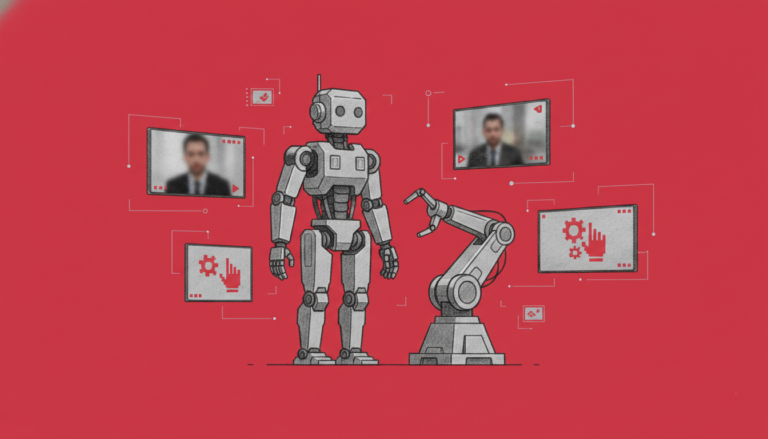
LLM-in-Sandbox Revolutionizes AI Agents with Secure Virtual Computing for Complex Problem Solving
The emergence of LLM-in-Sandbox marks a pivotal shift in how large language models interact with complex tasks, moving beyond traditional tool-calling toward full computer-level autonomy. This new paradigm enables LLMs to leverage a virtualized computing environment, unlocking capabilities that were previously out of reach. By operating within a secure, isolated sandbox, models gain access to external resources, file management, and code execution—transforming them into universal agents capable of handling long-context reasoning, intricate computations, and domain-specific problem-solving across fields like mathematics, physics, chemistry, and biomedicine. At the heart of this innovation is the idea that LLMs can now act as autonomous agents, not just responders. The sandbox environment, typically implemented via a lightweight, shared Docker container, provides a safe and scalable platform where models can explore, experiment, and execute tasks without compromising system integrity. This setup allows models like Claude Sonnet 4.5 and GPT-5 to achieve performance improvements of up to +24.2% on complex benchmarks—without requiring any additional training. What’s particularly compelling is how these models naturally discover and utilize the sandbox’s meta-capabilities. Rather than being explicitly programmed to use external tools, they begin to spontaneously apply file manipulation, script execution, and data retrieval as part of their problem-solving workflow. This behavior emerges organically, suggesting a deeper level of reasoning and adaptability. While earlier work focused on secure code generation and execution—such as in the case of Claude Code Sandboxing—LLM-in-Sandbox extends this concept far beyond programming. It enables general agentic intelligence, where the model can autonomously manage workflows, process large datasets, run simulations, and follow multi-step instructions with greater accuracy and independence. This advancement represents a fundamental evolution in AI agent design. Instead of relying on pre-defined APIs or limited tool sets, LLMs now operate within a full computing environment, effectively turning them into self-directed agents capable of navigating complexity and scale. As AI systems grow more capable, the ability to reason, compute, and act within a secure sandbox becomes a cornerstone of next-generation intelligent systems.