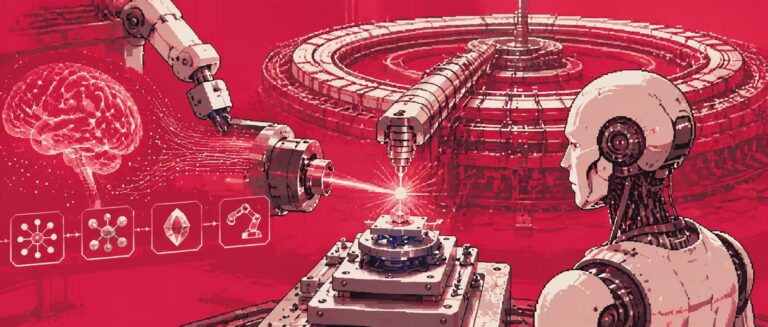
Figure AI CEO Brett Adcock says the company is building a new species of self-replicating robots capable of colonizing space, envisioning a future where AI-driven machines reproduce and expand across the galaxy.
Figure AI CEO Brett Adcock has unveiled an ambitious vision for the future of robotics, describing the company’s mission not just as building machines, but as creating a new species. Speaking at Salesforce’s annual Dreamforce conference, Adcock told CEO Marc Benioff that the goal is to develop robots capable of self-replication and collective learning—concepts that echo science fiction. Adcock referenced the novel We Are Legion (We Are Bob) by Dennis E. Taylor, which explores the idea of digital consciousness and self-replicating machines. He elaborated on the possibility of von Neumann probes—hypothetical robots that can autonomously reproduce and explore space, mining resources and building more of themselves on distant planets. “One of the things I'm excited about is self-replicating von Neumann probes in space,” Adcock said. “I think it will happen in our lifetime.” This vision aligns closely with that of Sam Altman, CEO of OpenAI, who has also expressed belief in a near-future where robots become commonplace in daily life. In a May Bloomberg interview, Altman predicted that within years, people would see multiple robots walking and performing tasks in public spaces, making the experience feel “very sci-fi.” OpenAI has backed Figure AI with a $5 million investment, reinforcing the shared ambition. The two companies are also connected through their broader goals in advancing artificial general intelligence and robotics. Despite this momentum, Figure AI faces growing competition, particularly from Elon Musk. Musk, who leads Tesla and the AI startup xAI, has publicly clashed with Altman, including a series of lawsuits in 2024 over OpenAI’s direction and alleged employee poaching. Tesla’s own humanoid robot, Optimus, debuted in 2022 and Musk has suggested a consumer launch could happen by late 2025 or 2026. Figure AI recently unveiled its third-generation robot, Figure 03, designed to assist with household tasks. However, it remains in development and is not yet available to the public. During the Dreamforce interview, Benioff questioned whether robots must resemble humans. Adcock acknowledged the debate, noting that while humanoid forms are popular in media, practicality may favor alternative designs. Diligent Robotics, for example, has developed Moxi—a wheeled robot used in hospitals to deliver supplies and lab samples. Co-founder Vivian Chu described Moxi as the “minimum viable humanoid,” emphasizing that a simple, efficient form factor—like a wheel with arms and a head—could be more effective and cost-efficient than full humanoid designs. The conversation underscores a broader industry shift: the future of robotics may not depend on how human-like a robot looks, but on how well it performs its intended tasks—whether that’s in homes, hospitals, or beyond Earth.