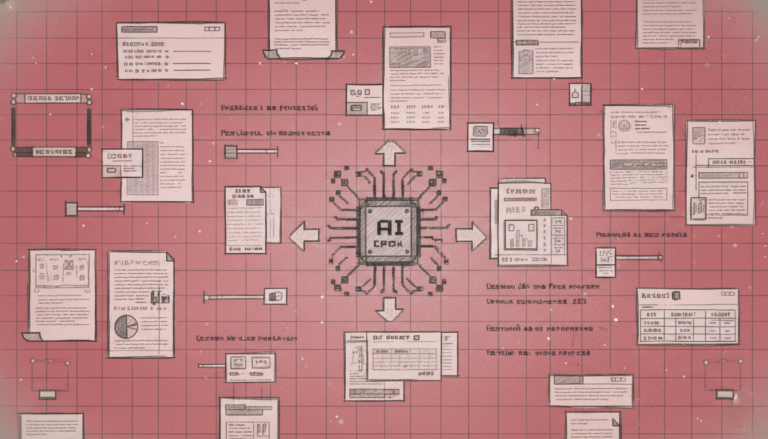
Tired of spending countless hours on peer reviews? An AI-assisted workflow could help https://t.co/bkmIJV7NBV
### Abstract: AI-Assisted Workflow in Peer Review #### Core Events: The article discusses the implementation and potential benefits of an AI-assisted workflow in the peer review process, a critical but time-consuming aspect of academic and scientific publishing. The introduction of AI tools aims to streamline the review process, improve efficiency, and reduce the burden on human reviewers. The technology can assist in various stages, including initial manuscript assessment, identifying potential reviewers, and providing preliminary feedback on the quality and originality of the research. #### Key People: - **Academic Researchers and Scientists**: Those who are involved in the peer review process and stand to benefit from AI assistance. - **Publishers and Journal Editors**: Key stakeholders who are exploring and implementing AI tools to enhance the review process. - **AI Developers and Technologists**: Experts who are creating and refining the AI algorithms used in peer review. #### Key Locations: - **Global Academic and Research Institutions**: The AI-assisted workflow is being developed and tested in various academic settings worldwide. - **Scientific Journals and Publications**: The primary platforms where the AI tools will be applied and where the impact of these tools can be most directly observed. #### Time Elements: - **Present**: Current challenges in the peer review process and the ongoing development and testing of AI-assisted workflows. - **Future**: Potential long-term benefits and the widespread adoption of AI tools in academic and scientific publishing. #### Summary: The peer review process, a cornerstone of academic and scientific publishing, is often criticized for its inefficiency and the significant time it demands from researchers and scientists. To address these challenges, several publishers and journal editors are exploring the use of AI-assisted workflows to enhance the review process. These AI tools can be integrated into various stages of the peer review, from the initial assessment of manuscripts to the identification of suitable reviewers and the provision of preliminary feedback. One of the primary benefits of AI in peer review is the reduction of the administrative workload on human reviewers. AI algorithms can quickly screen manuscripts to check for basic compliance with journal guidelines, such as format, structure, and adherence to ethical standards. This initial screening can help filter out submissions that do not meet the required criteria, allowing reviewers to focus on more substantive and high-quality work. Another significant advantage is the ability of AI to identify potential reviewers. By analyzing the content of the manuscript and matching it with the expertise and publication history of potential reviewers, AI can suggest a list of suitable candidates. This can save journal editors considerable time and effort in finding the right reviewers, who are often in short supply and may be overwhelmed with requests. AI can also provide preliminary feedback on the quality and originality of the research. This feedback can include checks for plagiarism, assessment of the statistical methods used, and even an evaluation of the clarity and coherence of the writing. While this preliminary feedback does not replace the nuanced and critical evaluation provided by human reviewers, it can serve as a useful starting point and help authors improve their manuscripts before the formal review process begins. However, the integration of AI into the peer review process is not without its challenges. One of the main concerns is the potential for bias in AI algorithms. If the AI is trained on a dataset that reflects existing biases in the academic community, it could perpetuate or even exacerbate these biases. Therefore, careful development and testing of AI tools are essential to ensure they are fair and objective. Another challenge is the need for transparency and accountability. Human reviewers can provide detailed and personalized feedback, which is crucial for the academic and scientific community. AI tools must be designed to complement, rather than replace, this human input. Additionally, there is a need for clear guidelines on how AI-generated feedback should be used and interpreted by human reviewers and authors. Despite these challenges, the potential benefits of AI in peer review are substantial. By automating routine tasks and providing valuable preliminary insights, AI can help reviewers and editors focus on the more critical aspects of the review process. This can lead to faster publication times, improved manuscript quality, and a more efficient and sustainable peer review system. Several academic institutions and publishers are already testing AI-assisted workflows, and early results are promising. For example, a pilot program at a major scientific journal found that AI tools significantly reduced the time spent on initial manuscript screening, allowing reviewers to focus on more in-depth assessments. Another institution reported a reduction in the time taken to identify suitable reviewers, which can be particularly beneficial for niche or interdisciplinary fields where finding the right reviewers can be challenging. As the technology continues to evolve, it is expected that AI will play an increasingly important role in the peer review process. However, the success of AI-assisted workflows will depend on ongoing collaboration between AI developers, journal editors, and the broader academic community. Ensuring that AI tools are reliable, unbiased, and user-friendly will be crucial for their widespread adoption and effectiveness. In conclusion, the introduction of AI-assisted workflows in peer review has the potential to revolutionize the academic and scientific publishing landscape. By addressing the time and resource constraints faced by human reviewers, AI can help make the peer review process more efficient and sustainable. However, careful consideration and ongoing refinement of these tools are necessary to mitigate potential biases and ensure that they enhance, rather than diminish, the quality and integrity of the review process.