Reinforcement Learning optimiert Entscheidungen in agentenbasiertem AI
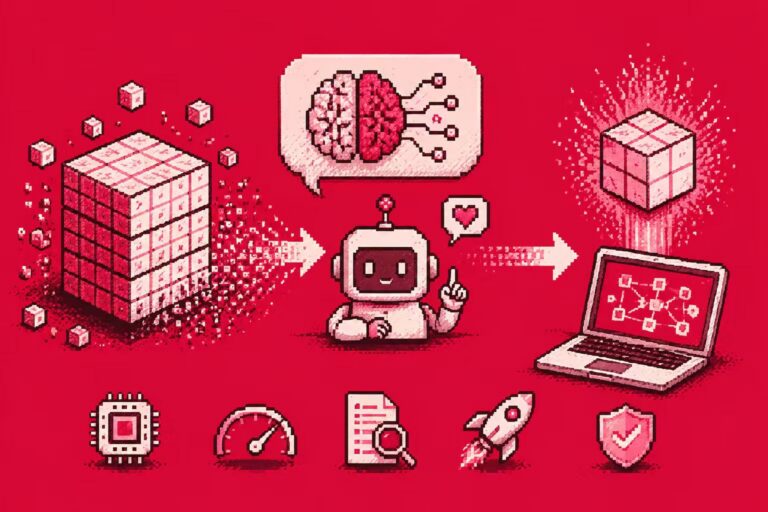
In the realm of agentic AI, reinforcement learning (RL) has emerged as a transformative force, enabling intelligent systems to navigate complex, uncertain environments through adaptive decision-making. Unlike traditional rule-based AI, which relies on static programming, RL allows agents to learn optimal behaviors by interacting with their environment, receiving feedback in the form of rewards or penalties. This trial-and-error process mirrors human learning—such as a child mastering bike riding through repeated attempts—making it ideal for dynamic scenarios where outcomes are unpredictable. In logistics optimization, for example, an AI agent can learn to route deliveries efficiently under fluctuating traffic, weather, or demand conditions, continuously refining its strategy based on real-time data. The integration of RL with frameworks like LangGraph elevates this capability by structuring decision-making processes as directed acyclic graphs (DAGs). This approach provides a clear, modular architecture for modeling agent workflows, where each node represents a decision point or action, and edges define the flow of control and information. LangGraph enables developers to design sophisticated, multi-step reasoning processes—such as planning, execution, and feedback loops—while seamlessly incorporating RL components. For instance, in a supply chain management system, the agent can explore different inventory replenishment strategies, evaluate their impact on delivery times and costs, and adjust its policy to minimize long-term penalties. A key strength of RL in agentic AI lies in its balance between exploration (trying new actions to discover better outcomes) and exploitation (leveraging known effective strategies). This dynamic equilibrium is crucial in real-world applications where the cost of suboptimal decisions can be high. In autonomous logistics, for example, an RL-powered agent might experiment with alternative delivery sequences during low-demand periods, then deploy the most efficient route during peak hours. Over time, the agent evolves a robust policy that adapts to changing conditions without requiring explicit reprogramming. Moreover, RL with LangGraph supports scalable, interpretable, and maintainable AI systems. The visual and logical structure of DAGs makes it easier to audit decisions, debug failures, and incorporate human-in-the-loop feedback. This transparency is essential in high-stakes domains like healthcare logistics or emergency response planning, where accountability matters. Industry experts highlight that the convergence of agentic AI and RL represents a paradigm shift toward self-improving systems. According to AI researchers at leading tech firms, the ability to learn from interaction rather than pre-defined rules is a critical step toward artificial general intelligence. Companies like Anthropic and OpenAI are actively exploring similar architectures, while startups in logistics and manufacturing are deploying RL-driven agents to cut operational costs by up to 30%. As tools like LangGraph mature, they lower the barrier to entry, enabling developers to build intelligent, adaptive systems without deep expertise in RL theory. The future of agentic AI isn’t just about automation—it’s about autonomy, learning, and evolution, one decision at a time.